
There are a number of symptoms of gastro-oesophageal reflux (GOR), often just called reflux, with the most noticeable being heartburn. But there are symptoms in addition to heartburn that you may not realise are related to reflux. See our list of common reflux symptoms below.
Heartburn
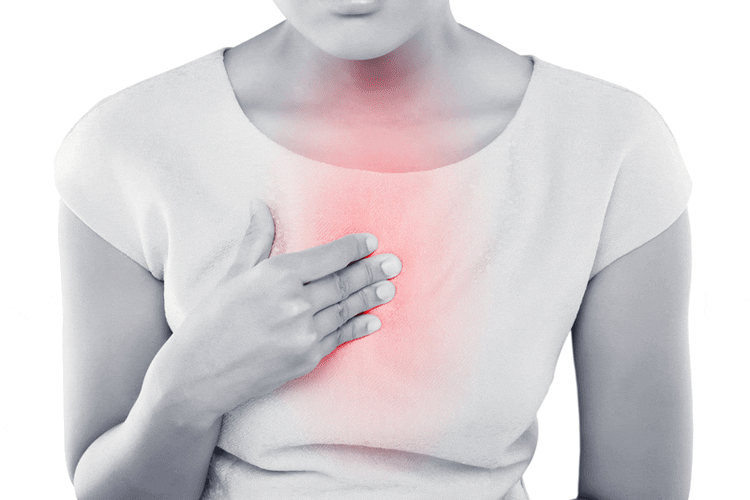
Heartburn is a burning pain that is generally felt in the chest area behind the breastbone and sometimes also the middle of the top part of your abdomen. The burning pain moves upwards during an episode of reflux. It can sometimes be felt in the throat.
The pain of heartburn is usually provoked by eating or by bending over, lying down or straining.
Regurgitation
Regurgitation of acid, food or fluid into the mouth. You may not be aware of bringing up anything, just a bitter taste which appears in your mouth. Bad breath (halitosis) can result.
Waterbrash
Waterbrash is the sudden appearance of an excess of salty or tasteless fluid in the mouth. This fluid is caused by an excessive production of saliva.
Belching
Many people with reflux suffer from excessive belching or burping.
Chest pain
Chest pain that can be similar to the pain associated with a heart attack is another symptom of reflux that is generally caused by acid reflux from the stomach into the oesophagus.
Always remember that your doctor should check any chest pain, even if it is associated with a gastrointestinal disorder, to make sure that the pain is not caused by a heart condition.
Hoarseness
Hoarseness or change in voice can occur when stomach acid reaches the mouth and throat, causing laryngitis (inflammation of your larynx, or voice box).
You may sometimes wake up with a hoarse voice because you had reflux during the night and find that your voice gets better during the day.
Sore throat
Sore throat can also be due to reflux. This is caused by the acidic stomach contents irritating the throat.
Cough
Reflux can cause persistent coughing in some people. Night-time coughing or choking can happen when the stomach contents enter the windpipe and the lungs while you are sleeping. You may wake up suddenly feeling that you are choking.
Asthma and asthma-like symptoms
Some people with reflux experience symptoms of wheezing and shortness of breath, especially at night.
Also, some people with asthma find that reflux makes their asthma symptoms worse.
Complications of gastro-oesophageal reflux
Unlike the stomach lining, the lining of the oesophagus is not designed to withstand acidic conditions.
Complications of gastro-oesophageal reflux disease (GORD) are caused by inflammation and damage to the oesophagus due to the regular reflux of acid from the stomach.
Symptoms that may be caused by complications of reflux include the following.
Problems with swallowing
In some cases of reflux, there may be difficulty in swallowing (called dysphagia).
There may be a feeling that food has got stuck in the oesophagus. This feeling of a blockage is sometimes due to narrowing (a stricture) of the oesophagus, and results from scar tissue forming in the oesophagus.
Pain with swallowing (called odynophagia) may be caused by ulcers (open sores) in the oesophagus brought about by it being exposed to acid over time. The pain is felt as the mouthful of food is swallowed and travels down the oesophagus.
These are serious symptoms and you should seek medical advice.
Vomiting blood
This is not a common symptom of reflux disease and usually happens only in severe cases. Bleeding in the oesophagus can cause vomiting of blood that is bright red or has the appearance of coffee grounds.
It is also possible for a severely inflamed or ulcerated oesophagus to bleed slowly, leading to anaemia.
Bleeding from the oesophagus requires urgent medical attention.
When to see your doctor about reflux
If you have any concerns or are experiencing some or all of the symptoms of gastro-oesophageal reflux disease, see your doctor.
It’s especially important to see your doctor if you have:
- reflux symptoms that are getting worse or more frequent;
- symptoms that are different from usual;
- symptoms that are not responding to self-help measures; or
- unexpected weight loss.
If you have problems with swallowing you should see your doctor urgently.
Seek immediate medical attention if you:
- vomit blood; or
- experience chest pain.
