
Gastro-oesophageal reflux is common, and symptoms are often related to diet and lifestyle. Self-help measures are often effective in reducing reflux symptoms such as heartburn.
Try these self-help suggestions to ease heartburn and reflux.
1. Lose weight if you are overweight
Weight loss has been found to be one of the most effective ways of reducing the frequency of reflux symptoms. Even losing just a few kilos can help.
Eating smaller portions (see below) and healthier foods will help with weight loss.
2. Watch what you eat and drink
Most people with reflux find that their symptoms are closely related to what they eat and drink. Foods and drinks that commonly trigger reflux symptoms include:
- coffee;
- alcohol;
- carbonated (fizzy) drinks;
- tomato-based foods;
- citrus fruits;
- chocolate;
- fatty foods; and
- spicy foods.
If you find that any of these foods or drinks aggravate your symptoms, avoid them as much as you can.
3. Adjust how much you eat – small portions are best
Eat smaller meals and try to drink your fluids between meals, rather than eating and drinking together.
4. Mind when you eat and drink
Tips on food timing to minimise reflux symptoms include:
- waiting several hours after eating or drinking before you exercise; and
- if you have reflux symptoms at night, try timing your meal so that you finish at least 2 hours before lying down or going to bed.
5. Quit smoking
Smoking can make reflux worse. Quit smoking to improve your reflux symptoms as well as dramatically improve your health overall.
6. Choose comfortable clothes
Clothes that are tight around the waist and chest can make heartburn worse. Wear loose-fitting clothes if this is a problem for you.
7. Tilt the head of the bed
If you find that reflux bothers you at night, you may get relief from raising the head of your bed. This will help prevent stomach contents rising.
Try propping the head of the bed up by putting an old phone directory, piece of wood or a brick under the feet of the bed at the head end, so that it is slightly raised. This is a better option than using more pillows, which is not effective and can cause neck pain.
8. Talk to your doctor about your medicines
Some medicines can cause or contribute to reflux symptoms. Ask your doctor if reflux is a side effect of any medicines you are taking, and discuss possible alternative choices. Never stop medicines without checking with your doctor or pharmacist – it can be dangerous to suddenly stop taking medicines.
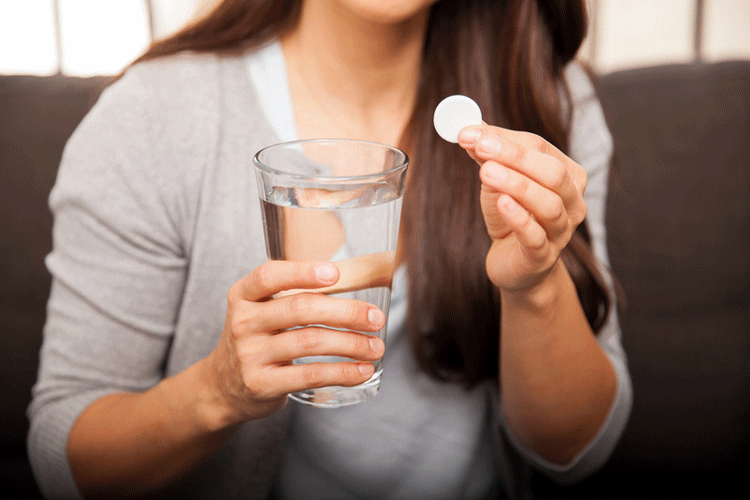
9. Try taking an antacid
Antacids may be taken as liquid or tablets, and can be taken as needed to relieve symptoms. Be aware though, that using antacids for long periods can have side effects such as diarrhoea or constipation.
10. Talk to your pharmacist about over-the counter medicines for reflux
Medicines that suppress the amount of acid made in the stomach can help relieve the symptoms of reflux. Some H2 antagonists (e.g. Zantac Relief) and proton pump inhibitors (e.g. Maxor Heartburn Relief, Pariet 10, Somac Heartburn Relief, Suvacid Heartburn Relief, Salpraz Heartburn Relief, Nexium 24HR Once-Daily Dosing) are available over the counter from your pharmacist, and can be used to treat mild intermittent symptoms of gastro-oesophageal reflux as needed.
What to do if reflux symptoms persist
If none of these suggestions helps, or you are concerned about your reflux, see your doctor.
Your doctor will ask about your symptoms and may suggest prescription medicine for the treatment of gastro-oesophageal reflux. Medication may be sufficient to relieve the symptoms of reflux, however, in some cases your doctor may recommend that you have some tests or that you might need to see a specialist.
Remember, reflux symptoms can often be relieved by self-help measures, especially when the symptoms are mild, but see your doctor if lifestyle changes alone are not helping.
