
Get the answers to some of the most commonly asked questions about menopause.
What is menopause?
Menopause is the time in a woman’s life when her periods stop for good. It’s a natural stage of every woman’s life. Once you’ve reached menopause, your ovaries produce much less of the female hormones oestrogen and progesterone, and you are no longer able to become pregnant.
Doctors define menopause as your last menstrual period. You are said to be postmenopausal when a year has passed since your last period.
A transitional stage, known as the ‘perimenopause‘, can start several years before menopause, during which time women have declining fertility and fluctuating hormone levels. Many of the symptoms associated with menopause, such as hot flushes and mood swings, may be caused by these fluctuating hormone levels.
What age does menopause occur?
Menopause usually occurs between the ages of 45 and 55 years — the average age is 51. However, it can occur earlier or later than this — every woman is different.
If you are a smoker, you may reach menopause a year or 2 earlier than non-smokers. Also, there are certain medical conditions and treatments that can cause premature menopause (menopause before the age of 40) or early menopause (menopause between 40 and 45).
Causes of premature and early menopause include:
- cancer treatments such as chemotherapy and radiotherapy;
- premature ovarian failure, which sometimes runs in families; and
- surgery that involves removal of the ovaries.
If you’ve had a hysterectomy (removal of the uterus) you’ll no longer have periods, but you shouldn’t experience menopausal symptoms if your ovaries are intact. Nevertheless, women who have had their uterus removed may experience menopausal symptoms a year or 2 earlier than expected.
Can you get pregnant while perimenopausal?
While the chances of becoming pregnant during perimenopause are fairly low, it is possible. If you are 50 or older, contraception (birth control) is recommended until a year has passed since your last period. If you are younger than 50, you should use contraception for at least 2 years from your final period.
If you have been taking the oral contraceptive pill (OCP, or ‘the pill’) or using a vaginal ring, you should talk to your doctor about whether this is still appropriate, because it may be associated with health risks when taken after the age of 50. What’s more, you may not realise that you’ve reached menopause, because taking the pill can mask the symptoms. Any oestrogen-containing method of contraception is generally not recommended after the age of 50 years.
And remember, even if you’ve been through menopause, it’s still possible to contract sexually transmitted diseases (STDs). If you have a new sexual partner, consider using condoms to protect yourself.
Do all women get menopause symptoms?
Most women will notice a change in their periods as they approach menopause. Their periods may get shorter, longer, lighter or heavier. They may occur closer together, or further apart. Eventually, periods will stop altogether.
For some women, this change in their periods is only thing they will notice. But most women will also experience at least some additional symptoms around the time of menopause. The type, frequency and severity of symptoms can vary considerably from woman to woman.
What are hot flushes and what can I do to treat them?
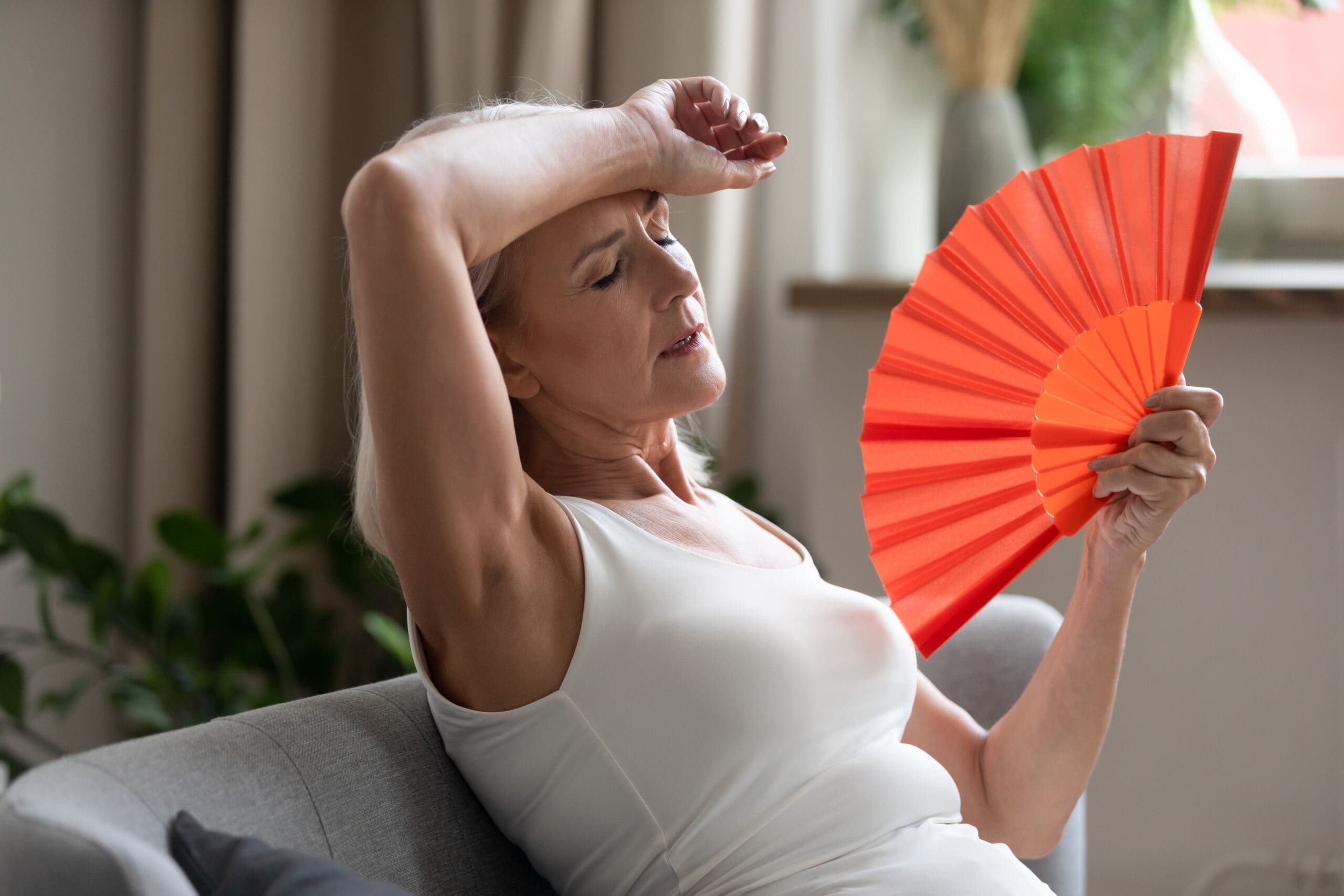
A hot flush is described as a sudden warm or hot feeling that often starts in the chest or shoulders and moves up to the face and neck. They usually last from 30 seconds to about 5 minutes, and can happen during the day or night.
Hot flushes often cause red and flushed skin. You may also experience heavy sweating followed by chills or sweats. Some women have palpitations (an awareness of their heart beating or pounding in the chest) with a hot flush.
To prevent hot flushes, avoid triggers such as alcohol, caffeine, hot drinks and spicy food. If possible, avoid warm environments. Keeping stress to a minimum can also help. Try carrying a hand-held fan or misting spray and wearing layers of clothing that can be easily removed.
Hormone replacement therapy (HRT) – now more commonly known as menopausal hormone therapy (MHT) – can be used to treat hot flushes, and is generally regarded as the most effective treatment. There are also non-hormonal treatments, but they are usually less effective than MHT.
What other symptoms are associated with menopause?
Vaginal dryness can cause pain or discomfort during intercourse, as well as increase your risk of developing a vaginal infection. A water-based vaginal lubricant, vaginal moisturiser or oestrogen cream or tablet can be used to treat vaginal dryness. Maintaining an active sex life can also help with vaginal discomfort because it helps maintain the elasticity of the vaginal walls. And although your libido may decrease, most women who enjoyed an active sex life before menopause continue to enjoy sex afterwards.
Urinary symptoms, including problems with bladder control, a burning feeling when you urinate, and an increased risk of urinary tract infections, are also common. Performing pelvic floor muscle exercises may help if you are having trouble with bladder control. Oestrogen cream can also help.
Some women suffer from mood swings, concentration problems or trouble with their short-term memory, but these symptoms are not always due to hormonal changes – they may also be related to stress and sleep deprivation. Also, some major life changes that often occur around the age of menopause (e.g. death of elderly parents, children leaving home, and retirement) can contribute to you feeling irritable and down.
How long will my symptoms last?
Menopausal symptoms may last from several months to several years – the average is 4-8 years. Menopause symptoms tend to be most severe in the year around your last period.
While some symptoms (such as hot flushes and mood swings) should disappear with time, urinary symptoms and vaginal dryness can continue to be a problem throughout the postmenopausal years.
Does anything make menopause symptoms worse?
Your menopause symptoms may seem worse when you:
- are feeling stressed, tired or anxious;
- drink too much coffee, tea or alcohol;
- smoke; or
- drink hot drinks or eat spicy foods, which can make hot flushes worse.
Will I put on weight around the time of menopause?
Many women put on a small amount of weight around the time of menopause. But this seems to be due to age rather than changing levels of hormones. However, declining oestrogen levels can mean that women tend to put weight on around the abdomen rather than around the hips and thighs.
To keep your weight in the healthy range, keep moving and eating a healthy diet.
What can I do to improve my sleep?
To help get a better night’s sleep, some simple self-help measures may be all that’s needed.
Try to get at least 30 minutes of physical activity each day, but don’t exercise just before you go to bed. Also, avoid caffeine and alcohol in the evenings, because they can disrupt your sleep.
Try not to sleep during the day, and make an effort to go to bed around the same time every night.
How can mood swings be treated?
Lifestyle adjustments such as fitting some physical activity into each day and getting enough sleep can help with menopause-related mood swings. You might also want to try relaxation techniques. If lifestyle changes on their own aren’t enough, ask your doctor about trying further treatments.
Can menopause cause depression?
Depression can affect some women around the time of menopause, but it does not seem to be any more common than in other age groups.
There is no evidence that a fall in your oestrogen level on its own causes depression. However, some women do experience mood swings and irritability, and hormonal fluctuations can make you more vulnerable to stress. Mood swings can lead to sadness and crying for no reason, as well as withdrawing from social interactions in some women.
How do you know if you are perimenopausal?
Usually, a history of typical menopausal symptoms is all that is needed to determine whether you are heading for menopause. Tests are usually not necessary.
A blood test measuring the level of follicle-stimulating hormone (FSH) may be recommended for some women to make sure there isn’t another explanation for their symptoms. This blood test may be recommended for younger women (aged 40-45 or younger) experiencing menopause-like symptoms to check for premature or early menopause. Blood tests may also be recommended for some women who’ve had a hysterectomy if the diagnosis is not clear.
It should be noted that FSH tests do not always give a reliable indication that you are perimenopausal because the decline in the function of the ovaries can fluctuate.
FSH testing is not usually recommended for women older than 45 years.
Are there any treatments for menopausal symptoms?
There are many treatments available to help relieve troublesome symptoms associated with menopause. Sometimes, it can take a bit of trial and error before finding the treatment that works best for you – every woman is different and experiences her own range of symptoms, so a treatment that works for one woman may not work for another. Talk to your doctor, who can recommend the best treatment options for you.
What happens if menopause isn’t treated?
Menopause is a normal part of life, and many women get through this time without treatment. Most symptoms, such as hot flushes and disturbed sleep, decline in time and disappear in a few years. In the meantime, some simple lifestyle adjustments may be all that’s needed to help relieve symptoms.
The decision to start treatment usually depends on how much your menopause symptoms affect your daily life.
What is HRT?
Hormone replacement therapy (HRT), also known as menopausal hormone therapy (MHT) or just hormone therapy (HT), replaces the hormones that your ovaries are no longer producing. It is well recognised as the most effective treatment for many menopausal symptoms. It can help relieve hot flushes, vaginal discomfort, sleep disturbances and mood swings.
HRT/MHT can be taken as a pill, skin patch, implant or gel. There are also intra-vaginal hormone replacement treatments (creams, pessaries or tablets) that specifically treat vaginal symptoms.
Most women need to take combined menopausal hormone therapy – MHT that contains both oestrogen and progestogen (a naturally-occurring or synthetic form of the hormone progesterone). While it’s the oestrogen in MHT that relieves menopausal symptoms, oestrogen taken on its own can increase the risk of developing cancer of the lining of the uterus. (Women who’ve had their uterus removed can take oestrogen on its own.)
Is menopausal hormone therapy safe?
Overall, the benefits of MHT tend to outweigh the risks in most women with significant menopausal symptoms.
MHT may slightly increase the risk of some health problems, including breast cancer, stroke and blood clots. The risks vary according to the type and dose of MHT and how long you take it for. The age you start taking MHT is also important. In general, it should be taken at the lowest dose and for the shortest amount of time, while still relieving symptoms.
If you do take MHT, it’s important to have regular reviews with your doctor (at least once a year) to work out whether you need to continue taking it.
Can all women try HRT/MHT?
Some women should generally not take HRT because of pre-existing medical problems, such as breast cancer, previous stroke or heart attack, blood clots or liver disease. Talk to your doctor about whether or not HRT is a suitable treatment option for you.
There are alternative treatments for menopause symptoms in women unable to take MHT. Ask your doctor if they would be suitable for you.
What are phytoestrogens and can they help treat menopause symptoms?
Phytoestrogens are weak oestrogen-like substances that occur naturally in certain plants. They include:
- isoflavones, which are found in soybeans, chickpeas and other legumes; and
- lignans, which occur in flaxseeds (linseeds), whole grains and some fruits and vegetables.
Phytoestrogens may help relieve menopause symptoms (such as hot flushes) in some women.
Foods that naturally contain high levels of phytoestrogens are nutritious and high in fibre. Even if they don’t relieve your symptoms, they can be eaten as part of a healthy, balanced diet.
Phytoestrogen supplements, including soy and red clover extracts, are also available, but studies have not proven their effectiveness or safety for long-term use. There is some evidence suggesting that these supplements should not be taken by women with breast cancer or women who have had breast cancer. Always check with your doctor before taking any supplements.
What other complementary therapies can help menopause symptoms?
There are claims that several different complementary and alternative treatments relieve menopausal symptoms. However, in general there is little evidence supporting the safety and effectiveness of these treatments.
There is some (limited) evidence that hypnotherapy and mindfulness meditation may help improve certain symptoms such as hot flushes. Therapies such as acupuncture and yoga also have limited evidence proving their effectiveness for the treatment of menopause symptoms. However, there are other health benefits associated with these treatments and they appear to be generally safe.
Vitamin E may have a small effect on reducing hot flushes, and may help with vaginal symptoms when taken by mouth or used as a cream.
There is a lack of good-quality evidence to support the use of herbal treatments such as evening primrose oil, ginseng and wild yam cream. Black cohosh is a herbal remedy that has been reported to relieve hot flushes and improve mood, but there is insufficient evidence for its use, and it has been associated with liver problems in some people (which may be due to contaminants).
Always check with your doctor before taking any alternative treatments, because some herbs and plants have drug-like qualities, and can cause side effects or interact with other medicines you may be taking.
Is it normal to have vaginal bleeding after menopause?
While it’s common to have changes in the frequency and flow of your periods leading up to menopause, you should see your doctor if you experience any bleeding or spotting once you have reached menopause. You may need to have some tests to find out what’s causing the bleeding.
Do I need to keep having cervical cancer screening tests after menopause?
It’s important for women who’ve ever had sex to continue having regular cervical cancer screening tests after menopause, especially since the risk of cervical cancer increases with age.
Pap smears have been replaced by cervical cancer screening with human papillomavirus (HPV) tests. These new tests are generally recommended once every 5 years until the age of 74 years.
