
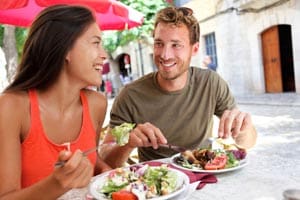
Travellers’ diarrhoea is a fact of life when travelling, no matter how careful you are with food and drink. Between 30% and 70% of travellers experience it, with the risk depending on where and when you travel. However, this is a lot you can do to reduce your chances of getting it and managing the symptoms if you do. You should pay particular attention to the food and drinks you consume to protect against food and waterborne disease.
Which areas are the riskiest?
- High-risk regions for an attack of travellers’ diarrhoea include the majority of Asia, the Middle East, Africa, Mexico, Central and South America.
- Moderate-risk regions include Eastern Europe, South Africa, parts of Asia and some Caribbean islands.
- Low-risk regions include Northern and Western Europe, North America, Australia, New Zealand and Japan.
Who is most at risk?
It seems that you’re more at risk of traveller’s diarrhoea if you are a younger rather than an older traveller. This might be because younger travellers tend to be more adventurous and are more likely to take risks than their older counterparts.
You are also at risk if you have type 1 diabetes, heart failure, advanced cancer, HIV infection or inflammatory bowel disease.
Causes of travellers’ diarrhoea
The most common cause of travellers’ diarrhoea is ingesting food or water contaminated by diarrhoea-causing microorganisms, usually because of poor restaurant hygiene or sanitation. (As local people are repeatedly exposed to these microorganisms, they become immune and so aren’t affected.)
- Bacteria such as E. coli and Salmonella cause 50–80% of attacks.
- Other microorganisms that can cause diarrhoea include viruses such as rotavirus, and protozoal parasites like Giardia lamblia (also known as Giardia intestinalis or Giardia duodenalis) and Cryptosporidium.
Because there are so many different microorganisms that can cause travellers’ diarrhoea, experiencing one bout of illness does not exclude you from experiencing another. This means you shouldn’t let down your guard once you’ve had an attack and should remain vigilant about what you eat and drink.
Symptoms
You may experience nothing more than one or two attacks of diarrhoea a day with no additional symptoms.
If your illness is more severe, you will experience frequent bouts of diarrhoea accompanied by any of the following symptoms:
- nausea and/or vomiting
- abdominal pain and cramps
- fever
- blood in your stools.
Symptoms usually last about 3–4 days and generally resolve of their own accord as your body builds immunity to the organism.
Self-treating travellers’ diarrhoea
Be prepared
There are things you can take with you to combat travellers’ diarrhoea, including antibiotics. It is always a good idea to obtain these before you go travelling to a risky area, just in case. They may not be available at your destination and even if they are, you may not be in a position to venture out and buy them once you become ill.
If heading overseas, pack some over-the-counter medications for diarrhoea, such as Imodium (loperamide) or Lomotil (diphenoxylate-atropine), as well as fluid and electrolyte replacement medicine – also called oral rehydration salts – such as Gastrolyte or Hydralyte.
Indigestion tablets and antacid may also come in handy for an upset stomach caused by unfamiliar foods.
If you are travelling for more than 2 weeks to a destination where the parasite Giardia lamblia is prevalent, also consider obtaining a precautionary prescription for metronidazole or tinidazole from your doctor. You should only take this medication in the event of travellers’ diarrhoea that persists despite taking other antibiotics.
Treating mild illness
For a mild attack of diarrhoea, drink plenty of water from a safe source to avoid dehydration. You can also take oral rehydration drinks such as Gastrolyte or Hydralyte that can help replace lost salt from your body.
Anti-diarrhoeal medicine, such as Imodium or Gastro-Stop (loperamide) or Lomotil (diphenoxylate + atropine sulfate) are medications you can take that help stop the diarrhoea. These medicines can decrease the number of diarrhoeal stools; however, as they work by slowing down the passage of the gut’s contents, they can cause complications for people with serious infections by delaying the expulsion of the infectious agent via the diarrhoea. They should never be used if a person has a fever or bloody diarrhoea, They should never be used in children.
More severe illness
If your symptoms worsen or don’t improve after 24 hours, or your symptoms are more severe in the first place, you can also take a course of antibiotics such as norfloxacin or azithromycin, as prescribed by your doctor. These may help shorten the duration of your illness. Take these in conjunction with the anti-diarrhoeal agent.
Avoid taking anti-diarrhoeal medications like loperamide (e.g. Imodium, Gastro-Stop) if you develop a fever or bloody diarrhoea though. Having diarrhoea is your body’s natural response to help rid it of the infection. By stopping the diarrhoea, you are preventing this, which may prolong your illness.
When to see a doctor
You should seek medical help if:
- your diarrhoea persists for more than 2 weeks, or antibiotics have failed to have an effect. (You may have become infected with a parasite and need further treatment)
- your stools are bloody or very frequent and watery
- your diarrhoea is accompanied by repeated vomiting, fever or chills
- you can’t drink enough fluid to stay hydrated.
Prevention
The best way to prevent diarrhoea is by paying meticulous attention to your choice of food and drink, and by being careful about personal hygiene.
Personal hygiene
- Always wash your hands with soap and water – after going to the toilet and before eating, making sure they are completely dry before you touch food. You can also carry alcohol-based hand sanitisers around with you to wash your hands.
Safe eating
- Avoid high-risk foods like: undercooked meat, fish, shellfish; unpasteurised milk and milk-based products (yoghurt, cheese and ice cream); and raw foods like salads and uncooked vegetables. Eat only food that is fully cooked and served hot.
- Be cautious when eating from salad bars and smorgasbords. Don’t eat food from buffets unless you know that the food is fresh and has been kept either hot (above 60°C) or on ice or refrigerated (below 5°C) and has also been protected from insects such as flies.
- Do not eat food that has been kept at room or outside temperature for long periods or that has been exposed to flies, such as in restaurant buffets, markets and from street vendors.
- Avoid leafy, cold salads as they are hard to clean and ingredients may have been rinsed with contaminated water.
- Fruits that you have peeled yourself should be safe; however, do not wash them in the local water after peeling. It’s best to avoid fruits you can’t peel, like blueberries and strawberries. If you do eat them, make sure you can wash them in clean, safe water first, and dry them thoroughly before eating.
- Vegetables should be cooked or boiled and served steaming hot.
- Meats need to be thoroughly cooked. Undercooked pork, in particular, should not be eaten because of the risk of the parasite infection trichinosis.
- Desserts should be baked and served hot. Condiments, sauces and topping should be consumed only if freshly opened as they can be contaminated if not stored properly.
- Shellfish may cause hepatitis A infection and in areas with ‘red tides’ (algal blooms) may also contain poisonous biotoxins. They should be avoided in developing countries and after ‘red tides’.
- Avoid carnivorous reef fish, which may be contaminated with ciguatera toxin, particularly if fish are large or in a known ciguatera area. This toxin causes a serious gastrointestinal and neurological illness.
Drinking water
- Don’t drink unsafe water – boil it (most effective method), purify it (with pharmacy-bought iodine or chlorine tablets/solutions), or use a reliable filter before you drink it. Alternatively, stick to bottled water. This applies to water for cleaning your teeth and for making ice cubes too. Bringing clear water to a vigorous boil for at least one minute is generally sufficient to eliminate most pathogens, according to the US Centers for Disease Control and Prevention. At high altitudes, however, water boils at a lower temperature so needs to be boiled for longer – at least 3 minutes. Water purifiers, iodine-based tablets or chlorine tablets (available from camping stores) can be used to make water safer; however they may not kill Giardia or amoebic cysts. The use of iodine water-purifying tablets is not advisable if you are pregnant. Bottled water (making sure that it is a named brand and the seal has not been broken) is generally available at most tourist destinations and this should be consumed in preference to local water. Tap water in many areas is not safe.
- Avoid brushing your teeth with tap water.
- Avoid ice in your drinks as it may have been made from untreated water or unsafe local water supplies.
- Watch what else you drink – hot tea and coffee, canned or bottled soft drinks, beers and wines are generally safe to drink, as is boiled milk or milk from pasteurised sources. Raw or unpasteurised fruit juices or iced tea or coffee on the other hand, are best avoided.
- Do your best not to ingest water during water activities and don’t enter water you have doubts about – this includes hot tubs and spas. Not only does this reduce your chances of getting diarrhoea from contaminated water, but it also reduces your risk of getting other illnesses that result from waterborne microorganisms, such as Legionella.
Travellers’ diarrhoea in children
The most important thing you can do if your child develops travellers’ diarrhoea is keep them hydrated. Give them water from a safe source or diluted lemonade, fruit juice or cordial. Children with diarrhoea who show signs of mild dehydration, such as thirst and restlessness, can also be given oral rehydration drinks.
It is best not to give your children anti-diarrhoeal medications without the say-so of a doctor, due to the risk of side effects.
If your baby is no longer breast feeding, baby formula prepared from commercial powder and boiled water is the easiest, safest food source if you are concerned about food safety in overseas countries.
When a child with diarrhoea should see a doctor
You should seek medical help if your child has any of the following symptoms:
- bloody diarrhoea
- dehydration that is moderate or severe
- a fever in excess of 38.6°C
- persistent vomiting.
Seek medical advice if your baby develops diarrhoea while travelling too. Breastfed babies can also be given oral rehydration drinks, and should be allowed to nurse on demand.
Preventing travellers’ diarrhoea in children
The same preventative measures apply to children as well as adults. In addition, for babies and infants:
- Disinfect all water used to prepare infant formula by boiling it, even if the water is bottled.
- Pay scrupulous attention to your hand washing after changing nappies to prevent the spread of infection.
- Be extra careful about cleaning baby bottles, dummies and any toys that fall on the floor or have been handled by others.
- Don’t allow your child to crawl around on the floors or put their fingers in their mouth.
- Be sure to wash your young child’s hands frequently.
