
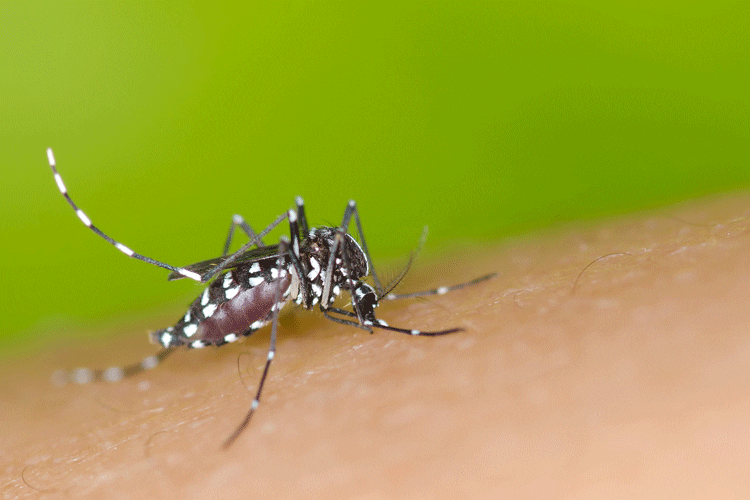
Most people have been bitten by a mosquito at some time in their lives. Usually this causes no more than an extremely itchy swelling which produces discomfort for a day or so. But mosquitoes can be the cause of a number of serious illnesses. Some of the diseases spread through mosquito bites cannot be treated and may produce long-term problems or even death.
Aside from malaria, there are a number of other less well-known diseases spread by mosquitoes. Several of these diseases can be contracted in Australia.
Ross River fever
Occurring widely in Australia, the Ross River virus is spread from animals to humans by several different types of mosquitoes. Although many people infected with this virus have no, or only slight, symptoms, other people may have a fever, joint pain and swelling, tiredness, and a rash. The symptoms can usually clear up in a few weeks, but some people may have symptoms of joint pain and tiredness for many months. There is no specific treatment but medicines may be taken to help relieve the symptoms.
Barmah Forest virus
The Barmah Forest virus is also widespread in Australia and causes a similar illness to Ross River virus infection but the symptoms usually last for a shorter length of time. The virus is spread from infected animals, such as kangaroos, wallabies or possums, to humans by mosquitoes. Again, there is no specific treatment for this infection, but medicines may be taken to help manage the symptoms.
Australia is the only country where Barmah Forest virus has been found.
Murray Valley encephalitis
Murray Valley encephalitis is a very rare disease caused by infection with the Murray Valley encephalitis virus. Encephalitis is swelling / inflammation of the brain tissue. It can cause severe problems in some people and may be fatal.
The disease is spread to humans by the bite of infected mosquitoes. The mosquito responsible is found throughout Australia and is endemic to northern Australia. Water birds, such as herons, are a natural reservoir of the virus.
The disease increases after flooding events, due to increased numbers of the mosquitoes that transmit the virus and migration of infected water birds into flooded areas.
Most people infected with the Murray Valley encephalitis virus do not develop symptoms, but others may have high fever, severe headache, neck stiffness, irritability, seizures (or fits), and drowsiness. Immediate medical advice should be sought if you have these symptoms.
Dengue fever
The mosquito (Aedes aegypti) responsible for transmitting the dengue virus is found in most tropical areas of the world, including north Queensland, Australia. The mosquitoes breed in containers that hold stagnant water and mainly bite during the day, unlike other types of mosquito, which bite mainly at dusk or in the evening.
Every year in Queensland there are outbreaks of dengue fever caused by an infected person returning from overseas with the virus in their bloodstream. If the person is bitten by an Aedes mosquito in Australia, then the mosquito becomes infected and can go on to infect other people by biting them. So, although we don’t have the virus in Australia permanently, we do have the host mosquitoes – and once they are infected they can start an outbreak.
Queensland residents are encouraged to minimise mosquitoes and mosquito breeding in and around their homes.
People infected with dengue virus may have no symptoms, but others may experience high fever, severe headache, muscle and joint pain, rash and extreme fatigue. In rare cases, dengue fever can be severe and even fatal. It is important to seek immediate medical advice if you suspect you have dengue fever.
Japanese encephalitis
Japanese encephalitis is a rare disease caused by a virus that is spread by infected mosquitoes. It cannot be passed from person to person. The mosquitoes become infected after biting an animal host infected with the Japanese encephalitis virus.
Japanese encephalitis occurs in parts of Asia and Papua New Guinea. It is common in rural areas where flooding irrigation is practised, such as rice fields. There have also been cases in the Torres Strait.
Most infected people (99 per cent) have no symptoms, but a small proportion may have severe symptoms, including headaches, high fever, convulsions and coma. Japanese encephalitis may cause permanent neurological damage and even death.
There is no treatment, but a vaccine is available to protect against the infection in people travelling to, or resident in, areas where the virus is found. People who are visiting rural areas for a month or more during the transmission season, or who will be outdoors in rural areas (even for a shorter period) are at greatest risk and should consider vaccination. People who live or work on the outer Torres Strait islands should be vaccinated.
Malaria
Malaria is the most well known mosquito-transmitted illness. It is caused by a tiny parasite that lives inside a mosquito and is spread from person to person when the mosquito bites. It is spread only by female mosquitoes and only females of some types of Anopheles mosquitoes. There are many types of Anopholes mosquitoes, but not all can transmit malaria. Malaria cannot be transmitted from human to human.
We used to have malaria in Darwin, but mainland Australia does not have malaria now. Occasionally there is malaria in the Torres Strait Islands.
The most common symptoms of malaria are fever, headache, nausea, and muscle and joint pain.
People living in, or visiting, places where the Anopheles mosquito is found can reduce the risk of malaria by taking tablets on a regular basis, and employing measures to avoid being bitten.
Zika virus
Zika virus is another virus (along with dengue virus) that is transmitted by the bite of an infected Aedes mosquito. Aedes mosquitoes bite mainly during the day, unlike other types of mosquito.
Most people who catch Zika virus will not have symptoms or feel sick, but around 1 in 5 people who are infected may have mild symptoms similar to flu symptoms, such as fever and joint pain.
For pregnant women, Zika virus carries additional risk, as it can be passed to the unborn baby and cause congenital malformations such as microcephaly – where the baby’s head (and brain) are smaller than expected.
In adults and children, Zika virus can cause Guillain-Barre syndrome – a rare condition that causes weakness and paralysis.
Chikungunya virus
The chikungunya virus is not currently endemic in Australia, but we do have the types of Aedes mosquitoes that can spread the virus, in parts of Queensland and the Torres Strait. Aedes mosquitoes live in and around houses and bite during the day.
The virus occurs in many regions of the world, including some Pacific Islands, Papua New Guinea and South-East Asia.
Symptoms of chikungunya infection include fever and joint pain.
Yellow fever
We do not have yellow fever endemic in Australia, but one of the types of mosquito that can transmit the virus (Aedes aegypti) is widespread in Queensland. Yellow fever is endemic in many African and Central and South American countries.
Yellow fever can be mild, but most infections are serious – in some cases fatal. There is a vaccine for yellow fever, which is almost 100 per cent effective against the virus.
Avoiding mosquito bites
Because there is no specific treatment for many of the mosquito-borne diseases, and few vaccines or medicines available to prevent them, the best protection is to avoid mosquito bites.
How can I protect myself from mosquito bites?
You should take as many precautions as possible to protect yourself from being bitten. Bites can occur at any time. Many mosquitoes bite between dusk and dawn, but some are more active during the daytime, such as Aedes mosquitoes. They can transmit dengue virus, Zika virus and chikungunya virus.
There are a number of things you can do to avoid being bitten by mosquitoes.
- Wear protective clothing; long sleeves and long pants in light colours are best. Mosquitoes are attracted to darker colours.
- Wear covered shoes when outside.
- If possible avoid being outdoors in mosquito prone areas when mosquitoes are biting.
- Try to stay in accommodation that has insect screens over the windows and doors and mosquito netting over the beds.
- Mosquito coils can be burned and offer some protection for approximately 6 hours.
- Indoors, use plug-in mosquito zappers, which release insecticide at low levels for several hours.
- Sleep in air conditioned rooms where possible, as this reduces the risk of mosquito activity.
- When camping, sleep under a mosquito net.
How to use insect repellent
- Treat your clothes and mosquito nets with an insect repellent containing permethrin. Permethrin paralyses and kills mosquitoes if they eat or touch it. It is also toxic to cats. Spray permethrin on your clothing and mosquito nets or soak clothes and bed nets in permethrin wash. It is also possible to buy clothes that have been pre-treated with permethrin. Be careful not to let the clothing touch your eyes and mouth.
- Don’t use permethrin spray designed for fabrics as a personal insect repellent on your skin.
- On your skin, use insect repellents containing DEET (preferably more than 20 per cent) or picaridin. DEET (diethyltoluamide) and picaridin don’t kill mosquitoes but stop them from being able to smell (and so bite) you. Repellents should be applied to exposed areas of skin but be careful to wash your hands after application and do not touch your eyes and mouth. Check which products are suitable with your pharmacist.
- Always read the instructions before use.
- Take special care with children. Adults should apply insect repellent to young children, rather than letting children apply their own. Avoid getting repellent on children’s hands or near their eyes and mouth. Insect repellent is usually not suitable for babies younger than 2 months.
- When using sunscreen and insect repellent at the same time, apply the sunscreen first.
- Don’t forget to reapply your insect repellent as directed.
How can I stop mosquitoes at home?
Removing possible breeding sites around your home, especially if you live in the northern areas of Australia, can help protect against mosquito-borne illnesses.
Measures you can take to reduce mosquitoes around your home include the following.
- Identify any places outside your home and yard where rainwater can collect. Remove any empty containers; tip over and invert buckets and wheelbarrows; and empty pot plant trays.
- Make sure any rainwater tanks and septic tank vents are screened.
- Clean out any blocked gutters.
- Fill in or drain any areas on the ground where water collects.
- Maintain the water in your swimming pool and ensure that it is clean.
- Change water in bird baths at least once per week.
- Flush any unused toilets at least once a week.
How else can I avoid catching mosquito-borne infections?
There are vaccines available against some mosquito-borne diseases, including:
- yellow fever; and
- Japanese encephalitits.
Consult your doctor about whether you should be vaccinated before travel.
Malaria can be prevented by taking anti-malarial medicines while you are in affected areas (and for a period before and after travelling to these areas). Talk to your doctor about anti-malarial medicines well in advance of overseas travel.
