
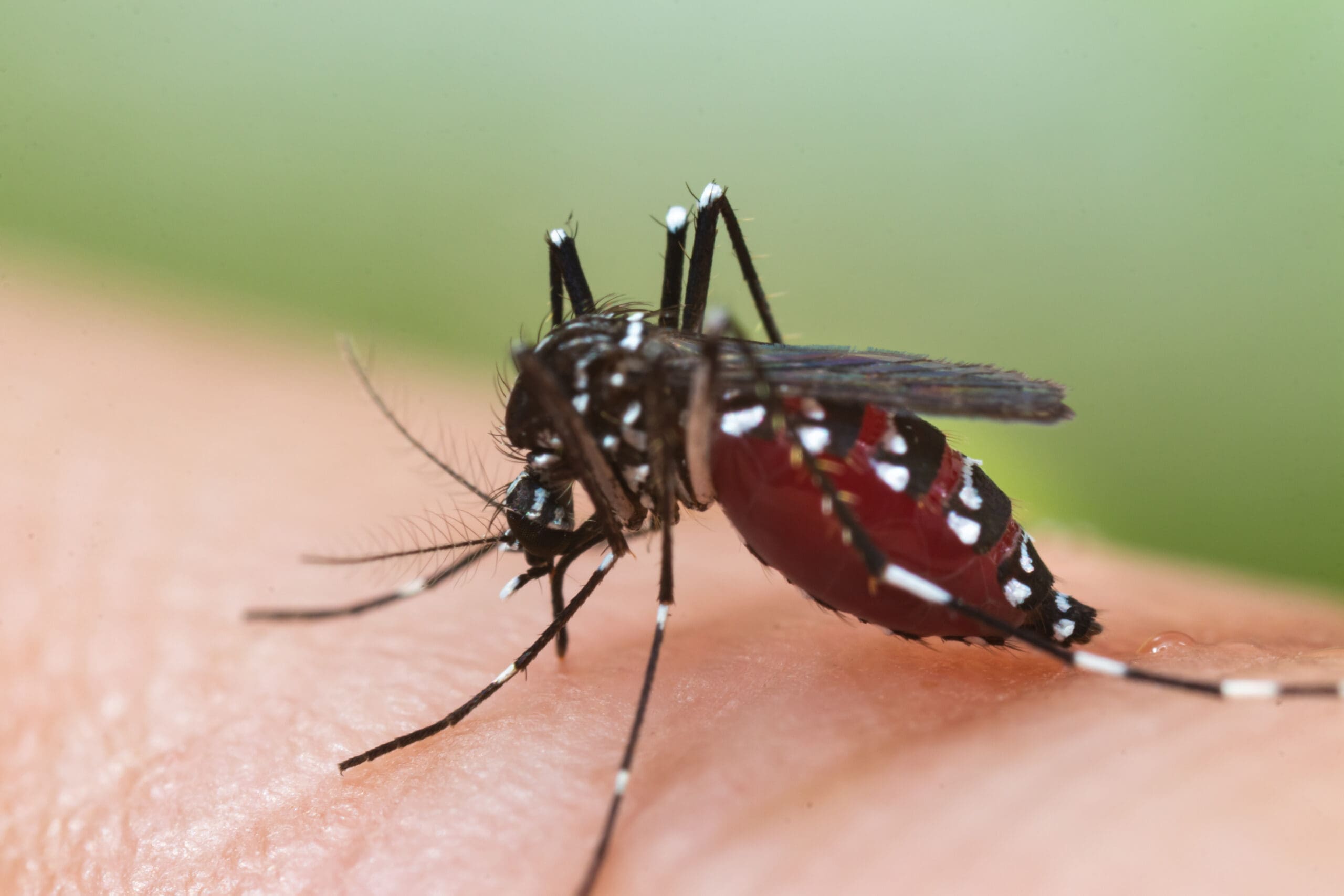
Dengue is a viral infection that is transmitted via the bite of particular types of mosquitoes. It most commonly occurs in tropical and subtropical areas of the world, including the Asia-Pacific, Central American and Caribbean regions. In Australia, there have been outbreaks of dengue reported in northern Australia, particularly in northern Queensland.
Symptoms of dengue
Many people with dengue have no symptoms. When symptoms occur, they typically include:
- sudden onset of fever (lasting 3 to 7 days);
- intense headache and pain behind the eyes;
- muscle and joint pain – particularly affecting the ankles, knees and elbows;
- loss of appetite, vomiting and diarrhoea;
- a metallic taste in the mouth;
- skin rash;
- minor bleeding from the nose and gums; and
- extreme fatigue.
Dengue fever usually affects older children and adults. Symptoms develop within 3 to 14 days of being bitten by the infecting mosquito.
Dengue cannot be spread directly from person to person. However, if a mosquito bites a person with dengue, it can pick up the virus and transmit it to other people.
Diagnosis and treatment of dengue
If you have symptoms you think might be dengue you should seek medical attention. Dengue fever can usually be diagnosed based on physical examination and a blood test.
There is no specific treatment for dengue fever. Non-specific treatments include:
- rest;
- use insect repellent so you don’t spread the disease;
- drink plenty of fluids; and
- take paracetamol to control fever and pain (you should not take aspirin or non-steroidal anti-inflammatory medicines as they increase the risk of bleeding).
In general, most people recover fully from dengue fever within a few weeks, but it can occasionally take several months. Recovery can be complicated by depression and fatigue.
Dengue haemorrhagic fever
Dengue haemorrhagic fever is a rare, severe – sometimes fatal – form of dengue fever, which is most often seen in children under 15 years. Initially it presents in the same way as classical dengue fever, but after a few days there is rapid deterioration and collapse.
In dengue haemorrhagic fever, large bruises often appear on the skin and there can be bleeding from the nose, gums or bowel. Urgent treatment is needed.
Prevention
There is no vaccine to prevent dengue.
In areas where dengue-carrying mosquitoes are endemic, prevention includes protecting yourself against being bitten as well as getting rid of potential mosquito breeding sites.
To protect against mosquito bites:
- Wear light-coloured clothing that covers as much of the body as possible, especially around dawn and dusk when mosquitoes are usually most active. However, note that dengue mosquitoes can bite at any time.
- Kill dengue mosquitoes indoors with surface insecticide. (Dengue mosquitoes typically hide in dark places in and under the house.)
- Use insect repellents containing either DEET or picaridin. (DEET should not be left on the skin overnight, and if the DEET concentration exceeds 20 per cent it should not be used on infants.)
- Use insect screens and mosquito nets.
Dengue-carrying mosquitoes generally breed in stagnant water found in man-made containers (such as discarded tyres, uncovered barrels, buckets and blocked roof gutters), rather than in rivers, swamps, open drains, creeks or mangroves. To eliminate breeding sites, empty any containers that are holding water in and around your home or travel accommodation.
