
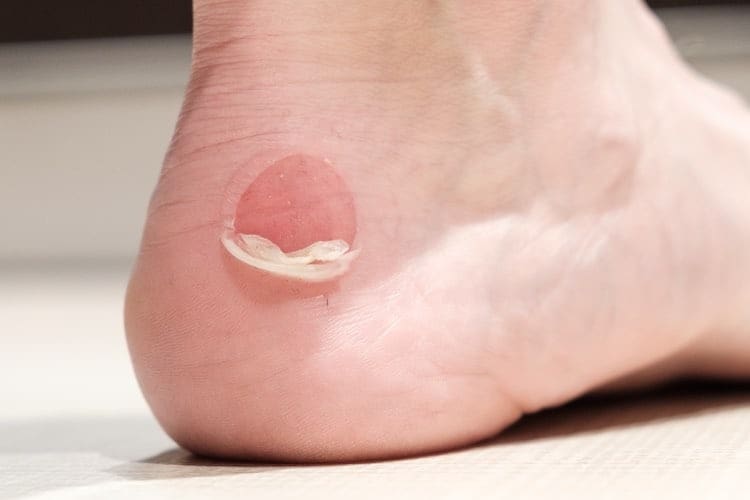
What is a blister?
A blister is a lump filled with fluid that appears when the skin’s outer layer is injured. The fluid forms under the damaged skin and protects the sensitive new skin growing underneath it. While the new skin grows, the body gradually reabsorbs the fluid. The process usually takes 3–7 days. Sometimes the blister breaks on its own.
Doctors sometimes use the terms ‘vesicle’ for a small blister (less than 10 mm in diameter) and ‘bulla’ for a larger blister.
What does a blister look and feel like?
A blister appears as a raised area of skin filled with clear fluid (or occasionally blood). Blisters are usually tender (they hurt when they are pressed).
Common causes of blisters
- Friction.
- Burns and scalds.
- Sunburn.
- Insect bites or stings.
- Viral infection of the skin (e.g. cold sores — caused by herpes simplex virus).
- Bacterial infection of the skin (e.g. impetigo).
- Fungal infection of the skin.
- Contact dermatitis — a reaction to irritants or allergens (substances that can cause an allergic reaction) that contact the skin.
What you can do
- Do not burst the blister. Let it heal on its own to avoid infection.
- Keep the blister and surrounding area clean.
- Cover the blister with a soft dressing if it is in an area that may get bumped or rubbed during the day.
- If the blister breaks, let the fluid drain. Then, wash it with mild soap and warm water and paint it with an antiseptic such as Betadine. Then cover it with a simple non-adherent dressing. Repeat the procedure twice a day to prevent infection.
- Consult a doctor if there is an increase in redness around the blister, swelling, or pus as these are signs of infection.
- You should also see your doctor if you develop unexplained or widespread blistering, or if you feel unwell as a result of the blisters.
What your doctor can do for you
If the blister becomes infected, it may require the following medical treatment.
- Drainage of the pus or fluid under sterile conditions and application of suitable treatment and dressing.
- Antibiotics if bacterial infection is present.
Your doctor may also be able to give you medicines to treat any allergy that may be present.
Preventing blisters
- Wear good-fitting, comfortable footwear and socks.
- Wear gloves if your working tools cause a lot of friction.
- Establish the causes of any skin allergy or irritation (see your doctor for appropraite testing) and avoid these triggers as much as possible.
- Avoid sunburn.
