
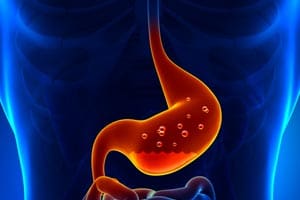
Gastro-oesophageal reflux is a condition where stomach acid (and sometimes other contents of the stomach) washes back up (refluxes) into the oesophagus. When reflux symptoms (such as heartburn) are frequent or severe, or when complications develop, this is known as gastro-oesophageal reflux disease (GORD).
Gastro-oesophageal reflux is common among Australian adults, and it can often be diagnosed based on symptoms and physical examination alone.
Self-help measures and medicines are often recommended before any tests are done. In some cases, simple tests for a type of bacteria called Helicobacter pylori are recommended. (Helicobacter pylori is associated with inflammation and ulceration of the lining of the stomach and duodenum, and infection can cause similar symptoms to reflux.) Testing for H. pylori is less invasive than many investigations for reflux, including endoscopy, and if found is usually easily treated with medication.
If symptoms don’t improve with treatments (and H. pylori tests are negative), tests and investigations for gastro-oesophageal reflux may then be recommended. In people with symptoms that are changing or severe and those with symptoms suggestive of complications, tests (such as endoscopy) may be recommended earlier.
There are several tests and investigations that might be recommended by your doctor to diagnose gastro-oesophageal reflux disease (GORD).
Upper gastrointestinal endoscopy
An endoscopy, or endoscopic examination of the upper gastrointestinal tract (including the oesophagus, stomach and duodenum), is the most common test used to help diagnose GORD. Your doctor may refer you to a gastroenterologist (a specialist in conditions affecting the digestive tract) for an endoscopy.
Having an upper gastrointestinal endoscopy involves a small flexible tube with a tiny video camera on the end (called an endoscope) being gently inserted into your oesophagus and into the stomach. This is done under sedation. You will also be given a liquid local anaesthetic, either to spray on the back of your throat or to gargle.
The endoscopy allows your doctor to see if there is any evidence of GORD, such as inflammation, irritation or ulceration of the oesophagus. Endoscopy can also help diagnose or rule out other conditions such as a stomach ulcer.
During an upper gastrointestinal endoscopy, tissue samples (biopsies) are often taken from the lining of the oesophagus. These tissue samples are sent for microscopic analysis by a pathologist.
In many cases of gastro-oesophageal reflux, the endoscopic examination will be normal.
Oesophageal pH (acidity) monitoring
Oesophageal pH monitoring tests can detect whether stomach acid is refluxing into your oesophagus, causing the pH to drop (stomach acid has a very low pH).
For 24-hour oesophageal pH monitoring, a fine wire is threaded through your nose down into the oesophagus. This wire is usually left in place for 24 hours while you are at home and a small box, which is usually carried on your belt, makes recordings of the pH, or acidity, of your oesophagus.
Wireless oesophageal pH monitoring is another option. This is done using a small probe that is attached to your oesophagus during an endoscopy. The probe remains in place for 48 hours and transmits information on acidity to a recording device that you wear around your waist. You can continue with your usual daily activities during the test. After a few days, the probe will detach from the oesophagus and will pass through your digestive tract to be excreted.
During oesophageal pH monitoring tests, you will be asked to record your food intake, sleep times and any symptoms you experience. The test can help determine whether the acid level in your oesophagus is linked to your symptoms.
An oesophageal pH monitoring test is usually undertaken only if there is an uncertainty about a diagnosis, even after an endoscopy. It can also be a useful test to help diagnose GORD when the main symptom is a chronic (ongoing) cough.
Impedance reflux testing is sometimes combined with 24-hour pH monitoring. Impedance testing can detect the reflux of non-acid or less acidic stomach contents into the oesophagus.
Oesophageal pressure test or manometry
For an oesophageal pressure test, a thin tube with pressure gauges along its surface is inserted through your nose or mouth and down into the oesophagus.
During the test you will swallow small sips of water and the device will measure the pressure in your oesophagus. The device is called a manometer and allows your doctor to determine whether the oesophagus and the sphincter muscle at the end of the oesophagus are functioning normally. (The lower oesophageal sphincter is a ring of muscle at the end of the oesophagus near the stomach. The sphincter helps prevent acidic stomach contents from refluxing into the oesophagus.)
Oesophageal manometry is rarely used in the diagnosis of gastro-oesophageal reflux, but may be recommended if surgery is being considered as a treatment option. It is sometimes also useful in evaluating difficulty in swallowing where other tests have been normal.
Barium meal or swallow tests
Barium swallow and barium meal tests (also known as an upper GI series) are special X-rays of your upper digestive tract.
During a barium meal or swallow, you will drink a thick liquid containing barium, which coats the inside of the oesophagus and stomach, making them show up on X-ray. Gastrografin can be used instead of barium for this type of test.
X-ray images are then taken to show any problems with the oesophagus and/or stomach.
Barium swallow tests can show if the oesophagus has become narrow or ulcerated. Your doctor may also be able to determine whether the muscles that control swallowing are working properly.
Barium meal and swallow tests are rarely performed these days.
