
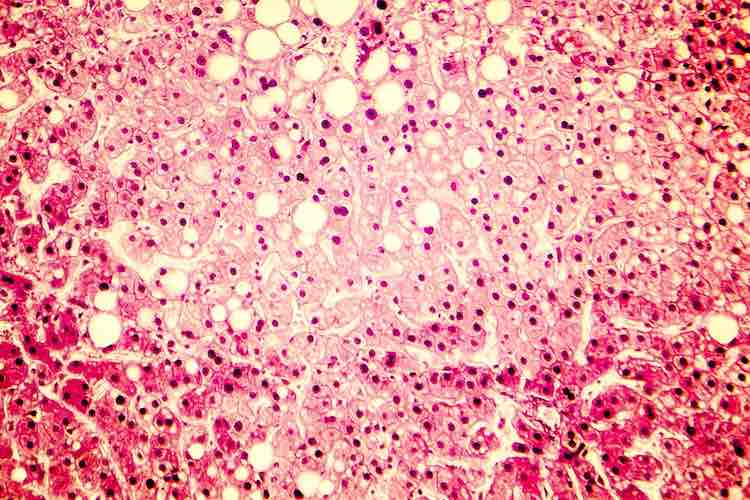
A liver biopsy involves removing a small sample of tissue from your liver so that it can be examined for abnormalities. It is very useful to help doctors diagnose liver problems and to determine the extent of liver damage caused by chronic conditions such as hepatitis and alcoholism.
Liver biopsy provides more detailed information about the health of the liver than a liver function blood test can do and can help diagnose the cause of liver disease. Your doctor may decide to refer you for a biopsy after you have had an abnormal liver function test.
There are 3 ways liver biopsies can be done. These are known as percutaneous biopsy, transvenous biopsy and laparoscopic biopsy.
Liver biopsies are done in hospitals, mostly on an outpatient day-surgery basis.
Before the test
Because a liver biopsy is a (minor) surgical procedure, your doctor may do a blood test before you book in, to ensure you have no bleeding or blood clotting problems. An ultrasound or CT (computed tomography) scan of your liver may be done to help doctors locate a particular area of tissue or abnormality from which the sample will be taken.
Talk to your doctor about any medicines you are taking. Some medicines can put you at a higher risk of bleeding. These include non-steroidal anti-inflammatory drugs (NSAIDs), such as aspirin and ibuprofen, and blood thinners such as warfarin (Coumadin). Your doctor should be aware of this and will advise you accordingly.
You will be required not to eat or drink anything in the 8 hours before the test.
Percutaneous liver biopsy
This is the most common way of doing a liver biopsy. You will be asked to lie on your back or facing slightly to the left, and a tube will be put into a vein in your arm to give you sedative medication. A local anaesthetic will be injected into your skin to numb the area around your rib cage on your right hand side. Then the doctor will make a small incision over the liver and gently insert a special biopsy needle through your skin and between the ribs to the liver. This is often done under ultrasound guidance to make sure the needle is going into the right place.
You will be asked to keep very still and hold your breath for about 5 seconds while a sample of tissue (about 1 mm thick) is withdrawn from your liver. This is to ensure the needle goes into the right place and doesn’t harm any other internal organs.
After the procedure a bandage will be put over the incision and you will need to stay in the hospital for a few hours for observation. This is to enable the effects of the sedative to wear off and to make sure there are no complications before you go home.
Although they are very rare, complications can include:
- leaking of bile into the abdomen, which can cause inflammation of the abdominal lining (peritonitis);
- bleeding from the place where the biopsy needle goes into the liver. This can occur up to 15 days after the biopsy;
- puncture of the lung or gallbladder during the biopsy itself; and
- infection.
You may feel some pain in your upper right abdomen or right shoulder for a while after the biopsy. This pain is usually not serious and can be relieved by paracetamol (don’t take aspirin or over-the-counter non-steroidal anti-inflammatory drugs such as aspirin or ibuprofen because they can cause bleeding). Contact your doctor if the pain becomes worse.
Transvenous liver biopsy
This method may be used for people who have bleeding problems or medical conditions that make percutaneous biopsy dangerous. A catheter (a thin flexible tube) is inserted through a vein in your neck and guided into the hepatic vein (the vein that takes blood from the liver to the heart). The biopsy sample is obtained by inserting a needle into the catheter and so through the hepatic vein and then directly into your liver.
Laparoscopic liver biopsy
This is where a special instrument known as a laparoscope, which allows doctors to view the liver, is inserted through a small cut in your abdomen. The laparoscope is a small tube with a camera on the end. The doctor will use instruments attached to the laparoscope to remove tissue samples from your liver. This technique is useful when the doctor wants to take a biopsy from a specific part of the liver.
If your doctor recommends a liver biopsy, he or she will advise which method would be best for you.
