
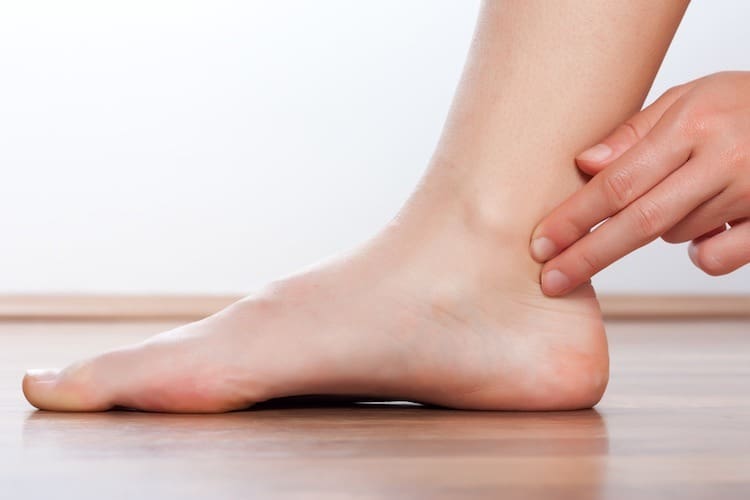

Posterior tibial tendon injury (posterior tibial tendonitis) occurs when the posterior tibial tendon becomes inflamed or torn.
The posterior tibial tendon provides support to the arch of the foot and gives stability when walking. Also known as the tibialis posterior tendon, it attaches the calf muscle to the bones of the inside of the foot. The tendon is located at the back of the leg and passes underneath the inside knob of the ankle bone (medial malleolus) and then inserts onto a small bone in the arch of the foot called the navicular. The posterior tibial tendon helps to invert the foot (turn the foot in). Posterior tibial tendonitis injury may involve inflammation, overstretching, or even rupture of the tendon.
Symptoms of posterior tibial tendon injury
- Pain or tenderness occurs on the inside of the shin, ankle or foot. Pain is usually worse with weight-bearing activity such as walking, but standing for long periods is also often painful.
- Swelling is seen along the course of the tendon towards the foot, which can often be seen as a thick cord when the foot is turned inwards.
- In longstanding cases the arch along the length of the inside foot will gradually collapse, and as this occurs the foot appears to become flat as the ankle rolls in and the toes turn outwards. This is called an acquired flat foot – and is quite different to those in people who are born with flat feet.
- The person will be unable to raise their heel and go onto their tiptoes on the affected side.
Causes
Posterior tibial tendon injury can result from overuse of the tendon or from a specific incident such as a fall. Sudden injuries usually occur in athletes from a distinct injury, but may occur as an overuse injury in people with poor lower limb alignment. Dysfunction usually occurs in older people, particularly women and is progressive. Overuse may be caused by walking, running, hiking, stair-climbing or high-impact sports, such as tennis and basketball.
Diagnosis
Diagnosis is often possible just from the signs and symptoms and a physical examination, but sometimes imaging, such as X-ray, ultrasound or MRI is needed to assess the injury or to rule out other conditions. Your sports doctor or orthopaedic surgeon should perform the appropriate assessment and investigations.
Treatment for posterior tibial tendon injury
Initial treatment may include the RICE regimen:
- rest;
- ice;
- compression; and
- elevation of the affected limb.
Anti-inflammatory medicines are often required to reduce pain and inflammation.
Sometimes a walking boot is needed for a few weeks to rest the tendon. Often wearing a supportive lace-up shoe like a running shoe is helpful to reduce symptoms.
Orthotics to reposition the affected foot and take the strain off the tendon may be required and should be worn in the supportive shoe.
Exercises to strengthen the tibialis posterior muscle can be prescribed by a physiotherapist or sports physician.
If left untreated, this injury may lead to irreversible damage, such as a flat foot, painful degenerative arthritis and mobility problems.
In advanced cases, or those that have not responded to conservative measures after 3 months or more, surgery may be recommended.
Cortisone injections are generally not recommended as they are associated with a risk of tendon rupture.
