
Sunburn is literally a burn to the skin from the sun, however, it occurs more slowly than other types of burns. It is well known that light-skinned people have the highest risk of getting sunburned, but many people do not realise that skin of any colour can be damaged by the sun’s rays.
Sunburn should be avoided where possible as it is damaging to the skin, causing premature ageing as well as increasing the risk of skin cancer. Intense repeated sunburn, especially when young, increases the risk of developing certain types of skin cancers, such as melanoma, in later years.
Symptoms
Symptoms of sunburn include:
- Skin discoloration ranging from slightly pink to severely red or even purplish. Sunburn can appear from one to 6 hours after sun exposure and reaches its peak in 24 hours. It should then start to fade or turn brown.
- The skin feels warm or hot to touch and is tender.
- The appearance of small blisters that are filled with fluid. These may itch and eventually break. This can then cause peeling of the skin, exposing an even more tender layer underneath.
- Severe sunburn may cause very red, blistered skin but will be accompanied by fever, chills, nausea (in some cases vomiting) and dehydration.
- The eyes may experience pain or irritation caused by overexposure to the ultraviolet rays of the sun (always wear eye protection when outdoors).
Causes
Sunburn is caused by the ultraviolet component of the sun’s radiation, mostly the UVA and UVB components. UVB causes the most damage. The intensity of UVB radiation is highest between the hours of 10am and 2pm and peaks at midday, hence avoiding the sun at this time is particularly important. UVB is only partially blocked by clouds, so you can still be burned on a cloudy day.
The sun is not the only source of sunburn: it’s possible to get severe sunburn from solariums. In fact, solariums may emit much higher concentrations of ultraviolet radiation than the sun, and UV exposure from solariums can cause premature ageing of your skin, as well as skin cancer and eye damage. Exposure to UV radiation from the use of sunbeds, or solariums, significantly increases the risk of melanoma, and their use is not recommended. In Australia, solariums are now banned in all States and the ACT. There are no commercial solariums in the NT.
A wide range of medicines can enhance the burning effect of the sun in susceptible people, including some antibiotics, e.g. tetracyclines, NSAIDs, some diuretics, and sulfonylureas. Look for ‘photosensitivity’ listed as a side-effect.
Sun protection and prevention of sunburn
Sunburn is better prevented than treated. Sunscreens alone are not 100 per cent effective in preventing sun-related skin damage. Other essential sun protection includes lip balm with SPF, sunglasses, hats and clothing. Follow these recommended measures to avoid being sunburnt.
Avoid sun exposure in the middle of the day. This is when UV radiation is at its most intense and damaging.
Seek out shade when you can and try to avoid being outdoors in the middle of the day (11am to 3pm during daylight savings time and 10am to 2pm at other times of the year). Remember that surfaces such as water, sand, concrete and snow reflect UV rays – you may end up with sunburn even if you have been sitting in the shade.
Cover up with sunsafe clothing. These should be made of tightly woven fabrics to offer constant sun protection and cover your neck, arms, and cover your legs to below your knees. Some clothes are available with SPF ratings.
Wear a hat. You should always wear a broad-brimmed hat that covers your face, ears and neck when in the sun. Most schools and daycare centres now insist that students wear hats when outside.
Wear sunglasses. These should meet the Australian Standard to protect your eyes from sun damage. Large close-fitting wrap-around styles offer the best protection because they reduce glare and reflected UV radiation.
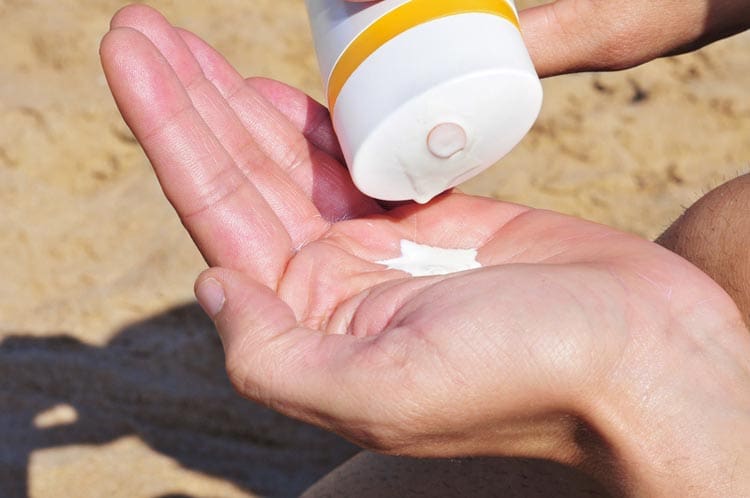
Use sunscreen. Sunscreens with the widest range of UVA and UVB block are called broad-spectrum. UVB is more intense than UVA, but UVA can still burn. Pharmacists stock many brands of broad-spectrum sunscreens and Cancer Council shops have a wide range. You can choose between a physical sunscreen, a chemical sunscreen or a hybrid one – see below for the differences between them. Be careful to use enough sunscreen (follow instructions) and reapply as directed.
Wear lip balm with an SPF. Protect your lips with special lip sunscreens. This will also protect you from the sun reactivating a cold sore on the lips. It is important that you reapply the lip balm frequently, as it tends to be licked off.
UV Index Alerts. The intensity of UV radiation is indicated by the UV Index. There is a SunSmart app (available as a smartphone app or on the SunSmart website as a free widget) that gives the UV Index for different locations in Australia, as well as live UV readings for some locations and UV alerts. The app provides guidelines for when sun protection is necessary and has reminder alerts to reapply sunscreen. Australian experts recommend sun protection for levels of 3 and higher on the UV index. That means that sun protection is needed every day, all year round in most parts of Australia. So, it’s important to make applying sunscreen part of your everyday routine to adequately protect yourself from the sun.
Sunscreens
Sunscreens will only give the claimed level of protection if they are applied generously. In Australia, sunscreens are measured using the SPF rating system, which is always listed on the label. SPF 50+ is the highest – the plus sign indicates that the SPF is significantly higher than 50.
The product label must also indicate if the product is water resistant – and for how long. Many products are water resistant for 2 hours – the maximum water resistance claim allowed is 4 hours.
Don’t use sunscreen that is past its expiry date – the chemicals may have broken down and will not give any protection against the sun. Similarly, don’t store sunscreens in a hot car – as this may make them less effective.
Insect repellents containing DEET may reduce the SPF effectiveness of sunscreen by a third. There are combination sunscreen and insect repellent products, however, it’s not generally recommended to use these combination products, as sunscreen needs applying more frequently than insect repellent.
Chemical sunscreens
Chemical sunscreens absorb the harmful ultraviolet light to protect the skin against sunburn. Because different chemicals have varying profiles of UVA and UVB absorption, a combination of chemicals is usually used in sunscreens. Chemical sunscreens should be applied at least 20 minutes before sun exposure, to make the chemicals — cinnamates, octocrylene and the less commonly used para-aminobenzoic acid (PABA) derivatives — more active on the skin. They need to be reapplied at regular intervals. Some people are allergic to some of the chemicals used in chemical sunscreens.
Physical sunscreens
Physical sunscreens – also known as mineral sunscreens – deflect and scatter UV radiation rather than absorb it. Some of them appear white or milky after applying to the skin.
Zinc oxide or titanium dioxide are the active ingredients used in physical sunscreens. These 2 ingredients are usually included in the form of micronised mineral particles – sometimes they are so small as to fall into the category “nanoparticles”. In Australia at present there is no requirement to declare the particle size of the active ingredients, so sunscreens with nanoparticles won’t be labelled as such. The controversy over nanoparticles centres around whether they penetrate the outer layer of the skin to reach living cells in the deeper tissues. At the moment, the Therapeutic Goods Administration say that the evidence shows the particles remain on the surface of the skin.
Broad spectrum physical sunscreens usually use a combination of zinc oxide and titanium dioxide. Physical sunscreens are usually a better choice for people who have had allergic reactions to chemical sunscreens. They may also be safer for children.
Sunscreens for babies and children
The Australasian College of Dermatologists does not recommend chemical sunscreens are used regularly or widely in young babies. Their skin absorbs more of the chemical than adults. Physical sunscreens labelled for sensitive skin are usually better for children and babies. Look for those which have been dermatologically tested – many brands have a baby or toddler formula.
You can patch test a new sunscreen on a small area of your child’s skin, such as inside the elbow to check for any skin reaction.
In any event, the Cancer Council recommends that infants under 12 months are not purposely exposed to direct sun when UV levels are 3 and above.
Treatment of sunburn
If the skin has reddened and also feels hot to touch it can be treated at home and should heal in a few days. Not many cases of sunburn require medical attention and there are a number of things that you can do to help treat mild sunburn:
- Apply cold compresses or immerse the affected area in cool water.
- Calamine lotion may be applied to itchy areas. This may not be appropriate if your skin is dry — an oily calamine lotion is an alternative. Ask your pharmacist or doctor for advice.
- Apply a moisturising cream or lotion to the affected areas; however, you should avoid salves or butter. Aloe vera gels and lotions can be soothing.
- Drink plenty of water, but avoid alcohol which can dehydrate the skin even further.
- If blistering occurs, lightly bandage or cover with gauze to prevent infection. Do not break the blisters as this will slow the healing process and increase the risk of infection.
- In cases of severe pain or discomfort pain relief such as paracetamol or ibuprofen may be taken.
- Wear loose, soft clothing to avoid irritation of the burned skin.
However, skin that has blistered or is swollen with considerable localised pain is considered to be a first-degree burn and will possibly need medical treatment. Care needs to be taken in this case if the sunburn is accompanied by fever, nausea and dehydration, as this will need medical treatment.
When to see your doctor
See your doctor:
- if the sunburn is widespread and severe;
- if you have severe sunburn with blisters;
- if the sunburn affects an infant under the age of 18 months;
- if the sunburn is accompanied by extreme pain;
- If the sunburn is accompanied by you feeling lightheaded, unwell or you have a headache;
- if the sunburn blisters are accompanied by chills, fever, nausea or vomiting. Medical attention is needed to prevent dehydration and infection;
- if your eyes are extremely painful or feel gritty. You will need to have your eyes checked by an ophthalmologist (an eye doctor) to determine any damage to the eyes. Corneas are particularly susceptible.
- If you have an abnormal amount of sunburn for the amount of sun exposure and are on medicines prescribed by your doctor, as some medicines can cause your skin to burn more easily.
- You should also seek medical advice if your child gets moderate to severe sunburn, as they may need treatment for dehydration, and appropriate skin care.
