
What is restless legs syndrome?
Restless legs syndrome (RLS) is a condition that causes unpleasant or uncomfortable feelings or sensations in the legs, accompanied by an irresistible urge to move the legs around to try to relieve the sensations. Symptoms are usually more noticeable at night when trying to sleep, so sleep is often disturbed in people with RLS.
Restless legs syndrome is also sometimes referred to as Willis-Ekbom disease. There are self-care measures and treatments available for restless legs syndrome that can help relieve the symptoms and restore your sleep.
Symptoms of restless legs syndrome
People with RLS report feeling unpleasant sensations in their legs causing a compelling need to move the legs. Both legs are usually affected but it is possible to experience the sensations in only one leg. Occasionally the arms or other body parts are involved as well.
The symptoms are often described as general uneasiness or discomfort with:
- tingling;
- itching;
- burning;
- crawling;
- cramping;
- tugging or pulling;
- aching; or
- twitching sensations.
Sometimes the sensations are described as being like an electric current.
Symptoms can be mild, moderate or severe, and while they can be felt at any time, they seem to occur more often when sitting or lying quietly and often when trying to get to sleep at night. You may notice symptoms at other times when sitting still, including while travelling (for example, on a plane) or watching a movie.
Symptoms can come and go or change in severity.
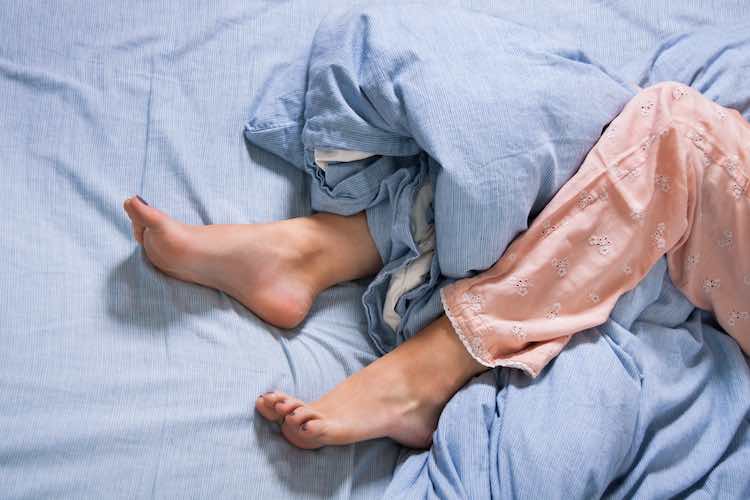
Because the unpleasant sensations are temporarily relieved by movement, people with RLS tend to move their legs around a lot. Movements that may help include stretching, jiggling or walking/pacing around. Tossing and turning in bed is common.
RLS can result in insomnia, usually due to trouble falling and staying asleep.
Causes and risk factors
The exact cause of RLS is not known, but it seems to be associated with the levels of iron and dopamine (a chemical messenger involved in body movements) in the body.
Restless legs syndrome affects about 5 to 10 per cent of people. It’s more common among women and older people, but it can occur at any age.
People with RLS who are otherwise healthy are said to have primary RLS. These people often have a family history of the condition. People with RLS and an underlying condition that may be causing or contributing to their symptoms are said to have secondary RLS.
Conditions that are associated with RLS include:
- iron deficiency and iron-deficiency anaemia;
- pregnancy (usually starting in the third trimester and resolving once the baby is born); and
- chronic kidney disease.
Other factors associated with RLS include smoking, diabetes and obesity. Certain medicines, such as some antidepressants, antipsychotics, antihistamines and anti-nausea medications can also cause RLS or make symptoms worse.
Complications of restless legs syndrome
Insomnia due to restless legs syndrome can result in excessive daytime sleepiness. Daytime tiredness can affect many aspects of your life, including work or school performance, relationships, memory and concentration. Ongoing sleep deprivation can affect your mood and increase your risk of mental health problems such as depression and anxiety.
About 80 per cent of people with restless legs syndrome also have a condition called periodic limb movement of sleep/wakefulness. This condition involves having repetitive movements of the arms, legs and feet that can happen when you are asleep or awake.
Diagnosis and tests
If you have symptoms of restless legs syndrome, make an appointment to see your GP (general practitioner). They will ask about your symptoms, the times when you tend to notice them and how they are affecting your sleep. They will also check if there are any factors (including any medicines you are taking) that could possibly be causing your symptoms or making them worse.
The symptoms of RLS need to be distinguished from arthritis pain, muscle cramps and the numbness associated with a peripheral neuropathy (a problem with the nerves).
There are no specific tests for restless legs syndrome. But your doctor may recommend a few simple tests (such as blood tests to check iron levels) to see if you have any related conditions and to rule out other diagnoses.
Your doctor may refer you to a specialist (such as a sleep specialist or neurologist) for further assessment and treatment for RLS.
Restless legs syndrome treatment
There are several treatments available in Australia that can relieve the symptoms of restless legs syndrome. Among people with secondary RLS, treating the underlying condition can potentially cure the condition. Treatment for primary RLS may involve self-care measures, including ensuring you have good sleep hygiene practices. Medicines may be recommended if other measures have not helped or for severe symptoms.
Treating underlying conditions
Treating any underlying condition that could be causing or contributing to your symptoms can help relieve the symptoms of RLS.
Iron supplements may be recommended to correct iron deficiency, but they are not suitable for everyone, including some pregnant women. Always check with your doctor before taking any supplements.
Self-help
Self-help measures for restless legs syndrome include the following.
- Gently stretching and massaging your legs at least twice daily.
- Taking a warm bath before bed.
- Using warm and/or cool packs to reduce sensations in your legs.
- Avoiding caffeine (or cutting down), especially if you notice it makes a difference to your symptoms.
- Cutting down or avoiding alcohol if you find it aggravates your symptoms. Smoking can also make symptoms worse – giving smokers another reason to quit.
- Getting regular physical exercise. Work out the level of activity that works for you – intense exercise and exercising late in the day can sometimes aggravate symptoms.
Developing healthy sleep patterns (also known as sleep hygiene) can also be helpful in mild cases of RLS. Some aspects of sleep hygiene include establishing a regular bedtime and doing a relaxing and quiet activity before bed, such as a crossword or reading a book. It’s also important to have a comfortable, dark space for sleeping.
Medicines for RLS
If your symptoms are severe and persistent, there are a number of medicines that might help. Your doctor will prescribe medicines based on your symptoms and how frequently you experience them.
For mild or infrequent symptoms, dopaminergic medicines that are more commonly used to treat Parkinson’s disease and other movement disorders may be prescribed. You only need to take these medicines from time to time when symptoms are bothersome.
For more severe symptoms, your doctor may prescribe medicines that are typically used to treat seizure disorders and neuropathic (nerve) pain. Alternatively, dopaminergic medicines approved for the treatment of moderate to severe RLS include ropinirole (brand names Repreve, Appese) and pramipexole (brand name Sifrol) may be recommended. Rotigotine (Neupro Transdermal patch) is another medicine for RLS that is given via a patch applied to the skin.
Dopaminergic medicines may cause side effects such as stomach upset, dry mouth or nausea. Feeling light-headed when you stand up suddenly due to low blood pressure is another common side effect. You doctor should also warn you that occasionally these medicines are associated with behavioural side effects (e.g. obsessive gambling, compulsive shopping, binge eating, hypersexuality).
Augmentation – where the symptoms get worse after treatment, possibly happening earlier in the day – is another possible side effect. If this occurs, your doctor may suggest stopping the medicine for a while or changing to another medicine.
Support
Joining a support group can be helpful if you have restless legs syndrome. Sharing tips on managing symptoms as well as providing understanding and support to each other can make a real difference to how you cope with the condition.
