
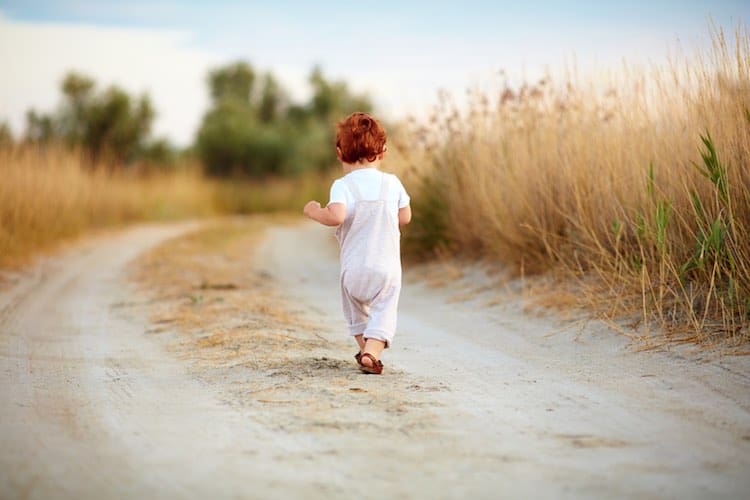
Intoeing, or ‘pigeon toes’, is a common problem in children. Children with pigeon toes have feet that point inwards (instead of straight ahead) when they walk. Parents or carers often first notice that their child’s feet are turned inwards when the child learns to walk.
Most of the time, intoeing naturally corrects itself as your child grows. Even when it doesn’t entirely resolve, and your child still has slightly inturned feet, intoeing usually doesn’t produce serious problems.
Young children with severe intoeing may sometimes trip over their feet when they are walking and some affected children have problems getting shoes that fit because of the curve of their feet. However, having pigeon toes doesn’t cause arthritis or clumsiness, and intoeing should not affect your child’s ability to play sport or participate in physical activities.
What causes intoeing?
Intoeing in otherwise healthy children is usually due to problems with the foot or with the bones in the leg, either above or below the knee. These problems tend to be more common in people with family members who have also been affected.
Foot problems
Some babies are born with a curve in their feet (called metatarsus adductus), probably due to the baby’s position inside the uterus (womb) before being born. This curve usually disappears on its own without treatment.
Leg problems
In some babies and children, the bone in the lower leg (tibia) or upper leg (femur) is not quite straight and has a twist, resulting in intoeing. These conditions are called tibial torsion (inward twisting of the tibia, or shin bone) and femoral anteversion (which leads to inward twisting of the thigh bone).
These problems almost always get better on their own over time (usually by the age of 8-10 years) without needing treatment.
When is treatment needed for intoeing?
Treatment is rarely needed – most cases of intoeing improve naturally over time. However, treatment may be recommended in a small number of children when the intoeing is severe and there is little or no improvement over time, or if intoeing is only affecting one foot.
Treatment may sometimes be recommended to correct severe intoeing due to metatarsus adductus (curved feet). Regular stretching and exercises may help. Occasionally, orthotic shoe inserts or, less commonly, the use of special casts or braces may be recommended to straighten the feet.
In children with intoeing due to femoral anteversion or tibial torsion, shoe inserts (sometimes called shoe inlays, insoles or orthotics), special shoes and leg braces (which have been used in the past) do not speed up the natural resolution of the problem and are not recommended.
In extremely rare cases, surgery may be considered for very severe intoeing that is due to twisting of the femur or tibia (leg bones).
When to see your doctor about intoeing
If your baby’s feet seem slightly turned in, there is usually no need to worry. But if the problem persists or you think the problem is getting worse, seek medical advice. You should also see your doctor if your child has only one foot that is affected, or if your child develops pain or swelling of the feet or legs, or starts limping.
In almost all cases of intoeing, doctors recommend ‘watching and waiting’ because usually pigeon toes gets better on its own.
