
Melanoma is a form of skin cancer. Melanoma starts in melanocytes — tiny cells in the outer layer of skin (epidermis) that give the skin its pigment (colour). Most melanomas arise as a new spot on previously normal-looking skin, rather than from a pre-existing mole.
Australia and New Zealand have the highest rates of melanoma diagnosis in the world.
Melanoma is the most serious form of skin cancer, because if not detected early and removed, melanomas can grow into the deeper layers of the skin, from where they may spread to distant parts of the body, such as the brain and liver.
What does a melanoma look like?
The first sign of a melanoma is usually the appearance of a new spot on the skin, or a change in the appearance of an existing mole or freckle. This change is usually in size, shape or colour. It usually occurs over a period of weeks or months, rather than in a few days.
Melanomas can be a variety of colours, including black, blue, brown, red or sometimes a pale greyish colour. They can also be tan, pink, white or normal skin colour. Their colour is often not uniform, having a ‘patchy’ appearance.
Unlike freckles, melanomas usually have an irregular border. Melanomas are usually flat to begin with but may become raised as they grow.
Melanomas may also cause itching or bleeding.
Melanomas often appear on areas of the skin that have been exposed to the sun, such as the back or legs. Sometimes they also occur in areas of skin that do not see much sun, such as the palms of hands, soles of feet or under fingernails or toenails. Melanomas can also rarely occur in other parts of the body, such as the eye, nervous system, mouth and intestine.
Melanoma risk factors
A number of things put people at increased risk of developing a melanoma, including:
- Exposure to the sun, particularly in childhood. Exposure enough to cause sunburn on more than one occasion increases your chance of developing a melanoma years later.
- Solarium tanning machines can also cause skin cancers, including melanomas.
- Skin type – having fair skin that burns rather than tans, fair or red hair and blue eyes, or having lots of moles increases your risk.
- Family history – having a family member who has had a melanoma increases your chances of getting one.
- Personal history – your risk increases if you have previously had a melanoma or another type of skin cancer.
- Age – the risk of melanoma increases as you get older.
Tests and diagnosis
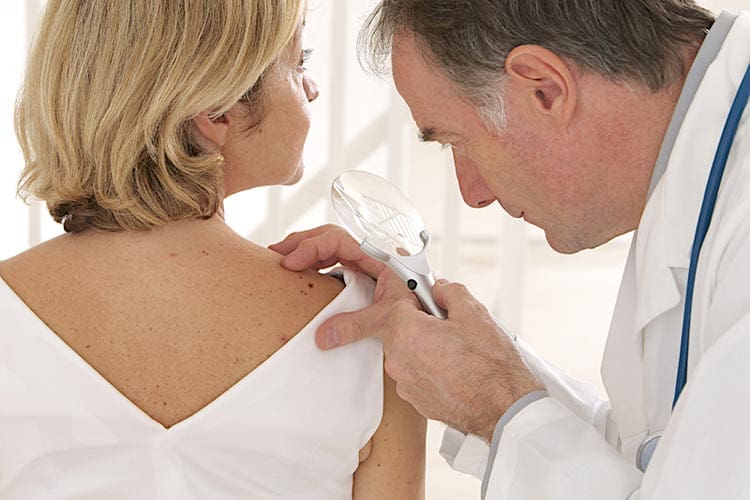
Your doctor will take a history, and ask about any skin lesions that you are worried about. They will perform an examination of the skin and may use a dermascope (an instrument that magnifies skin lesions) for closer inspection.
If your doctor is concerned about the appearance of any mole or area of skin, a biopsy of the area may be recommended. This usually involves removing the whole lesion/mole to be examined under a microscope.
If the biopsy reveals a melanoma, the specimen will also be examined to determine its thickness and how deeply it has spread into the skin layers. In some cases, further tests to examine whether the melanoma has spread to local lymph nodes or to other organs may be recommended.
Treatment
Surgery
Surgical removal of the melanoma and some normal surrounding tissue is the main treatment for melanoma. In many cases, this is the only treatment required.
In cases where the melanoma has spread into the deeper layers of skin or to the lymph nodes near the melanoma, surgical removal of local lymph node(s) may also be recommended.
Other treatments
In cases where the melanoma has spread to the lymph nodes or other areas of the body, further treatments may be recommended.
- Radiotherapy involves using high-energy X-rays to destroy cancer cells.
- Chemotherapy – medicine that destroys cancer cells – can be given via mouth or via a drip into a vein.
- Biological therapy or immunotherapy, is a newer type of treatment that stimulates your immune system to fight the melanoma. Examples include interferon, interleukin 2, ipilimumab (brand name Yervoy) and pembrolizumab (Keytruda).
- Targeted therapy can help treat certain types of melanoma that have genetic mutations. Examples include dabrafenib (brand name Tafinlar), trametinib (Mekinist) and vemurafenib (Zelboraf).
Your doctor may recommend you participate in a clinical trial if you have advanced melanoma.
Outlook
The outlook for those with melanoma depends mainly on how thick (deep) the melanoma is. In turn, this mainly relates to how early the melanoma was detected. If a melanoma is removed when it is less than 1 mm deep, and there is no spread to the lymph nodes or elsewhere, the chances of cure are more than 95 per cent.
Prevention
The best way to protect against melanoma is to reduce exposure to the sun and avoid solarium tanning machines.
This means staying indoors, if possible, in the middle of the day, especially in the warmer months. When you are outdoors, you can protect yourself by keeping to the shade when possible, and by wearing:
- maximum protection sunscreens;
- protective clothing;
- broad-brimmed hats; and
- sunglasses.
Check your skin regularly and see the doctor about any new or changing spot on your skin. It may be recommended that some people see their doctor for regular skin checks.
