
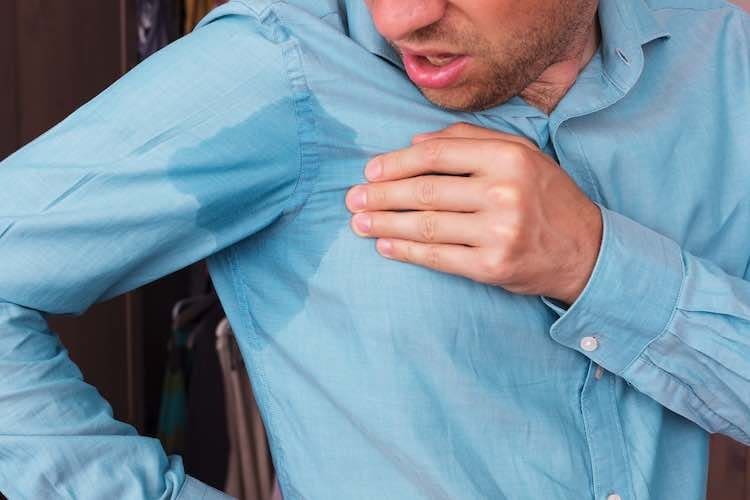
What is hyperhidrosis?
Hyperhidrosis is the condition of excessive sweating. Sweating is your body’s normal mechanism to cool itself, but some people produce more sweat than is needed for cooling – called hyperhidrosis. This condition affects about 2 to 3 per cent of the population.
Hyperhidrosis causes
There are 2 categories of hyperhidrosis – primary and secondary.
Primary hyperhidrosis
In primary hyperhidrosis, the most common type, the cause of the excessive sweating is not known. It often starts in childhood or adolescence and tends to affect the palms, soles, armpits and sometimes the face and scalp. Rarely, primary hyperhidrosis may affect the whole body.
Stress and anxiety can make the sweating worse, and although the condition occurs in both warm and cool climates, it is usually worse at higher temperatures. Many people with primary hyperhidrosis have a family history of the condition. Sometimes hyperhidrosis improves on its own over time.
Secondary hyperhidrosis
Secondary hyperhidrosis occurs when the excessive sweating is due to an underlying medical condition. It may affect the whole body. Some of the possible causes include diabetes, an overactive thyroid gland, obesity, menopause, infections, damage to nerves from disease or injury, some medicines (especially antidepressants) and, rarely, some tumours.
Effects of hyperhidrosis
Excessive sweating can be socially embarrassing. It may stain the clothing. Hyperhidrosis of the soles may not only result in smelly feet, but may also damage footwear. People with hyperhidrosis of the palms are often embarrassed by a cold, wet handshake. They may have trouble using keypads and other electronic equipment.
Excessive sweating can also predispose you to skin infections such as warts and tinea. Certain other skin conditions, including eczema and rashes, occur more often in people with hyperhidrosis.
If you suffer from excessive sweating, you should discuss it with your doctor. He or she can determine whether you need to have any tests for secondary causes, and can also advise you on options for treatment.
Hyperhidrosis treatment
Self-care
Lifestyle remedies that can help to reduce sweating and associated odour include:
- daily bathing;
- wearing clothing and footwear made of natural materials that breathe;
- changing socks often;
- wearing moisture-wicking socks;
- rotating shoes so you do not wear the same pair 2 days in a row;
- going barefoot when possible; and
- avoiding any triggers for sweating (such as spicy food or caffeine).
Antiperspirants
Topical antiperspirants containing aluminium salts may help to reduce sweating, and deodorants may help to disguise any unpleasant odour.
Antiperspirants are available as spray, solution and powder. It’s generally recommended that prescription-strength antiperspirants are applied to dry skin at night, just before sleep, and washed off in the morning. They should be applied daily until there is improvement, and then less frequently. Potential side effects include skin irritation, stinging and burning.
Iontophoresis with tap water
Treatment with iontophoresis may be useful for hyperhidrosis of the palms or soles, and can be tried if antiperspirants are not helpful.
Iontophoresis involves using a special machine that passes a low-voltage current through the skin of the hands or feet via pads moistened with tap water. Therapy takes about 15-20 minutes and initially is required every day, although after a while it is required less often. Possible side effects include skin irritation.
Anticholinergic medicines
Oral anticholinergic medicines such as propantheline (brand name Pro-Banthine) and oxybutynin (brand name Ditropan) may sometimes be prescribed to reduce sweating but can cause side effects such as increased heart rate, problems emptying the bladder, blurred vision, dry mouth and constipation.
Anticholinergic medicine can also be delivered via iontophoresis.
Botulinum toxin
Botulinum toxin type A (Botox) injections have been found to be effective for hyperhidrosis of the armpits. Botulinum toxin stops the sympathetic nerves (which normally control sweating) from stimulating the sweat glands, and the effect may last between 4 and 12 months. Side effects are generally minimal but may include pain at the injection sites and compensatory sweating in other areas.
Botulinum toxin type A injections have also been used for hyperhidrosis of the palms and soles, although this treatment is more complicated. Local anaesthetic is generally required for these injections, and side effects from botox injections to the palms may include temporary weakness of the hand muscles.
Surgical treatments
Surgical treatment for hyperhidrosis is sometimes considered in severe cases where other treatments have not been helpful.
One surgical treatment for hyperhidrosis of the armpits is the removal of sweat glands from the armpits. There are a variety of methods that have been used to remove sweat glands, including liposuction, curettage (a special surgical technique) and laser glandular destruction. Side effects depend on the type of method that is used. There is a risk of relapse with this treatment.
Endoscopic thoracic sympathectomy (ETS) is a procedure that is sometimes used to treat severe hyperhidrosis, usually of the palms, that has not responded to other treatments.
This procedure involves cutting the spinal sympathetic nerves that supply the sweat glands in the arm and hand, and requires a general anaesthetic.
Complications associated with ETS include:
- compensatory hyperhidrosis – excessive sweating elsewhere in the body (this is a common complication);
- relapse after a few years; and
- Horner’s syndrome (a problem that affects one side of the face, resulting in a drooping eyelid, reduced pupil size and decreased sweating on that side of the face).
Because both types of surgery may have complications, which may be severe, it is important to discuss the issues carefully with your doctor and surgeon. ETS in particular is reserved for the most severely affected individuals who are unresponsive to other treatment.
