
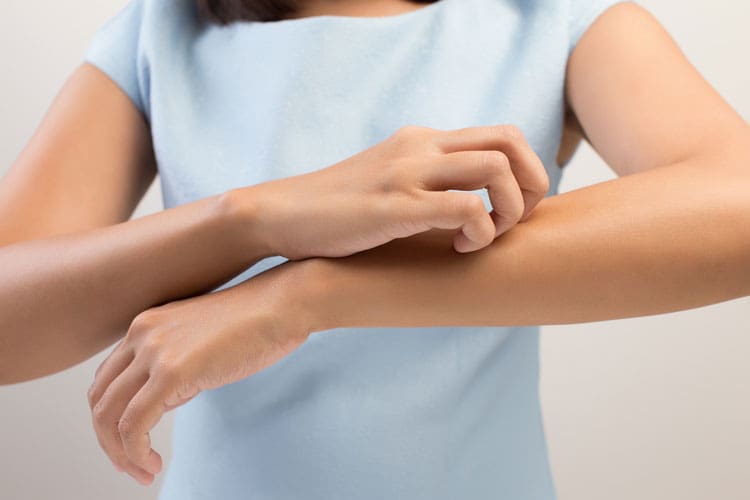
Dry skin is a common problem, especially in older people. While it usually only causes mild discomfort, in some cases it can lead to complications. Dry skin can also be a sign of other conditions or diseases. Medical names for dry skin include xerosis, xeroderma, and asteatosis. If you have any concerns about your skin, ask your doctor or pharmacist for advice.
What is dry skin?
Dry skin is skin that looks and feels dry. Your skin is made up of a number of layers. When you have dry skin, the outermost layer (called the stratum corneum) is dehydrated; that is, lacking in moisture.
Dry skin is not the same thing as dermatitis. While dry skin is simply skin that is dry, dermatitis is skin that is inflamed, causing symptoms such as redness, itchiness and cracking. The 2 main types of dermatitis are contact dermatitis (caused when you come into contact with a substance that irritates your skin) and atopic dermatitis or eczema (a chronic condition that often starts when you are young and involves a mix of genetic and environmental factors).
Symptoms of dry skin
The signs and symptoms of dry skin depend on many factors, including the cause, your age, and your general health.
If you have dry skin, you may notice your skin:
looks dull (not shiny)
- has small lines or cracks in it
- feels rough and dry to touch
- feels tight (especially after its been wet)
- looks scaly
- flakes off in tiny bits.
While any part of the body can be affected, dry skin is particularly common on the shins and the arms.
Causes of dry skin
Many factors can cause your skin to dry out.
Some of the main causes of dry skin are:
- low humidity weather (e.g. during winter and in certain climates)
- heaters, fires and air conditioners (these reduce humidity in the room)
- prolonged or frequent bathing or showering in hot water
- using certain soaps and detergents when you wash (especially those that are heavily perfumed, or antibacterial)
- sleeping with an electric blanket turned on
- exposing your skin to the sun
- putting drying chemicals on your skin, such as alcohol
- abnormalities in some of your skin cells that affect the integrity of your skin barrier, such as inherited problems with structural components of the skin.
Who gets dry skin?
Anyone can get dry skin at any age, although older people (especially those over 60) are particularly likely to have dry skin. However, certain factors can make younger people more susceptible. For example, you may be at risk of developing dry skin if you live in a dry climate, often swim in pools, or work in an occupation that means your skin is often wet.
You may also be at risk of getting dry skin if you:
- are a post-menopausal woman
- have diabetes
- have hypothyroidism (a thyroid condition)
- have chronic renal disease (kidney disease)
- have dermatitis (e.g. atopic dermatitis)
- are malnourished
- are taking certain medications (e.g. diuretics, retinoids, lipid-lowering drugs).
Dry skin that starts in early childhood – sometimes at birth – may be a sign of a disorder called ichthyosis (fish-scale skin). This condition makes the skin look dry and scaly due to the accumulation of dead skin cells on the surface, with the scales often particularly noticeable on the lower legs. The most common type of ichthyosis is ichthyosis vulgaris, which is genetic (inherited) and affects the whole body. If your child has very dry skin, see your doctor for advice.
Complications of dry skin
Complications can develop when you have dry skin. Often this is linked to the fact that healthy skin acts like a natural barrier, whereas unhealthy skin – including dry skin – offers less protection. For example, dry skin can lead to skin infections (if there is a break in your skin, from cracking), overheating and, in some cases, allergies to certain materials (e.g. nickel).
Dry skin can also lead to a skin condition called dermatitis. If your skin is not just dry, but becomes red and itchy as well, this can be a sign that you have developed dermatitis. The dermatitis may be one of several types, such as asteatotic dermatitis (especially if you are elderly), discoid eczema (especially if you wash yourself a lot), or atopic dermatitis.
How is dry skin diagnosed?
Dry skin can be diagnosed by:
- doing a physical examination
- taking a medical history, including when the condition first developed
- asking about activities that may dry your skin out, such as related to your work, or your bathing habits
- asking about any medications you are on, or skin products you have been using
- taking a family history of skin problems (especially if the person affected is a child).
If you have signs of skin problems other than just dryness, the doctor may take a biopsy (a small piece of skin) for laboratory examination. You may also be referred for other investigations to check for any signs of an underlying medical condition, or referred to a dermatologist (skin specialist) for further assessment.
Dry skin treatments
There are several different kinds of products that can help treat dry skin. If you’re not sure which products might be best, ask your doctor or pharmacist about the most suitable products for your skin.
Soap substitutes
Normal soap is very alkaline and can irritate or damage your skin. If you have dry skin, it is best to avoid using standard soaps, shampoos and bubble baths. Instead, use a soap substitute, which is much gentler on the skin. There are several of these available in pharmacies.
Moisturisers (emollients)
While many people are conscious of using moisturisers regularly on their face, they tend to neglect the rest of their body. Moisturisers (also called emollients) help retain moisture and protect the skin from irritants, and can be applied wherever there is dry skin on the body, as often as needed. Emollients are best applied straight after you have washed, while the skin is still warm and damp. It is best to use an emollient without fragrance if you have dry, sensitive skin.
Emollients come in a variety of different forms, including lotions, creams, ointments, bath oils and shower gels. The thicker products tend to have more oil in them, which tends to make them more effective but greasier. If your skin is only mildly dry, a lotion may work fine for you, while if your skin is very dry, you may need a cream or ointment. Generally speaking, the drier your skin, the thicker you should apply the emollient.
Emollients also vary according to their ingredients. Depending on your symptoms, you may choose an emollient that:
- contains humectants (e.g. urea, glycerol, lactic acid) – these help attract and hold water.
- is occlusive – these form a film on top of the skin to stop water leaving
- is antipruritic – these contain ingredients to help stop itching
- is antiseptic – these help protect your skin from becoming infected.
Some products also contain a keratolytic agent – this helps loosens cells on the top layer of skin, exposing the new, soft skin underneath.
Barrier creams
Barrier creams are thick creams designed to form a barrier that shields your skin from water, detergents, and other irritants. These can be useful for people who often have their hands in water or who have contact dermatitis. However, they can make your hands slippery.
Preventing dry skin
Aside from consistently using products such as soap-free cleansers and emollients, there are other things you can do to help prevent dry skin. Some other dry skin self-care tips are listed below.
- Only bathe or shower once a day – no more often.
- Use lukewarm water to wash yourself, rather than hot water.
- If you use bath oil, don’t use it too often, or too much of it (otherwise it can stop the skin producing its own oil).
- After a bath or shower, pat your skin dry rather than rubbing it dry.
- If you use cosmetics (make-up), use ones that are hypoallergenic.
- Wear natural fibres next to your skin, such as cotton.
- If the air in your home is dry, use a humidifier to add moisture to it.
- If you smoke, consider quitting (it dries out the skin)
- Drink plenty of water to keep yourself (and your skin) well hydrated.
When should you seek medical advice?
It’s best to ask your doctor for medical advice if:
- your skin is broken or becomes infected
- your skin is looking red and inflamed
- your symptoms are interfering with your sleep
- you can see white patches or silvery scales on your skin
- your skin is peeling off
- the person affected by dry skin is a child.
If your doctor assesses your condition and believes your dry skin may benefit from medical treatment, options include topical agents (applied directly to the skin like a cream or ointment), including a topical steroid (this can help with itchiness), or a topical calcineurin inhibitor (e.g. pimecrolimus (brand name Elidel)). In other cases you may be referred to a dermatologist for treatment.
