
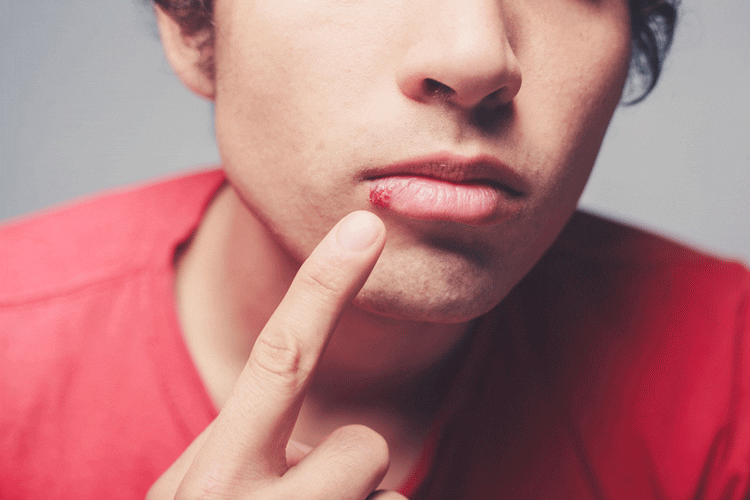
What is a cold sore?
A cold sore is a skin infection that is caused by a virus called herpes simplex virus (HSV). Cold sores usually occur on or around the lips, or nose. Cold sores are common and can affect children and adults. They have nothing to do with colds.
Only people who have been infected with HSV get cold sores. After you are infected, the herpes simplex virus remains in your body forever, and can cause cold sores to recur if you are stressed, tired, or unwell. However, many people never experience any symptoms and many others have only one episode of cold sores.
While there is no cure for cold sores, there are treatments that can help relieve the symptoms, speed up recovery and prevent recurrent outbreaks of cold sores.
How did I get a cold sore?
The herpes simplex virus that causes cold sores is very common and very contagious. In fact, about 90 per cent of adults test positive for the virus. People are most contagious when they have an active cold sore. Most people are infected with the virus when they are young.
Cold sores can be passed from one person to another through skin-to-skin contact. You can also pick up the virus through kissing or sharing drink containers, eating utensils, towels or toothbrushes with someone who has a cold sore.
There are 2 types of herpes simplex virus:
- herpes simplex virus type 1 (HSV-1); and
- herpes simplex virus type 2 (HSV-2).
HSV-1 usually causes cold sores, while HSV-2 usually causes genital herpes. However, both virus types can cause sores on the face and in the genital area. So it is possible to get a cold sore from HSV-2 infection, passed from person to person through direct contact such as from oral sex.
Symptoms of herpes simplex virus infection
Some people develop symptoms 4 or 5 days after being infected with the cold sore virus. Often this first attack (also called the primary episode or primary infection) is very mild and you hardly notice it. Many people have no symptoms at all.
Those who do experience symptoms with the primary episode are usually young children. Symptoms may include:
- painful blisters that break out around and inside your mouth and throat, later forming ulcers;
- feeling generally off-colour (with symptoms such as headaches and muscle aches and pains) for 4 or 5 days;
- swollen and sore gums;
- swollen, painful glands (lymph nodes) under your jaw and in your neck;
- fever;
- sore throat;
- feeling sick (nausea); and
- not enjoying eating.
These symptoms usually improve within a few days in young children. Older children and adults may take up to 2 weeks to get better from a primary infection.
What are the symptoms of cold sores?
After the first attack, the herpes simplex virus spends most of its time dormant (inactive) in the nerves that go to the skin or eyes. From time to time, a trigger will activate the virus and it travels down the nerve to the area around the mouth where it causes the characteristic spots and blisters. Most people only have one or a few attacks, which are usually mild, involving the development of a cold sore (without other symptoms). It is less common to have regular, painful attacks of cold sores.
People who have cold sores often describe various stages of cold sore development.
- The first sign that a cold sore is on the way is tingling, burning, itching, or pain in the spot where the cold sore is developing, usually around the lips or mouth. These symptoms may last hours or days. Doctors call this the prodromal stage.
- As the cold sore becomes visible, small red spots and fluid blisters appear.
- The blisters usually merge together into what looks like one cold sore, and later become dry and crusty when the blisters have broken.
- Cold sores usually clear up within 7-10 days, and do not leave a scar.

Triggers for cold sores
Some people who have been infected with the herpes simplex virus have occasional or regular outbreaks of cold sores, due to the cold sore virus being reactivated.
There are several things that can trigger an outbreak of cold sores, including:
- exposure to sun or wind;
- minor injuries or surgical procedures involving the affected area;
- having your period;
- stress;
- alcohol;
- being run-down; or
- colds, flu or fevers that make the body less able to fight off infection.
Sun exposure is a common trigger for cold sores, so sun protection (including using lip balm containing sunscreen) is recommended to reduce the risk of recurrence.
Cold sore diagnosis
It is usually possible for your doctor to be able to diagnose cold sores based on their appearance and your history of symptoms.
In some cases, your doctor may recommend taking a sample of fluid from the cold sore to send to a laboratory to test for the herpes simplex virus and confirm the diagnosis.
What makes a cold sore better?
Cold sores usually get better on their own within 7-10 days. The following self-care tips can help treat the symptoms of cold sores.
- Resist the temptation to lick, poke or prod at the area.
- Keep the cold sore dry and clean so it doesn’t get infected. If it gets infected, see your doctor.
- Put ice wrapped in a damp, clean cloth on the sore to relieve symptoms of pain or itching.
- Avoid acidic food such as grapefruit or lemons.
- Protect your skin from sun and wind.
Cold sore treatments
Treatment for cold sores involves treating symptoms of pain and discomfort, as well as giving antiviral medicines to reduce the length of time the sores last. Antiviral medicines are sometimes recommended to prevent recurrent episodes of cold sores.
Primary herpes simplex virus infection
If you have symptoms associated with the primary infection (such as fever and sore throat), you should make sure you drink plenty of fluids and treat pain and fever with oral pain relievers such as paracetamol.
To help relieve the pain and discomfort associated with the mouth sores and ulcers, your doctor or pharmacist may recommend you use a local anaesthetic gel, such as lidocaine (lignocaine).
In severe cases, your doctor may recommend taking an oral antiviral medicine (tablets), which can help speed up recovery.
Recurrent cold sores
Antiviral medicines can help cold sores heal faster. Antiviral medicines for the treatment of recurrent cold sores are available as creams (available over-the-counter from pharmacies) and tablets (available on prescription or from the pharmacist).
Mild episodes of cold sores are usually treated with antiviral creams, such as aciclovir cream (brand names include Zovirax Cold Sore Cream, Blistex Antiviral Cold Sore Cream, Nyal Antiviral Cold Sore Cream).
Antiviral creams are most effective if started very early in the attack (as soon as you feel the tingling or itchiness starting). If you get recurrent cold sores it’s a good idea to have antiviral treatment ready so you can use it at the first tingle, because antiviral creams are less likely to be helpful once the blisters have started to appear.
Oral antiviral medicines (tablets) are usually only recommended if the cold sore symptoms are severe.
Oral antiviral medicines available in Australia for the treatment of cold sores include:
- famciclovir tablets (brand names include Ezovir, Ezovir Cold Sore Relief, Famvir, Famvir for Cold Sores); and
- valaciclovir tablets (brand names Valtrex, Zelitrex).
Treatment with antiviral tablets should be started within 48 hours of symptoms appearing.
If you have frequent, severe recurrent attacks of cold sores your doctor may prescribe an oral antiviral medicine to be used in the longer term, in an effort to suppress the herpes virus from reactivating.
Antibiotics may also sometimes be needed if the cold sore gets infected with bacteria.
When should you seek medical advice about cold sores?
Some cold sores cause more severe symptoms and are more likely to result in complications than others. Having certain pre-existing conditions can also increase your risk of having severe cold sores or complications associated with cold sores.
See your doctor or pharmacist if:
- you are not sure that the sore is a cold sore;
- you have a cold sore that is not healing; your cold sore is spreading or covers a large area (as big as a 10 cent piece);
- you have more than one cold sore;
- your cold sore is crusty and has pus, as this is a sign of a secondary bacterial infection;
- your cold sore has spread near your eyes or your eyes are irritated;
- a young child has cold sores;
- you have persistent or frequently recurring cold sores;
- you also have eczema (atopic dermatitis); or
- you have cold sore symptoms and your immune system is weak (e.g. you have HIV, are receiving cancer treatment or have had an organ transplant).
Protect yourself and others from cold sores
When you have a cold sore:
- Change your toothbrush and towels regularly and don’t use those belonging to other people.
- Don’t share eating utensils, towels, make-up or razors, and don’t kiss anyone, particularly babies and children, as cold sores can cause much more severe symptoms for them.
- Wash your hands frequently and avoid rubbing your eyes to stop the virus spreading. Remind children with cold sores about this.
- Try not to touch your cold sore unless applying cold sore cream, and always wash your hands before and after applying cream.
How to prevent a cold sore
If you have specific triggers for cold sores, avoiding your triggers as much as possible can help prevent a cold sore developing. Sun exposure is a common trigger, so being sun safe and applying sunscreen or a lip balm that contains sunscreen to the area usually affected can help prevent cold sores developing.
Stress can also trigger cold sores in some people. Finding a way to relax and stay calm, such as meditation, may help reduce the frequency of cold sores. Talk to your doctor if you are feeling stressed.
If you have frequent, severe cold sores or you are at risk of complications from cold sores, your doctor may recommend you take regular antiviral medicines to help prevent further episodes of cold sores.
