
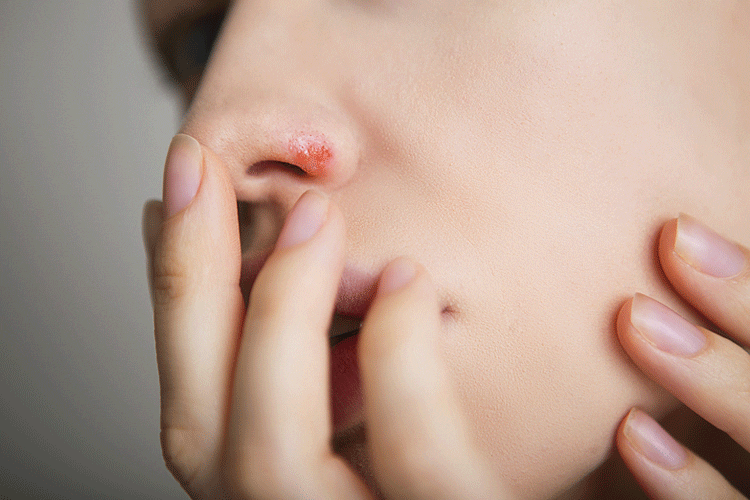
Q: Why do I get cold sores, but other people don’t?
A: Cold sores are caused by a virus called herpes simplex virus (HSV). Even though about 90 per cent of adults have been infected with HSV at some time in their lives, not everyone gets cold sore outbreaks.
Doctors think the reason why some people have cold sores that tend to come back is due to a genetic mutation which affects the immune system, making them more prone to developing recurrent cold sores.
It is also known that being stressed, run-down or unwell can trigger cold sores in people infected with the virus.
Q: Can I pass cold sores to my children or baby?
A: The short answer is yes. The cold sore virus can be passed from one person to another, mainly through skin-to-skin contact. You are most contagious when you have an active cold sore, but cold sores can be spread even when there are no blisters.
To avoid passing the cold sore virus to babies, children or other family members, follow these tips:
- avoid touching the area with the cold sores;
- avoid kissing when you have a cold sore;
- don’t share towels, drinks, utensils, make-up or toothbrushes with others; and
- wash your hands frequently when you have a cold sore.
Consider taking medication to shorten the cold sore outbreak.
Q: Is it OK to breast feed when I have cold sores?
A: Breastfeeding is fine when you have cold sores. The herpes virus is not transmitted through breast milk, but you could infect your baby or infant through skin contact, so follow the precautions above.
Q: Why do I get cold sores when I go to the beach or to the snow?
A: Sun exposure is the most common trigger in people who get recurrent cold sores. UV radiation from the sun suppresses the immune system – and this allows the cold sore virus to reactivate.
UV radiation is extremely high at the beach and also at the snow (because UV radiation is very intense in alpine regions and sunlight also reflects off the snow).
Make sure you wear plenty of sun protection, including lip balm and sunscreen with a very high SPF (sun protection factor) to protect yourself from both sunburn and cold sores.
Q: Can my cold sores give someone genital herpes?
A: Cold sores and genital herpes are both caused by herpes simplex viruses.
Cold sores (which affect the lips and nose) are usually caused by herpes simplex virus type 1. Genital herpes (a sexually transmitted infection causing sores in the genital area) is usually caused by herpes simplex virus type 2. However, it is possible for either virus type to cause sores to develop on either the face or the genital area.
So it is possible for someone with cold sores to pass the herpes virus to the genital area of another person through skin-to-skin contact, such as through oral sex.
Q: How long does a cold sore last?
A: Cold sores tend to get better on their own in about 7-10 days. Taking an antiviral medicine (either a cream or tablets) at the first sign of a cold sore developing can help speed up the healing process.
If you get cold sores, it’s a good idea to have some cold sore medicine at home. Start using the medicine whenever you have symptoms of a cold sore developing (such as tingling, itching or pain in the area you normally get cold sores). This helps your cold sore heal faster.
Q: Is there a cure for cold sores?
A: Unfortunately there is no cure for herpes simplex virus, which causes cold sores. Once you have been infected, the virus remains in your body forever. This virus mostly remains dormant (meaning it is not active) but it can be reactivated from time to time, causing recurrent cold sores.
But it’s important to remember that most people with HSV infection have only one or a few episodes of cold sores in their lifetime. And for those who have recurrent outbreaks of cold sores, avoiding triggers can reduce the frequency of attacks. Antiviral medicines can also be taken to reduce the frequency of attacks, speed up healing and reduce symptoms when cold sores do occur.
