
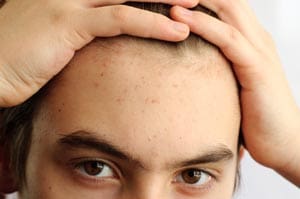
Acne is a very common skin problem that usually happens in your teens. When you have acne, your skin gets greasy, its pores get blocked and you get blackheads, pimples and sometimes cysts. Acne is mainly seen on the face, neck, back, chest and shoulders.
Acne occurs most often around puberty, but can start in childhood – from as young as 8 years of age. Acne can also occur in infants, but it is usually only mild. It tends to be more severe in males than females. Acne usually improves by the time you are in your early-mid 20s, but can continue (especially in women) into your 30s and 40s.
While some adolescents are not bothered by acne, others may become shy, lose self-confidence and even become depressed. But there are treatments available to help control acne, prevent new breakouts and reduce scarring. See your doctor if you are worried about the appearance of your skin or if your acne is not improving with self-care measures and over-the-counter treatments.
What causes acne?
In their teens, both young men and young women have more male hormone (testosterone) in their bloodstream. Increased sensitivity to this hormone makes the sebaceous glands at the bottom of the hairs on your face, back or neck produce too much sebum (an oily, waxy substance), which then gets clogged (along with dead skin cells) in the pores. This can cause whiteheads and blackheads to develop.

Bacteria can also grow in the blocked glands and cause inflammation. This can result in yellow pus-filled spots or deep cysts.
Acne is very common in teenagers and more so in some families.
Some people are more sensitive to testosterone: acne does not usually mean the levels of the hormone in your blood are too high. However, in some girls and women with severe acne, this can be the case – if acne is associated with certain other symptoms, such as excess male pattern hair growth, being overweight and having irregular periods, it could be related to polycystic ovary syndrome (PCOS).
Acne symptoms
Acne can result in several different types of skin lesions.
Lesions not associated with inflammation include:
- blackheads (also called open comedones) – open pores clogged with sebum (skin oil) and dead skin cells; and
- whiteheads (also called closed comedones) – closed pores clogged with sebum and dead skin cells.
Inflammatory lesions include:
- papules – small, tender, red skin bumps;
- pimples (also called pustules) – small, tender, red skin bumps with pus at the tip;
- nodules – painful, hard lumps beneath the skin’s surface; and
- cysts – inflamed, painful, pus-filled lumps beneath the skin’s surface due to inflammation deep in the hair follicle.
Your doctor can diagnose acne by examining your skin and identifying the different types of skin lesions. Comedones (blocked pores) as well as pimples and papules should be present to make a diagnosis of acne. Acne that includes inflammatory cysts is sometimes called cystic acne.
What can make acne worse?
There are several things that can aggravate acne, including the following:
- Hormonal changes in women associated with your menstrual cycle (often resulting in acne breakouts around the time of your period).
- Being stressed.
- Taking certain hormonal contraceptives. Progestogen-only contraceptive pills and devices, as well as combined oral contraceptive pills (‘the pill’) that have a high dose of levonorgestrel tend to aggravate acne. (Talk to your doctor if you are using a hormonal contraceptive that is making your acne worse – there are several formulations of oral contraceptives that can help reduce acne.)
- Taking some medicines, such as corticosteroids, lithium and some anti-epilepsy pills. Anabolic steroids can also aggravate acne.
- Being in humid environments, including saunas, and working in hot, humid places or with oil and grease (for example as a chef or barista).
- Using oily cosmetics, creams, lotions or sunscreens. (If you are prone to acne, it’s best to use water-based, oil-free products.)
- Certain foods. Some studies have indicated that carbohydrate-rich foods, dairy products, and possibly also chocolate may make acne worse. However, more research is needed to determine the relationship between food and acne. Special diets are not recommended for people with acne, but if you think a specific food might aggravate your acne, you can try avoiding it. However, always make sure you eat a balanced, healthy diet.
Acne treatments
There are several treatments for acne, and the best treatment for you will depend on how severe your acne is and how much it bothers you. Your doctor can help you choose which treatment is best for you. A combination of products may be recommended.
Treatments are aimed at reducing sebum production, unblocking pores and reducing inflammation.
Self care for acne
Gentle regular cleaning may help improve acne, but avoid excessive scrubbing. Acne is not infectious (catching) and cannot be ‘scrubbed away’ by keeping the skin excessively clean. Use a mild soap or face wash twice a day – special soaps and shampoos are not necessary.
Also, try to leave your skin alone as much as you can. Taking out blackheads is not recommended, and try not to pick or squeeze pimples: it can make the inflammation worse and cause acne scars.
If you wear make-up, make sure you use oil-free cosmetics that won’t block your pores. Remove make-up before going to bed, and make sure you regularly clean make-up brushes and other applicators with simple soap and water.
Topical treatments for acne
There are a variety of treatments that you can apply directly to the skin (called topical treatment) for acne. Most of these topical treatments should be applied to the whole area of skin that is affected by acne, rather than just to the pimples/lesions themselves. If you are in doubt, check with your doctor or pharmacist about how to apply your acne medicine.
Side effects (such as skin redness and dryness) can occur with these treatments, but they often settle after a few weeks. Also, remember that it may be several weeks before topical treatments have had any noticeable effect on your acne.
Benzoyl peroxide
You can buy benzoyl peroxide treatments over the counter without a prescription. Benzoyl peroxide is often recommended as an initial treatment for mild acne.
Benzoyl peroxide cream or gel gets rid of some of the bacteria on the skin and reduces inflammation. It makes the top layer of skin peel off, unblocking the pores. It can help if you have a lot of blackheads but may irritate your skin.
Take care in the sun as you may burn more easily than previously. Your pharmacist can show you how to use this treatment properly to minimise the risk of skin irritation.
Benzoyl peroxide is often used in combination with an antibiotic formulated for use on the skin and prescribed by your doctor. It is available in a variety of strengths; you should start with the weaker ones.
As with all creams, it is wise to start with a ‘test patch’ first so if you do get a reaction it is confined to a small area. You should also rinse the benzoyl peroxide cream off one hour after the first use, building up this time over a few days until you can use it overnight.
Salicylic acid
Anti-acne preparations containing salicylic acid can be used to help unblock pores.
Retinoids
Your doctor may prescribe synthetic vitamin A-based (retinoid) creams or gels, which can remove dead skin cells from the skin’s surface, unblock pores and prevent re-blocking of pores. They can also reduce inflammation. They can be very irritating, so spread only a small amount very thinly on your face, no more than once a day.
They may make your acne worse at first, but it should improve after a few weeks. Take care in the sun as you may burn more easily than previously.
You should not use these products if you are pregnant, planning a pregnancy or there is any likelihood of you becoming pregnant. These products also should not be used if you are breast feeding.
Azelaic acid
Azelaic acid lotion or gel helps remove dead skin cells and reduce inflammation, and is usually put on twice a day. If it irritates your skin, use less or use only once a day.
Talk to your pharmacist before using azelaic acid if you may be pregnant or are likely to become pregnant while using this medication.
Topical antibiotics
Antibiotic liquids or lotions can help if you have inflamed or pus-filled spots. They do not help blackheads or whiteheads. They reduce inflammation and are applied once or twice a day to affected areas. The liquid can be very drying.
Topical antibiotics include clindamycin and erythromycin.
Oral medicines
Your doctor may recommend you take oral medicines for the treatment of acne if topical treatments alone are not effective or you have moderate to severe acne.
Antibiotics
Antibiotic tablets can help by reducing inflammation, and can be used long-term if effective in controlling acne. Possible antibiotic choices include doxycycline, minocycline or erythromycin.
Your doctor may not prescribe antibiotics if:
- you are under 12 years (some antibiotics may discolour your teeth);
- you are pregnant or there is any likelihood of your getting pregnant (some antibiotics can harm the baby); or
- you are taking the contraceptive pill (it may make it less effective).
Hormonal treatments
Hormonal treatments can be used to treat acne in women and teenage girls. These treatments help reduce sebum production in the sebaceous glands in the skin by acting against circulating male hormones (androgens). Hormonal treatments include:
- the oral contraceptive pill (there are several formulations of oral contraceptives that are especially useful in the treatment of acne); and
- spironolactone (an anti-androgen medicine).
Oral contraceptive pills and spironolactone should be tried for 6 months initially.
Complementary therapies
There are some complementary treatments, such as zinc and tea tree oil, that have been tried for the treatment of acne. Further research is needed to establish the long-term safety and effectiveness of these treatments.
Specialist treatment
If you have moderate to severe acne, cystic acne or acne that is not responding to other treatments, your doctor may refer you to a skin specialist (dermatologist). The dermatologist may prescribe a medicine called isotretinoin, but this treatment must be used very carefully as it is associated with serious potential side effects.
Your dermatologist may also be able to recommend treatments to reduce any acne scarring you may have.
What happens if acne isn’t treated?
Acne usually gets better over time, although some people can still have problems into their 30s and 40s. Those with severe, untreated acne may be left with scars. A variety of cosmetic medical techniques may be effective for those left with severe acne scars. Treatments for scarring may include laser treatment, dermabrasion and cosmetic surgery.
Other conditions affecting older people may look like acne but they are not. So if you seem to be developing acne for the first time after your 20s, check with your doctor.
