
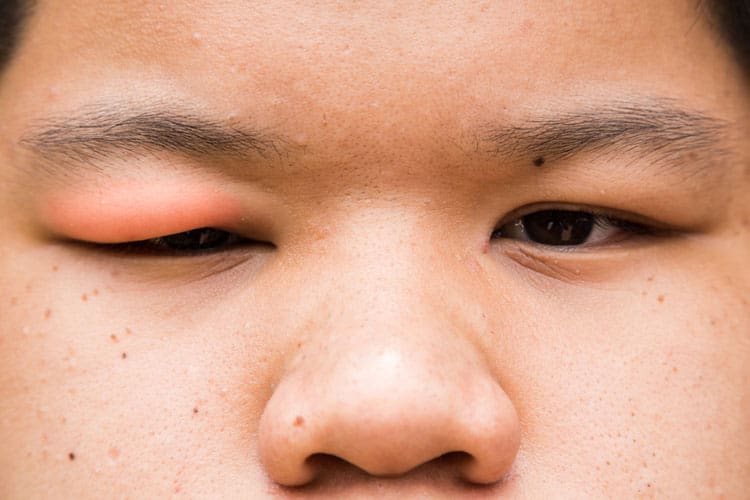
A stye is a small, pimple-like swelling or lump on the eyelid, usually near the eyelashes. A stye usually only affects one eye, and often goes away by itself without treatment.
Styes are caused by bacteria and are a type of abscess. The medical term for a stye is a hordeolum. If you have a stye on the outer edge of your eyelid, it is called an external hordeolum, and if the stye is inside your eyelid, it is called an internal hordeolum.
Symptoms of a stye
The symptoms of a style include:
- the appearance of a small, red lump on the edge of eyelid, which may fill with pus like a pimple
- tenderness or pain of the affected part of the eyelid
- itchiness or irritation (like there is something in your eye)
- sensitivity to light
- a watering eye.
Your vision is not usually affected if you have a stye.
If you have a stye on the inside of your eyelid (which is much less common than an external stye), the eyelid can become very inflamed and sore. If the condition becomes severe, it is possible to develop fever or chills.
What to do if you think you have a stye
If you think you may have a stye, there is probably no need to see a doctor straight away. Often it will start to get better on its own after a few days, and within a few weeks it is likely to be completely gone. There are some simple things you can do to help during this time.
While the stye is healing, it’s best not to wear makeup or contact lenses. It’s also important that you don’t try to squeeze or pop the stye like a pimple, as this can spread the bacterial infection.
See your doctor for advice if:
- the stye isn’t getting better after a few days
- the style is extremely painful
- redness and swelling starts to spread from your eyelid to other parts of your face.
What causes a stye?
A stye is caused by a bacterial infection.
The type of bacteria that is usually responsible for styes is Staphylococcus. Normally, these bacteria live on your skin without causing problems. However, if they get into a gland near an eyelash, or into an eyelash follicle (a small hole in the skin where an eyelash grows out of), they can cause an infection. This can happen if the follicle becomes clogged with dirt or oil.
Who is at risk of getting a stye?
Anyone can get a stye. However, you may be more likely to develop one if you:
- have had a stye before
- touch your eyes with unclean hands
- put your contact lenses in when your hands aren’t clean
- don’t disinfect your contact lenses properly
- use old or contaminated makeup, or tend to leave makeup on overnight.
You can also get a stye if you have another eye condition called blepharitis (which causes red and swollen eyelid rims) or a skin condition called rosacea (which causes spots and redness of the skin on the face).
Complications of a stye
Having a stye can lead to complications, although these are not common or likely to be serious.
- If your stye is on the inside of your eyelid, this can cause a cyst called a chalazion to develop. These usually go away on their own, but they can become infected.
- If the bacteria that caused the stye spread to the skin around your eye, this can cause a condition called preseptal cellulitis, which causes redness and swelling.
Both of these complications may be treated using antibiotics.
How is a stye diagnosed?
To make a diagnosis, your doctor will have a close look at the affected eye to look for the tell-tale symptoms of a stye.
Treatment
Usually a stye doesn’t need any special treatment and will go away by itself within 3 weeks.
Keep your eyelid clean by washing it gently with mild soap and water. To encourage the stye to release some pus, and so relieve some pressure and pain, you can try applying a warm compress 3 or 4 times a day. Run warm water over a clean face washer or towel, then wring it out and hold it against your eyelid for 5 to 10 minutes, then very gently massage the area. If you are in pain, it may be helpful to take painkillers such as paracetamol or ibuprofen.
What your doctor can do for you
If you decide to see your doctor (if your eyelid becomes very sore, for example), he or she may decide to remove the eyelash nearest the stye, or use a sterile needle to pierce the stye and drain the pus away.
Antibiotics usually aren’t needed. However, the doctor may recommend other treatments if there are complications or other eye conditions involved, such as a chalazion or blepharitis.
If necessary, your doctor may refer you to an eye specialist (ophthalmologist) for further treatment.
How do you prevent a stye?
Because styes are caused by bacterial infection, preventing infection is the best way to avoid getting a stye. You can do this by:
- washing your hands regularly, with soap and water or a hand sanitiser
- keeping your hands away from your eyes
- only using good quality makeup, keeping it clean, not keeping it too long and removing it before you go to bed
- keeping your contact lenses properly disinfected.
- It is also a good idea to seek treatment for any other conditions that can cause styes, including blepharitis and rosacea.
