
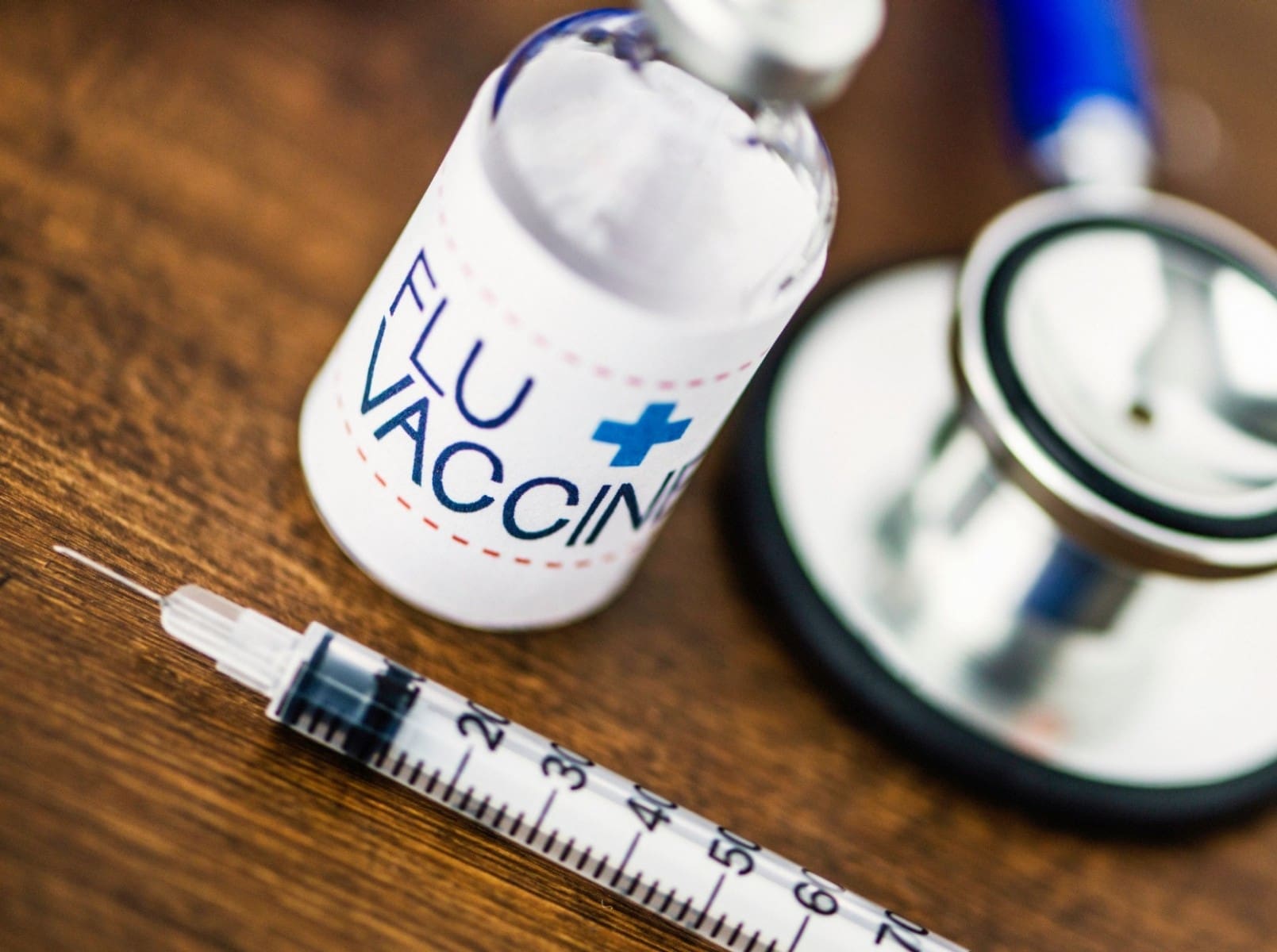
Most Australians benefit from having a yearly flu vaccination. In 2020, flu vaccination is even more important as the peak of COVID-19 cases in Australia is likely to coincide with our annual influenza season. Flu vaccination won’t protect you from COVID-19, but will reduce your risk of getting influenza. In 2020 Australians are advised to get immunised against influenza as early as possible.
If you get influenza it will lower your immunity, making you more susceptible to other illnesses including COVID-19. Both flu and COVID-19 can cause severe illness, including pneumonia. If you got them together it could have even more serious health consequences.
Who should have a flu vaccination in 2020?
Everyone (unless otherwise advised). Annual influenza vaccination is recommended for everyone over 6 months.
What is involved in getting a flu jab?
Getting vaccinated against influenza involves having an injection, which is usually given into the upper arm. A nurse or doctor can give the injection, which only takes a few seconds. Some people refer to it as a ‘flu jab’.
When to get a flu vaccine
Australians are advised to get their annual flu vaccination as early as possible this year, due to the COVID-19 pandemic. From May 1, flu vaccination will be mandatory for anyone wishing to visit an aged care facility in Australia, and those who work in one. Some states may implement this even earlier.
Flu vaccines are generally given around late autumn or the start of winter to give you protection over the flu season. Getting vaccinated in April provides protection before the peak flu season.
The vaccines change each year, based on predictions of which flu strains will be most active in that coming winter.
In most parts of Australia, the influenza season (the time of year when most people get flu) happens between June and September.
Your immunity is highest during the 3 to 4 months after having a flu shot, so getting vaccinated at the beginning of winter may give you the best chance of being protected against flu throughout winter and at the peak of flu season (around August).
As it’s possible to be infected at any time of the year, you can be vaccinated after winter, providing that year’s flu vaccines are still available. This is particularly relevant to overseas travellers and pregnant women.
Pregnant women can get the flu vaccine for free on the National Immunisation Program, and should be vaccinated whatever stage of pregnancy they are at, and at any time of year.
Remember, it’s important to get re-vaccinated every year to protect yourself against the common strains of flu virus that are circulating that year.
Where to get vaccinated
In Australia, influenza vaccines are available from general practitioners (GPs), pharmacies (you may need to book an appointment, but they are taking bookings at the time of writing [March]), vaccination clinics, Aboriginal Medical Services, or as part of a workplace flu vaccination programme. Always check with your immunisation provider about the cost beforehand, even if you are eligible for free flu vaccinations, because you may be charged a consultation fee.
In 2020, vaccination providers have put special measures in place to help protect people from COVID-19 when they are being vaccinated, including low waiting times, physical distancing (where possible) and hand sanitiser, etc.
2020 influenza vaccines in Australia
Influenza vaccines are formulated to protect against the most common strains of influenza that are circulating each year. Influenza A and influenza B are the 2 main types of influenza virus that cause disease in humans.
All the vaccines available in 2020 are called quadrivalent influenza vaccines – they contain 4 strains of flu virus. The 2020 flu vaccines in Australia protect against 2 strains of influenza A and 2 strains of influenza B.
Influenza viruses are named after their subtype (in the case of influenza A viruses), their strain (both influenza A and B viruses are classified into strains), and the place and year that they originated.
The strains included in the 2020 southern hemisphere seasonal influenza vaccines include:
- Influenza A (H1N1) – an A/Brisbane/02/2018 (H1N1)pdm09-like virus
- Influenza A (H3N2) – an A/South Australia/34/2019 (H3N2)-like virus
- Influenza B – a B/Washington/02/2019-like (B/Victoria lineage) virus
- Influenza B – a B/Phuket/3073/2013-like (B/Yamagata lineage) virus
Flu vaccines for children and adults in 2020
Influenza vaccines available in 2020 in Australia include:
- For children aged 6 months to under 3 years: FluQuadri, Vaxigrip Tetra, Fluarix Tetra
- For children aged 3 to under 5 years: FluQuadri, Vaxigrip Tetra, Fluarix Tetra, Influvac Tetra
- For people aged 5 to 64 years of age: FluQuadri, Vaxigrip Tetra, Fluarix Tetra, Afluria Quad, Influvac Tetra
- For adults 65 years and over: FluQuadri, Vaxigrip Tetra, Fluarix Tetra, Afluria Quad, Influvac Tetra, Fluad Quad
Your doctor will be able to advise you on the most appropriate vaccine for you and your family, based on your age, vaccine availability and eligibility to receive vaccination free of charge. All children aged 6 months to under 5 years are eligible for free flu vaccines in 2020 under the National Immunisation Program.
Flu vaccines for older people in 2020
Vaccination is important for people aged 65 years and older. That’s because people in this age group can become very ill with influenza and have the highest risk of complications associated with seasonal influenza.
In 2020, five quadrivalent flu vaccines are available for free on the National Immunisation Program for people aged 65 years and older. One of these Fluad Quad is preferentially recommended over the other vaccines. It contains an adjuvant – an ingredient used to promote a stronger immune response in people receiving the vaccine. This will be available from mid-April, according to the Royal Australian College of General Practitioners.
Mandatory vaccination
From 1 May 2020, flu vaccination will be mandatory for anyone wanting to visit an aged care facility, as well as anyone who works in one.
Side effects of flu vaccines
Side effects are usually mild and occur within the first 24 to 48 hours following immunisation. Common side effects associated with influenza vaccination include soreness and redness at the injection site.
One brand of influenza vaccine used in 2010 was associated with more serious side effects in children younger than 5 years, including high fever. This brand of vaccine – Fluvax – is no longer available in Australia. There are other brands of vaccine that are recommended for use in children.
In general, the risk of severe side effects from influenza vaccines is much smaller than the risk of serious complications from having flu.
Can I get flu from the flu vaccine?
Flu vaccines do not contain any live virus, so it is not possible to get flu from the vaccines.
Some people may feel tired and have muscle aches or a mild fever after having a flu vaccination. These are side effects of the vaccine, not symptoms of the flu. These side effects may start a few hours after vaccination and last for a couple of days, and occur in only a small proportion of people (up to 10 per cent).
Flu vaccination for special groups
Influenza vaccination is especially important for some people, including:
- all children aged 6 months to less than 5 years (this is new for 2020);
- all people aged 65 years and older;
- Aboriginal and Torres Strait Islander people aged 6 months and older;
- pregnant women; and
- people with medical conditions that put them at risk of severe influenza (such as heart disease, severe asthma, chronic obstructive pulmonary disease (COPD), impaired immunity, chronic kidney disease and diabetes).
These people are at increased risk of severe illness and complications from influenza such as bronchitis and pneumonia. Influenza vaccine is available to these people free of charge through the National Immunisation Program. Contact your doctor, pharmacy or local vaccination clinic to make an appointment to receive your free vaccine if you are eligible.
Some people who are eligible for free vaccination may still be charged a consultation fee to receive the vaccine – check with your immunisation provider.
Vaccination is also strongly recommended for certain other people at increased risk from flu and its complications who are not eligible for free vaccination under the National Immunisation Program. These people include:
- healthcare and childcare workers;
- women planning a pregnancy;
- people who are obese;
- those with liver disease; and
- people planning travel during influenza season.
Pregnant women and influenza
Pregnancy can increase your risk of severe influenza and complications related to influenza infection. The influenza vaccine is safe to receive at any stage during pregnancy, and is recommended in every pregnancy.
It’s recommended that pregnant are vaccinated with the latest flu vaccine available – even if that means being vaccinated twice during the same pregnancy.
Flu vaccination during pregnancy also provides protection from flu to newborn babies of vaccinated mothers.
Children and influenza
Children can be immunised against the flu from 6 months of age. Getting your child immunised is the best way to protect them against influenza and its potentially serious complications.
In 2020, flu vaccinations for children aged 6 months to up to 5 years will be funded under the National Immunisation Program. This was not previously the case.
There are specific brands of flu vaccine that are suitable for children of different ages. Make sure you tell the immunisation provider your child’s age so that they receive the most appropriate vaccine.
Protecting others
Getting vaccinated against influenza can not only protect you from getting the flu, but also those around you. It’s especially important if you are in close contact with people who are at increased risk from influenza, such as older people, pregnant women, young children or those with health problems. It is especially important in 2020 against the background of the COVID-19 pandemic.


