
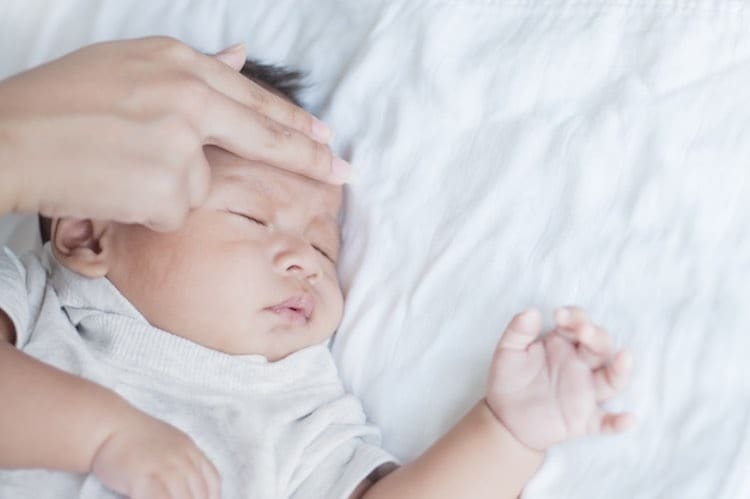
What is bronchiolitis?
Bronchiolitis is a viral chest infection, seen mainly in autumn and winter. It tends to affect babies under a year old.
Bronchiolitis symptoms
The condition usually starts with symptoms like those of a cold, such as a blocked or runny nose, a cough and, in about half of all cases, a mild fever.
In bronchiolitis, the virus goes on to cause swelling in the walls of the bronchioles – the small airways which branch off the two main breathing tubes (bronchi) in the lungs. The swelling narrows the airways. Air tends to become trapped in the lungs and, as a result, the child’s breathing will tend to become more shallow and rapid. Sometimes a wheeze will be heard when breathing out.
How long does it last?
Most infants with viral bronchiolitis recover completely within 7 to 10 days. However, a small number may have symptoms (most commonly a cough) that persist for 3 or 4 weeks.
If your child was premature or has a weakened immune system or other serious health problem, such as a heart or lung condition, then bronchiolitis may be more severe.
Bronchiolitis treatment
Because bronchiolitis is a virus infection, antibiotics will not help. (Antibiotics are only effective in treating infections caused by bacteria.) Similarly, medicines such as salbutamol (e.g. Ventolin), steroids and antihistamines are not usually effective.
If your child has a fever, this can be treated with paracetamol.
What else should I do?
Infants with bronchiolitis need lots of fluids. Commonly, the breathing difficulties associated with viral bronchiolitis affect the child’s ability to feed, especially in infants younger than 6 months. To meet the increased need for fluids, it’s often best to give infants small amounts more often, as this is usually better tolerated.
It is important that a child with the condition does not become dehydrated. This can be checked by monitoring the number of feeds the child is taking and the number of wet nappies.
Other things you can do to help your child’s breathing and make them more comfortable are to humidify the air, keep them upright and make sure they are not exposed to cigarette smoke.
Should my child be in hospital?
Usually, viral bronchiolitis is a mild illness that can be managed at home. However, occasionally it can be more severe and hospital admission is necessary.
A child will need to be treated in hospital if their fluid intake is inadequate and they are becoming dehydrated, or if they are having difficulty breathing. Hospital admission is more likely in very young children and in children with other medical conditions such as cystic fibrosis or a heart defect.
In hospital, children with viral bronchiolitis will usually be given fluids either intravenously (through a drip) or through a nasogastric tube (a tube that’s inserted through the nose and goes to the stomach). They will also be given oxygen if necessary and assistance with their breathing in severe cases. The antiviral medicine ribavirin (Virazide) may also be given in severe cases but can have serious side effects and is not always effective.
Can it be prevented?
Viral bronchiolitis is not entirely preventable. However, the risk of contracting the illness can be minimised during the high-risk season. Avoid taking young babies into crowded places, especially confined areas such as shopping centres, and avoid close contact with people who have cold symptoms. Good and frequent hand washing by parents and carers can also reduce the risk.
There is as yet no vaccine commercially available in Australia against the most common cause of viral bronchiolitis, respiratory syncytial virus (RSV). The medicine palivizumab (Synagis) – a monoclonal antibody against RSV – may help decrease the likelihood of bronchiolitis in babies who are at high risk of having a severe illness.
