
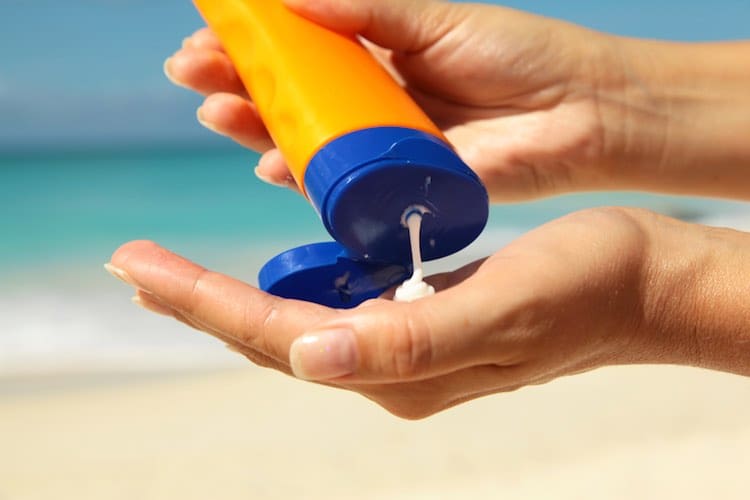
- General Information
- See Your Pharmacist or Medical Professional
- Treatment Tips
- Treatment Options
- More Information
General Information
Sunburn and skin damage are caused by too much exposure to ultraviolet radiation, through time exposing your skin in the sun or under a sunlamp. Ultraviolet radiation (UVR) is sub-classified as UVA, UVB and UVC rays. However, it is only UVA and UVB that we need to protect against as these rays pass through the ozone layer.
You may not realise you are burning since your skin only becomes red and painful later on. Minor sunburn appears as pink or red skin and more serious sunburn as blistered and sometimes peeling skin.
Australia has the highest rate of skin cancer in the world. It is important to protect your skin when it is exposed to the sun, because of the risk of skin cancer. Long-term sun exposure also causes premature skin ageing due to UVA rays.
Good sun care includes:
- trying to stay out of the sun when the UV radiation is more intense, which is between 10 am and 2 pm (11 am and 3 pm during daylight saving)
- wearing a hat (wide-brimmed to protect neck), wrap-around sunglasses that block UV light, and protective clothing or shade structures
- using sunscreen to prevent skin burning
- after-sun skin care; check with your pharmacist
- remembering that reflection from water, snow and sand can cause sunburn
- protection of lips with special lip sunscreens; sunburn can reactivate a cold sore on the lips
- reapplication of lip balm frequently, as it tends to be licked off
- wearing hats in the sun; many schools now insist students wear hats during summer
- wearing sunglasses to protect the eyes
- wear clothes that meet the UV Clothing Standard to offer sun protection, such as dark, tightly woven fabrics (UPF 15 to 50+)
- following the SunSmart message: ‘slip, slop, slap, seek and slide’
Artificial tanning
- many people still consider that tanned skin looks healthy and attractive. Artificial suntan products may provide this look without the risk of prolonged exposure to the sun
- most artificial tanning products will not protect against exposure to UV radiation from the sun
- some artificial suntan products do contain a sunscreen but further sunscreen will need to be applied throughout the day
- sun beds are not safe alternatives for tanning
See Your Pharmacist or Medical Professional
- if you have severe or extensive sunburn, blisters or extreme pain
- if you have other symptoms, such as feeling unwell or light-headed, if you are vomiting or have a fever or headache
- if blisters look infected, e.g. the skin may be broken or oozing
- if you are burning more easily than before, especially with minimal sun exposure
- if you take other medicines; some medicines, such as antibiotics, can cause skin to burn more easily
- if the person with sunburn is a young child or elderly person with moderate to severe sunburn; they may need treatment for dehydration
- if you have a mole that has changed in size, colour, shape, height, surface texture or sensation; this could be a sign of melanoma, a common and dangerous skin cancer
- Australia and New Zealand have the highest incidence and mortality rates of melanoma in the world. It is the most common cancer in young adults and its development is linked with sunburn in childhood. In 2019, it was estimated there were 15,229 new cases of melanoma diagnosed and an estimated 1725 deaths from melanoma in Australia.
Treatment Tips
- sunscreen ‘sun protection factor’ (SPF) indicates how protective a sunscreen is. It should not be used as a guide to determine how long an individual will take to become sunburnt
- it is recommended that a broad-spectrum (filters out both UVA and UVB rays), water resistant, SPF 50+ sunscreen is used.
- the highest SPF for sunscreen in Australia is 50+.
- Doubling the SPF does not mean doubling the safe exposure time, rather it is an indication of the percentage of UVB rays blocked.
- sunscreens do not completely protect you from the sun and should be used in conjunction with protective clothing, a hat, sunglasses and shade
- everyone should apply sunscreen, especially infants, and including people with suntans
- sunscreens use chemical or physical barriers to filter out and protect the skin from burning
- apply sunscreen liberally 20 to 30 minutes before going outside, and allow to dry as a protective layer on skin. Reapply 15 minutes after this to ensure coverage
- reapply frequently, at least every two hours, or more often if perspiring, exercising or swimming
- apply children’s sunscreens more regularly, e.g. every 20 to 40 minutes, because children are more active and sunscreen is more likely to rub off
- apply sunscreen even if it is overcast, as UV rays can pass through cloud
- cream-based sunscreens tend to be more resistant to removal by water than alcohol-based products
- water-resistant products retain their sun protection for at least 40 minutes in water
- be aware that oily products may prevent sweat from evaporating, which can increase the risk of over-heating, especially in humid conditions
- keep babies out of the sun and use clothing or hats for protection
- for babies under six months old, it is better to use a sunscreen that is specially formulated for babies’ skin, and apply particularly to those areas not covered by clothing; check with your pharmacist
- people with acne should avoid oil-based products as these can worsen the acne
- not all sunscreens are safe to use in young children – always check with a health professional before use
Treatment Options
Most products have a combination of chemical and physical barriers
Chemical sunscreens
[GENERAL SALE]
e.g. cinnamates, salicylates, benzophenones, dibenzoylmethanes and the less commonly used para-aminobenzoic acid (PABA) and derivatives (Aquasun SPF 50+ Sunscreen Lotion, Cancer Council Australia Face Day Wear Moisturiser SPF 50+, Cancer Council Australia Repel Sunscreen Plus Insect Repellent Lotion SPF 50+, Cancer Council Australia Kids Sunscreen SPF 50+, Cancer Council Ultra Sunscreen SPF 50+, Cancer Council Sport Sunscreen SPF 50+ Spray, Cancer Council Work Dry Touch Sunscreen SPF 50+, Cancer Council Ultra Cooling Sunscreen SPF 50+, SunSense Ultra 50+, SunSense Anti-Ageing Face SPF 50+ Lotion, SunSense Clear SPF 50+ Gel, SunSense SPF 50+ Lip Balm, SunSense Sport 50+ Lotion, Hamilton Active Family SPF 50+, Hamilton Everyday Face SPF 50+, Hamilton Sensitive SPF 50+ Lotion, Hamilton Toddler SPF 50+, Banana Boat range, Reef Sun Tan Oil SPF 15, Reef Sun Tan Oil SPF 30+, La Roche Posay Antihelios, Neutrogena Ultra Sheer Sunscreen Stick SPF 50+, Neutrogena Beach Defence Sunscreen Spray SPF 50, Neutrogena Ultra Sheer Dry Touch Sunscreen Lotion SPF 50+
- chemical sunscreens absorb harmful UV light to protect the skin against sunburn
- chemical sunscreens usually contain more than one chemical, with different protective effects for UVA and UVB, to give broader protection
Physical sunscreens
[GENERAL SALE]
e.g. SunSense Sensitive Invisible SPF 50+ Cream, SunSense Sensitive SPF 50+ Lotion, Cancer Council Sensitive + Zinc SPF 50+, Cancer Council Kids Zinc Sunscreen 50+, Cancer Council SPF 50+ Classic Zinc Sunscreen Lotion, Cancer Council Face Day Wear Moisturiser Matte Zinc Lotion SPF 50, Neutrogena Sheer Zinc Baby Dry-Touch Sunscreen Lotion SPF 50, Neutrogena Sheer Zinc Face Dry-Touch Sunscreen Lotion Broad Spectrum SPF 50, Zinc Cream
- physical sunscreens reflect sunlight rather than absorb it
- zinc oxide or titanium dioxide are particularly effective, especially for the nose and ears
Treatment for mild sunburn
- stay out of the sun and use extra protection when you do go outdoors
- wear loose, soft clothing to avoid irritation of the burnt skin
- use a moisturiser to rehydrate and cool the skin
- have a cool bath or put cool compresses on the sunburnt area
- cooling water based gels can also be applied on the skin (such as SoloSite Gel)
- drink plenty of fluids (non-alcoholic) to keep hydrated
- local anaesthetics (see below) can give short-term relief
- Aloe vera gel may be beneficial for short-term relief; however, as pure a gel as possible should be used (e.g. 90% aloe)
- pain and discomfort could last a few days, and general pain relievers may help, e.g. paracetamol or ibuprofen; your pharmacist can provide individualised advice
- keep blistered skin clean and monitor for infection
Sunburn treatment products
[GENERAL SALE]
e.g. Sunsense After Sun, Banana Boat Aloe After Sun, Pinetarsol Bath Oil
- a moisturiser will not prevent peeling but will help relieve the irritation of dry, flaky skin
- pinetarsol can reduce itching and help with dry skin
Local anaesthetic products
[GENERAL SALE]
e.g. Soov Burn, Solarcaine
- these can be applied as ‘no touch’ sprays or creams and offer pain relief
- some local anaesthetics may irritate skin in some patients
More Information
Availability of medicines
- GENERAL SALE available through pharmacies and possibly other retail outlets.
- PHARMACY ONLY available for sale through pharmacies only.
- PHARMACIST ONLY may only be sold by a pharmacist.
