
- General Information
- See Your Pharmacist or Medical Professional
- Treatment Tips
- Treatment Options
- More Information
General Information
Osteoarthritis is the most common form of arthritis, with the average age of onset at 45 years. Almost half of those aged over 60 years, and almost everyone over 80, will develop osteoarthritis.
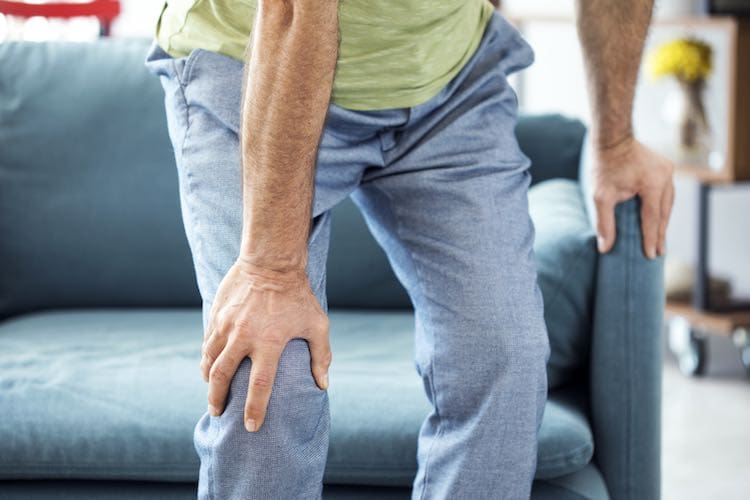
Osteoarthritis develops gradually from the breakdown of parts of your joints. In a healthy joint, a firm rubbery material called cartilage covers the end of each bone. This allows your joints to move smoothly and easily. In osteoarthritis the cartilage becomes damaged and starts to wear away. This makes your joints painful and stiff.
Weight-bearing joints such as your knees, hips, feet and spine are most commonly affected by osteoarthritis, but it also affects hands.
Osteoarthritis is more common in women (especially after menopause) than in men. It is more likely to develop in people who are overweight for long periods, since this puts more stress on the weight-bearing joints and also causes inflammation in the body.
Osteoarthritis was previously thought to be a result of normal wear and tear. However, it is now known that other factors are involved. These include damage to a joint earlier in life, repetitive joint use, sports such as weight lifting, being overweight (which can cause inflammation that damages joints), or a family history of osteoarthritis.
Many people are not seriously affected by osteoarthritis, but it can lead to severe pain and significant disability for some. For example, it may be difficult to climb stairs or get in and out of a car with a severely affected knee joint.
Osteoarthritis may come and go, with periods when there is very little or no pain. Some people have particular times when their pain is worse, such as in damp weather.
Symptoms
- pain that usually gets worse when you move, and feels better if your joint is rested. This is one of the first symptoms, but as the disease gets worse, the pain may occur at rest
- stiffness when your joint is not moved for long periods, such as overnight; this usually lasts less than thirty minutes
- swelling when your joint is irritated and produces extra fluid
- a popping or creaking noise (‘crepitus’) may be heard if your knees are affected
- bony growths (‘nodes’) – e.g. those that can be seen on your hands
See Your Pharmacist or Medical Professional
It is best to see your doctor if you think you have osteoarthritis; this will help you manage it as well as possible and minimise long-term effects.
Also see a healthcare professional if:
- your pain is severe or interferes with movement
- you have had a recent accident, such as a fall
- your joint is red and swollen or there is a burning pain
- you feel generally unwell, as well as having joint pain
- the pain began very suddenly
- the pain gets worse or continues after 2 or 3 days, despite taking pain medicine
Treatment Tips
- try to keep to a healthy bodyweight – obesity is the most important risk factor for osteoarthritis that you can influence
- a tailored exercise program is recommended for everyone with osteoarthritis; exercise can reduce pain and improve function in the joints
- a physiotherapist can help design an exercise programme for you
- heat or ice packs (with a towel wrapped around them to avoid burns or frostbite) may help knee or hip osteoarthritis; they should not be applied for longer than 20 minutes each time
- a walking stick (used in opposite hand to affected knee or hip) can help reduce stress on your hips or knees and reduce pain when walking
- short-term taping of the knee may help in arthritis of the knee joint when getting started with exercise, as may the use of a knee brace
- special aids to help with everyday life, such as opening jars, turning on taps, putting on stockings and picking up objects are available from some pharmacies and Independent Living Centres Australia
Treatment Options
Osteoarthritis cannot be cured, but there are medicines and treatments that can help you manage pain and other symptoms.
In the long term, hip or knee joint replacement surgery may be necessary when you have severe pain or your mobility is very restricted.
Oral pain relief medicines (analgesics)
[GENERAL SALE]
e.g. paracetamol, smaller packs (Panadol Tablets/Mini Caps, Panadol Optizorb Caplets/Tablets, Panadol Rapid Caplets/ Soluble Tablets, Herron Gold Tablets)
[PHARMACY ONLY]
e.g. paracetamol, larger pack sizes (Panadol, Panamax, Panadol Optizorb Caplets/Tablets, Panadol Rapid Caplets); paracetamol modified-release (Panadol Osteo, Osteomol, Osteo Relief*)
*Pharmacy only until 31 May 2020.
[PHARMACIST ONLY]
e.g. paracetamol modified-release (Panadol Osteo, Osteomol, Osteo Relief)**
**Pharmacist only until 31 May 2020.
- paracetamol may be helpful for mild to moderate osteoarthritis, but is no longer recommended as first-line treatment. NSAID tablets (see below) have been shown to be more effective, but are not suitable for everyone.
- paracetamol is a safe option for most people but it is important not to take more than the recommended dose (4 g/day)
- paracetamol is an ingredient in many cold and flu remedies, so be careful to take these doses into consideration in your calculations
- the maximum daily dose for an adult is 4 g (4000 mg), with no more than 1 g every 4 hours
- modified-release paracetamol is targeted for osteoarthritis and should only be taken every 6 to 8 hours; maximum 6 tablets (3990 mg) per day
- some people find taking paracetamol regularly works better than waiting until the pain is bad and taking occasional doses
Oral NSAIDs
[GENERAL SALE]
e.g. ibuprofen, smaller packs (Nurofen Tablets, Nurofen Caplets, Nurofen Liquid Capsules, Nurofen Zavance, Advil Tablets, Advil Liquid Capsules, Herron Blue Tablets)
[PHARMACY ONLY]
e.g. ibuprofen, larger pack sizes (Nurofen Tablets, Nurofen Caplets, Nurofen Liquid Capsules, Nurofen Zavance, Advil Liquid Capsules, Rafen)
e.g. diclofenac (Voltaren Rapid 12.5)
e.g. naproxen (Naprogesic)
[PHARMACIST ONLY]
e.g. ibuprofen, higher strength (Nurofen Zavance 400 Double Strength Tablets, Advil 400 Double Strength Caplets, Advil 12 Hour Extended Release Tablets)
e.g. diclofenac (Voltaren Rapid 25, Viclofen)
[PRESCRIPTION ONLY]
e.g. diclofenac, higher strength (Voltaren 50), celecoxib (Celebrex), ibuprofen, larger pack size (Brufen) and others
NSAIDs can provide good pain relief in osteoarthritis. They have been shown to be equal to and often better than paracetamol for relief of osteoarthritis pain, but NSAIDs are not suitable for everyone. Health professionals only recommend NSAIDs if you are at low risk of side effects. Check with your doctor or pharmacist before taking NSAIDs if you:
- have a history of stomach problems, such as ulcers or indigestion
- have asthma; some people with asthma find their condition is made worse by these medicines
- have kidney problems or a heart condition
- take other medicines
- have an allergy to aspirin or NSAIDs
- are pregnant or breastfeeding
- are elderly; you may be at more risk of side effects
- are dehydrated
Sometimes NSAIDs can cause side effects. It is important to take these products with a glass of water and food to minimise heartburn. If you develop indigestion, or unusual or increased bleeding or bruising, stop taking them and talk to your pharmacist.
Aspirin is not usually recommended for osteoarthritis because the dose required often leads to unacceptable side effects.
Combination products
Paracetamol + caffeine
[GENERAL SALE]
e.g. paracetamol and caffeine [smaller packs] (Panadol Extra Caplets, Panadol Extra Optizorb Caplets)
[PHARMACY ONLY]
e.g. paracetamol and caffeine [larger pack sizes] (Panadol Extra Caplets, Panadol Extra Optizorb Caplets)
• caffeine acts on paracetamol to increase its effectiveness
• if you have caffeine-containing drinks while taking this medicine, you may experience caffeine-related side effects, including sleeplessness
Paracetamol + ibuprofen
[PHARMACY ONLY]
e.g. paracetamol and ibuprofen [smaller packs] (Nuromol, Combigesic, Ibupane, Maxigesic and Mersynofen)
[PHARMACIST ONLY]
e.g. paracetamol and ibuprofen [larger pack sizes] (Nuromol, Combigesic, Ibupane, Fenmol, Maxigesic and Mersynofen)
- these products contain two or more ingredients that relieve pain in different ways
- try single-ingredient products first; if these do not give adequate pain relief then consider combination products
- be careful with combined paracetamol and ibuprofen products as different brands have different doses, dosing instructions and maximum daily doses, check with your pharmacist
- don’t take combination analgesics with other single ingredient analgesic products, in case you double up and increase your risk of side effects
- see warnings above relating to the individual ingredients, particularly those for ibuprofen
- codeine may cause drowsiness and constipation; avoid alcohol and do not drive or operate machinery if you feel drowsy
- always follow the directions on the packet and do not take more than the recommended dose
Topical NSAIDs
[GENERAL SALE]
e.g. ibuprofen (Nurofen Gel), diclofenac [lower strength] (Voltaren Emulgel, Dencorub Anti-inflammatory Gel), piroxicam (Feldene Gel), benzydamine (Difflam Anti-Inflammatory Gel)
[PHARMACY ONLY]
e.g. diclofenac [higher strength] (Voltaren Osteo Gel 12 Hourly)
- Topical treatments mean treatments rubbed into the skin
- NSAID gels rubbed gently into your joints may be helpful for some people
- gel medication can be absorbed into your bloodstream so it is important to check if NSAIDs are suitable for you (see warnings above under Oral NSAIDs)
- it is not recommended to use an NSAID gel at the same time as taking oral NSAIDs (tablets or capsules); check with your pharmacist
- treatment beyond 2 weeks is not recommended unless advised by a medical professional
- do not apply to open wounds, lips or near eyes, and wash hands after use
Other topical preparations
[GENERAL SALE]
e.g. Deep Heat Cream, Deep Heat Arthritis Cream, Deep Heat Night Strength Cream, Metsal Heat Rub Cream, Finalgon Cream, Ice Gel Mentholatum, Percutane Pain Relief Cream, Tiger Balm Ointments and Liniment, Rubesal Cream, Dencorub Cream, Dencorub Extra Strength Gel, Dencorub Arthritis Cream
- rubbing these products onto your skin can help stimulate blood flow and create warmth, which can relieve pain and stiffness
- do not apply heat rubs to open wounds, eyes, mouth or nose
- heat rubs may irritate the skin; stop using them if this happens
- massage heat rubs in for better effect, except with Finalgon
- Finalgon is much stronger; if extreme stinging occurs, remove excess product with cooking oil or margarine, not water. Test the product on the skin first to identify any reactions
Capsaicin
[GENERAL SALE]
e.g. Zostrix Cream
- it may take up to 4 weeks for pain relief to be noticed
- burning or tingling may occur briefly when this product is applied to your skin
- do not apply to broken or irritated skin
- avoid contact with eyes
Dietary supplements
[GENERAL SALE]
e.g. glucosamine, chondroitin, fish oil
- some people find taking glucosamine or chondroitin supplements helpful, however, the evidence for their benefit is inconsistent; ask your pharmacist for more information
- it may take up to 4 weeks for effects to be noticed
- if you have diabetes, ask your doctor before starting glucosamine; it may affect your blood glucose levels
- glucosamine should be avoided by people with shellfish allergies
- fish oil has not yet been thoroughly evaluated in osteoarthritis
- people taking warfarin should speak to their pharmacist or doctor before using these products
More Information
Availability of medicines
- GENERAL SALE available through pharmacies and possibly other retail outlets.
- PHARMACY ONLY available for sale through pharmacies only.
- PHARMACIST ONLY may only be sold by a pharmacist.
- PRESCRIPTION ONLY available only with a prescription from your doctor or other health professional.


