
- General Information
- See Your Pharmacist or Medical Professional
- Treatment Tips
- Treatment Options
- More Information
General Information
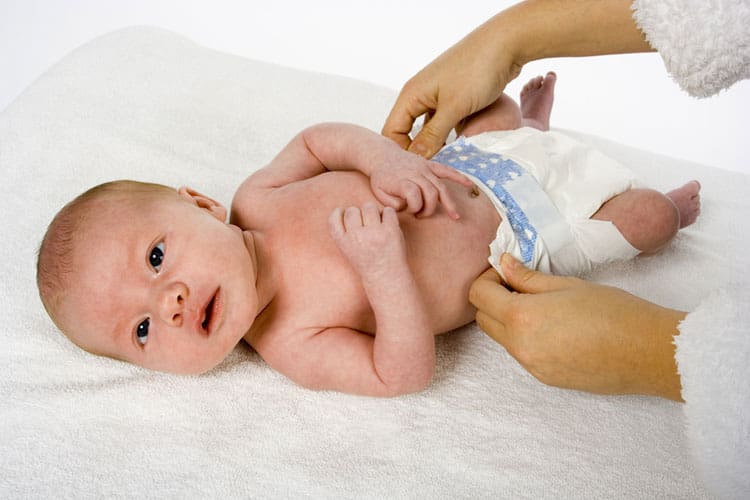
Nappy rash is a red rash that occurs on the skin covered by a baby’s nappy. It is a very common problem, which most babies will have at some time, and it does not mean your baby is not being properly looked after. It may make your baby feel uncomfortable but it is not usually a sign of anything serious.
Simple nappy rash
Nappy rash is most often due to irritation caused by urine and faeces in contact with your baby’s sensitive skin. The area affected is red (but not bright red) and may look spotty or blotchy. The rash does not spread into the baby’s skin folds.
Nappy rash due to fungal infection (thrush)
The warm, damp skin under your baby’s nappy provides an ideal place for fungi to grow. Nappy rash due to a fungal infection tends to be brighter red than simple nappy rash. There may be small red or white spots around the edge of the rash. The rash often spreads into the skin folds or onto the skin not covered by a nappy.
Your baby may also have a fungal infection in their mouth, called oral thrush. Their mouth will be sore and look red, and there may be white patches on their tongue or inside their cheeks. If your baby is breastfeeding, your nipples may also be affected by thrush.
Nappy rash due to bacterial infection
Sometimes if a baby’s skin has been irritated and damaged by simple nappy rash it can become infected by bacteria. The skin can be red, warm and swollen and the baby may develop a fever. Parts of the skin may be broken and weeping, and a yellow crusting may be noticeable. This type of nappy rash needs to be treated by a doctor.
Other causes of nappy rash
Rashes in the nappy area may also be caused by seborrhoeic dermatitis, or other skin conditions. In these cases, there is also generally a rash somewhere else on the body.
See Your Pharmacist or Medical Professional
- if the rash spreads beyond the nappy area
- if there is oozing, swelling, blistering or crusting
- if the redness is severe
- if your baby has a fever
- if the rash does not get better after a few days of treatment, or continues to spread
- if the rash is in other places as well, such as your baby’s mouth, scalp, or the mother’s nipples
Treatment Tips
- change your baby’s nappy frequently
- wash and dry your baby’s bottom at each change
- if the baby’s nappy was wet, use warm water to clean
- if the baby’s nappy was dirty, use a soap substitute to clean, and rinse this off thoroughly
- baby wipes may sting if the skin is sore
- apply a barrier cream at each nappy change
- have nappy-free times so the skin is exposed to air
- if using cloth nappies, make sure they are rinsed thoroughly to remove all traces of detergent, and dry in direct sunlight, rather than in a clothes dryer
- if using cloth nappies, consider changing to disposable nappies for a while because these keep wetness away from the baby’s skin more effectively
- avoid tight-fitting, plastic over-pants because these make the area warm and moist, which is ideal for fungal growth
Treatment Options
Barrier creams
[GENERAL SALE]
e.g. dimethicone (Silic 15 Cream), petrolatum (Vaseline Petroleum Jelly), zinc oxide (Curash Babycare Medicated Nappy Rash Cream, Desitin Nappy Rash Ointment, Sudocrem)
- these products create a barrier between the baby’s skin and wet nappy, and help prevent nappy rash developing
Healing and soothing preparations
[GENERAL SALE]
e.g. Bepanthen Antiseptic Cream, Bepanthen Ointment, Curash Anti-Rash Baby Powder, Curash Babycare Medicated Nappy Rash Cream, Pine Tar Lotion with Menthol, Silic 15 Lotion, Ungvita, Zinc and Castor Oil Ointment
[PHARMACY ONLY]
e.g. Egozite Baby Cream
- these products provide a barrier on the skin and also contain ingredients which can help to soothe and heal nappy rash
Soap alternatives
[GENERAL SALE]
e.g. Pinetarsol, Egoderm Ointment, aqueous cream, emulsifying ointment, Rikoderm Bath Oil, Alpha Keri range, Cetaphil range, DermaVeen range, QV range, Hamilton range
- Pinetarsol solution can be added to your baby’s bath to reduce redness and irritation
- aqueous cream or emulsifying ointment can be made into a liquid soap substitute by putting a small knob of it into a jar, adding hot water and shaking it
- the DermaVeen range contains oatmeal; do a patch test on your baby’s skin to test for sensitivity to oatmeal first (test on a small area of skin and wait 24 hours to ensure no irritation occurs)
Antifungal preparations
[PHARMACY ONLY]
e.g. clotrimazole (Canesten range) econazole (Pevaryl range), miconazole (Daktarin, Resolve Balm), miconazole + zinc oxide (Daktozin, Resolve Nappy Rash Ointment)
- antifungal creams should be used for one to two weeks after the rash has cleared to make sure the infection has been fully treated; check product information
- antifungal creams can be used with barrier creams to protect the skin; apply the antifungal cream first, then the barrier cream
- Daktozin contains an antifungal agent and zinc oxide, which provides a barrier on the skin and helps soothe and heal nappy rash
Antifungal + hydrocortisone combinations
[PHARMACIST ONLY]
e.g. Canesten Plus Clotrimazole and Hydrocortisone Cream, Resolve Plus 0.5, Resolve Plus 1.0
- these products are useful if the skin is particularly inflamed and red, or if the baby also has eczema or seborrhoeic dermatitis; they should not be used in babies except on medical advice
More Information
Phone helplines
If you are concerned about your child there is a national 24-hour health advice helpline and also parenting helplines in each state and territory.
National helplines:
- healthdirect 24-hour health advice line: 1800 022 222
- Pregnancy, Birth & Baby Helpline: 1800 882 436
Availability of medicines
- GENERAL SALE available through pharmacies and possibly other retail outlets.
- PHARMACY ONLY available for sale through pharmacies only.
- PHARMACIST ONLY may only be sold by a pharmacist.


