
- General Information
- See Your Pharmacist or Medical Professional
- Treatment Tips
- Treatment Options
- More Information
General Information
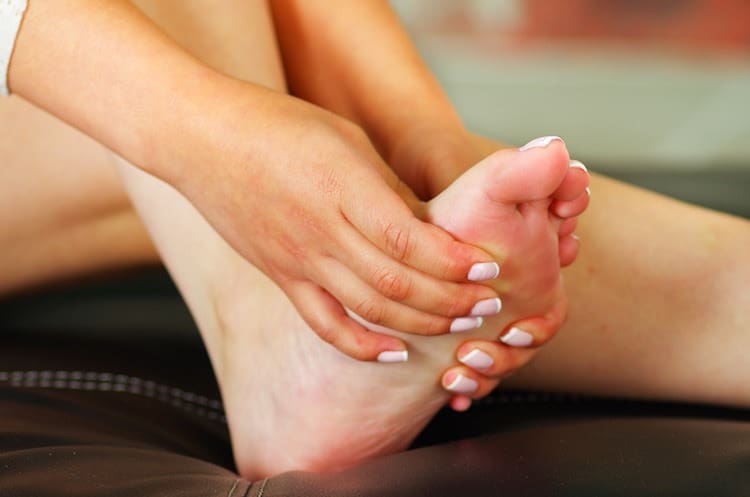
Common foot problems include smelly feet, athlete’s foot (tinea pedis), fungal nail infections, warts, verrucas, corns and calluses, and cracked heels. Some of these conditions are caused by fungal infections, spread by moist environments such as showers, baths changing rooms, or are associated with excessive sweating, while others are caused by pressure points on the feet and may be due to the type or fit of shoes worn.
Smelly feet
Smelly feet are usually caused by excessive perspiration and an overgrowth of fungi and/or bacteria. This also increases the risk of developing other conditions such as fungal infections of the nail and foot.
Athlete’s foot
Athlete’s foot, also known as tinea pedis, is a common fungal infection of skin between the toes, which can spread further onto your foot if left untreated. It appears as patches of soft, white, cracked skin, sometimes with red areas visible underneath. Athlete’s foot may cause itching, burning or stinging and can have an unpleasant odour. It spreads via wet floors and shared footwear or towels, and the fungi thrive in warm, moist environments.
Fungal nail infections
Fungal nail infections, also known as tinea unguium, are often caused by the spread of athlete’s foot but can occur on their own. Your toenail looks thick and discoloured (white or yellowish) and may be brittle or crumbly and parts, or all of it, may fall off. These infections are more difficult to treat as the entire nail must grow out.
Verrucas
Verrucas, also called plantar warts, are warts found on the sole of your foot. They are made flat by the weight of your body pushing down on your foot. They may occur in clusters and appear as a round area of thickened skin, with an uneven or slightly lumpy surface. Verrucas may look white or grey and there may be small, black dots on them. They are often painful.
Verrucas spread via wet floors, such as changing rooms, showers, baths. They can clear up without treatment; however, this may take up to two years, which increases the risk of spreading them to others.
Corns and calluses
Corns and calluses are areas of hard, thickened skin which build up on areas of your feet subject to pressure or rubbing. Corns are smaller than calluses and develop on nonweight-bearing parts of your foot, such as the tops of your toes. They have a hard centre and can be very painful. Calluses are flatter and less painful than corns, and are found on the soles of your feet, particularly the heel or ball of your foot.
Cracked heels
Cracked heels are common in summer when people wear sandals or go barefoot, and the skin on their feet dries out.
See Your Pharmacist or Medical Professional
- if you have diabetes; you may have reduced feeling and/or poor circulation in your feet, and can be more at risk of developing ulcers or infections
- if you are elderly; you may have poor circulation, which can lead to more serious foot problems developing
- if there is any bleeding from your feet
- if there are any signs of infection, such as if the area starts to ooze, weep or smell
- if you are unsure of what you have; verrucas can be confused with calluses
- if you have a severe fungal nail infection that involves most of the nail
- if your nails look yellow, thick and crumbly
Keep in mind that your doctor may scrape some of the skin or nail to test for tinea, so don’t put anything on the skin or nail before the scraping is taken as it may interfere with the test.
Treatment Tips
Smelly feet
- wash feet twice daily and dry thoroughly with a clean towel, particularly between your toes
- change your socks daily; choose cotton ones which are thick and will absorb any moisture
- wear leather shoes or open shoes, such as sandals, to reduce sweating
- apply an antiperspirant after washing
- check whether the odour is caused by an infection and treat it if necessary
Athlete’s foot, infected nails, verrucas
- bleach the shower and bath areas to prevent spreading and reinfection
- wash socks and towels in hot water and do not share towels with other people
- wear thongs in communal changing areas to prevent spreading the infection
- if you have sweaty feet, use an antiperspirant to help prevent athlete’s foot developing
- dry your skin thoroughly after showering or bathing, using tissues rather than towels
- it is important not to pick at verrucas to prevent them spreading
- wash and dry your feet every day
- if you wear socks, wear ones made of a natural fibre to keep your skin cool and dry
- change your socks every day or more often if needed in hot climates
Corns and calluses
- wear well-fitting shoes to reduce pressure and rubbing
- see a podiatrist for orthotics if it is a recurring problem
- corns and calluses can be cut away by a podiatrist; do not attempt to do this yourself
Treatment Options
Smelly feet
[GENERAL SALE]
e.g. aluminium chlorohydrate (Neat Feet Roll On Deodorant)
e.g. Odor Eaters, Scholl Heavy Duty Odour Control range a strong antiperspirant deodorant may be rolled or sprayed on the feet to prevent feet sweating
- when using a roll-on deodorant, do not use the same container for feet and underarms as this can spread infection
- powder may be put onto the feet or into socks
- washing feet with a mild antiseptic soap such as triclosan (Sapoderm) may help
- people with sensitive skin should avoid aluminium hexahydrate
Athlete’s foot: topical antifungal agents
[PHARMACY ONLY]
e.g. bifonazole (Canesten Once Daily Bifonazole Cream 1%, Mycospor), clotrimazole (Canesten Clotrimazole, Clonea), econazole (Pevaryl Topicals), ketoconazole (DaktaGOLD, Nizoral Cream, Sebizole), miconazole (Daktarin, Eulactol Antifungal Spray, Resolve range), terbinafine (Lamisil range, SolvEasy Tinea Cream)
- topical antifungals are available as creams, gels, liquids, spray powders and powders; ask your pharmacist which product is most suitable for you
- most antifungal products stop the growth of fungi but do not kill them
- continue treatment for at least 14 days after the area has healed, because the body needs to shed the infected skin for complete eradication of the fungi
- products such as terbinafine do kill the fungi, which means that treatment courses are shorter
- athlete’s foot can be treated with terbinafine for just one week, in most cases
- there are also some Pharmacist Only products available which combine an antifungal with hydrocortisone (corticosteroid) cream, e.g. Resolve Plus 1.0 (miconazole + hydrocortisone) and Hydrozole Cream (clotrimazole + hydrocortisone)
- these combination products can be useful if there is severe itching
- these combination products should be used for a maximum of seven days; a product containing an antifungal alone should then be used for the rest of the treatment
Fungal nail infection
[PHARMACY ONLY]
e.g. amorolfine (Loceryl Nail Lacquer), ciclopirox (RejuveNail Antifungal Nail Solution), miconazole (Daktarin Tincture).
- these antifungal treatments are painted onto the affected nails and need to be used for many weeks to be effective; see product details for directions. Each product has slightly different instructions that need to be followed.
Corns, calluses, verrucas and warts
[PHARMACY ONLY]
e.g. salicylic acid products (DermaTech Wart Treatment, Duofilm range, Scholl Removal range, Wart Off Paint, Wart Off Stick).
- do not use these products on the face, moles, birthmarks or broken skin
- unaffected skin surrounding the corn, wart or verruca must be protected with Vaseline or a plaster
- Salicylic acid products should be applied as directed in the product instructions; some conditions may need treatment for 4 to 12 weeks. These products are not suitable for people with diabetes
- wash affected area and soak the wart in warm water for 5 minutes to soften the skin and then dry the area thoroughly
- clean and dry the affected areas and remove dead skin with a pumice stone or emery board prior to product application
- stop use immediately if pain or irritation occurs, and start again once irritation has settled down
For verrucas and warts only
[PHARMACY ONLY]
e.g. dimethyl-ether propane spray (Wartner Wart and Verruca Remover)
- the spray freezes the core of the verruca
- apply to the wart for approximately 20 seconds only
- over the 10 days following treatment the verruca will gradually disappear, or fall off
- do not use on bleeding verrucas, or on birthmarks or moles
- not to be used by people with diabetes, during pregnancy or on children under four years old
- if there are multiple warts or verrucas, treat only one at a time – treat each remaining wart or verruca separately with a 2-week interval between treatments.
Cracked heels
[GENERAL SALE]
e.g. Alpha Keri Heel Balm, Eulactol Heel Balm, FootSmart cream, DUIT Foot & Heel Balm Plus, QV Heel Balm, NS-8 Heel Balm Complex
- use regularly to prevent and treat cracked heels
More Information
Availability of medicines
- GENERAL SALE available through pharmacies and possibly other retail outlets.
- PHARMACY ONLY available for sale through pharmacies only.
- PHARMACIST ONLY may only be sold by a pharmacist.
