
- General Information
- See Your Pharmacist or Medical Professional
- Treatment Tips
- Treatment Options
- More Information
General Information
Dry eye is a common condition affecting Australians. Some common problems include dry or watery eyes and eye irritation. Conjunctivitis, blocked tear glands and styes are also common but are not explained here.
Dry eye is a problem for some people who produce fewer tears or lower quality tears which can evaporate quickly. It is more common in older people and in women after menopause. Sometimes dry eye is caused by eyelid inflammation, computer use or because of some diseases or medicines.
Symptoms of dry eye include:
- sore, gritty and irritated eyes, as if you have something in your eye, like sand
- eyes that are sensitive to bright light, open air and wind
- watering eyes; dry eyes can water a lot, even though they still feel dry
- there may be a fine crusting on the edges of the eyelids
Other minor eye irritations can be caused by many things, including late nights (‘party eyes’), wind, dust, smoke, air conditioning, air pollution, chemicals, sunlamps, glare from snow, sand or the sea, staring at a computer or sleeping in contact lenses. Your eyes will feel sore, red, watery, itchy or irritated.
See Your Pharmacist or Medical Professional
- if your eye or eyes are painful or sensitive to light
- if you see colour or halos around lights or your sight is affected
- if only one eye is affected
- if you have strangely shaped pupils or cloudy eyes
- if your eyes produce a discharge, such as pus
- if you have other symptoms, such as headache, vomiting or a rash
- if your eyes do not respond to treatment or improve within two days
- if you have had the problem before or it is an ongoing problem
- if you think the problem was caused by something stuck in your eye
- if you have a cold sore, herpes or shingles
- if you have other medical conditions or use other medicines
- if the person with the eye problem is a baby, young child or elderly person
- if you are pregnant or breastfeeding; some medicines may not be suitable
- if you have allergies to any medicines
- if you wear contact lenses
Treatment Tips
- remove or avoid the causes of dry or irritated eyes, and keep your eyes well hydrated
- flush eyes with saline (salt water solution) if there is something gritty in your eye
- protect your eyes from the wind and sun by wearing sunglasses
- do not wear contact lenses if you have dry or irritated eyes, or an eye infection, such as conjunctivitis, as this may worsen the problem
- some eye drops are not suitable for contact lens wearers so check with your pharmacist before use
- eye drops usually have an expiry of one month, so mark the date of opening on the bottle, then discard appropriately after the correct time
- throw eye drop bottles away one month after opening; mark the date you open them on the bottle
- if you are using more than one type of eye drop, put them in at least 10 minutes apart, to prevent dilution
- some eye drops can cause temporary stinging; if this continues talk to your pharmacist
Tips for using eye drops
- always wash your hands first
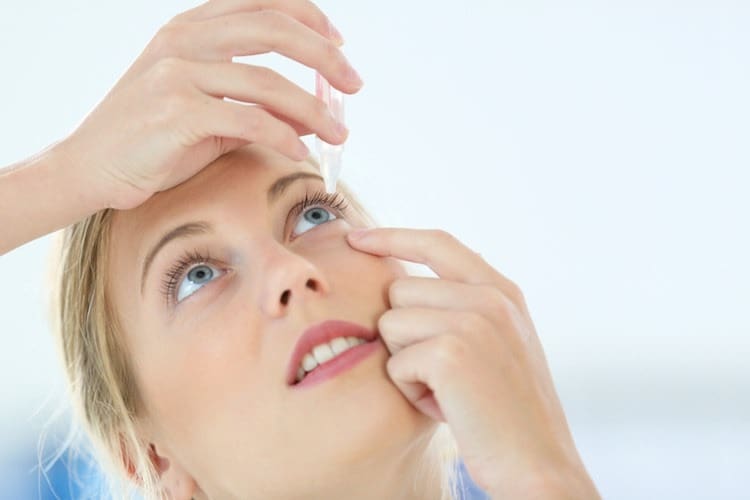
- pull your lower eyelid down gently with your index finger to form a pocket, tilt your head back slightly and look up
- hold the bottle between your thumb and index finger and squeeze gently to release the recommended number of drops into your eyelid pouch
- do not touch your eye with the dropper tip (to prevent infections)
- do not blink, as this draws the drops into the tear duct and out of the eye
- close your eye and press gently on the corner near your nose, to stop the drops draining through your tear duct
- if you have trouble with the above, drop the fluid onto the inner corner of your eye, and then tilt your head to the side to allow the drop to run over the surface of your eye
- wait 10 minutes before adding other eye products
- use eye drops before any eye ointment
Tips for applying eye ointment
- to position the tube tip, hold the tube between your thumb and index finger and rest your hand against the base of your nose
- apply a small blob of ointment into your lower eyelid pouch
- blink to spread the ointment to the entire eye
- your eyes may be blurry with the ointment for the first few seconds, but this will subside as you continue blinking
- do not touch your eye with the tube tip, to prevent infections
Treatment Options
Dry eyes
- dry eyes can be relieved by replacing natural tears with a substitute
- eye drops, gels and eye ointments are available and contain lubricants or artificial tears; these different products are applied in different ways
- gels and ointments work for longer than drops but may blur vision temporarily; they are a good option for use before bed
- eye drops are useful if you have slightly dry eyes, as you may need to use them more often
- gels are useful for moderately dry eyes
- combination treatments are good for severely dry eyes; for severe dry eye, talk to your pharmacist, doctor or eye specialist
- while dry eye might make your eyes look red, the treatments for dry eye are different to those for the conditions called ‘red eye’ and allergic conjunctivitis (allergic eye); using the wrong drops can make dry eye worse, so ask your pharmacist for advice
- the preservatives in some eye drops can also irritate the eyes if you are sensitive to them, but preservative-free versions are available
- preservative-free eye drops are available in single-use vials, which must be discarded after use
Lubricant eye drops and gels (dry eyes)
[GENERAL SALE]
e.g. Bion Tears, Cellufresh, Celluvisc, GelTears, Genteal Gel, Genteal Lubricant Eye Drops, HPMC PAA, In A Wink Moisturising Eye Drops, Liquifilm Forte, Liquifilm, Minims Artificial Tears, Murine Tears, Optive, Optrex Eye Drops, PAA, Poly Gel Lubricating Eye Gel, Poly-Tears, PVA Forte, PVA Tears, Refresh, Refresh Contacts, Refresh Liquigel, Refresh Plus, Refresh Tears Plus, Systane, Tearsagain, Tears Naturale, Viscotears, Vistil, Vistil Forte
Lubricant eye ointments (dry eyes)
[GENERAL SALE]
e.g. Ircal, Poly Visc Lubricating Eye Ointment
Eye drops with antihistamine (allergic conjunctivitis)
[PHARMACY ONLY]
e.g. Albalon-A, Eyezep Eye Drops, Visine Allergy with Antihistamine, Zaditen, Cromolux Eye Drops
Minor eye irritations
- other minor eye irritations can happen because your eyes are tired or irritated. You can use lubricant eye drops to soothe them
- if your eyes are red, eye drops containing a decongestant can relieve the redness, but they should only be used for a few days
Eye drops with a lubricant and decongestant (red eyes)
[PHARMACY ONLY]
e.g. Albalon, Livostin Eye Drops, Lomide Eye Drops 0.1%, Murine Clear Eyes, Murine Sore Eyes, Naphcon-A, Opticrom Eye Drops, Optrex Eye Drops, Visine Advanced Relief, Visine Clear Eye Drops, Systane Red Eyes
- decongestants should not be used for more than five days. They can worsen the redness if used longer than this (a ‘rebound’ redness from overuse)
More Information
Availability of medicines
- GENERAL SALE available through pharmacies and possibly other retail outlets.
- PHARMACY ONLY available for sale through pharmacies only.
- PHARMACIST ONLY may only be sold by a pharmacist.


