
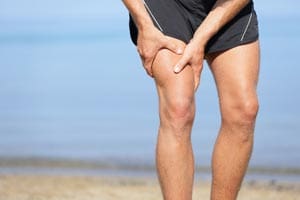
Muscular aches and pains are very common and most people will suffer from sore muscles at some time or another. Muscular aches and pains (myalgia) can happen to any muscle in the body and may be caused by unaccustomed use of muscles, overuse of muscles or tension (such as from poor posture) among other causes.
Muscle aches may be accompanied by stiffness, tenderness and/or weakness of the affected muscle. Uncomplicated muscle aches, where you normally know what brought them on, are usually easily treated at home with some simple measures.
More severe muscle pain accompanied by swelling and restricted movement or bruising may mean that muscles, tendons or ligaments have been torn or damaged, for example, sprains or strains. This type of muscle pain usually starts during, rather than after, exercise. You should seek help from a doctor or physiotherapist if you have severe muscle pain.
Sometimes muscle aches and pains are related to medical conditions such as influenza or fibromyalgia. In these cases, the muscle pain may be widespread throughout the body, not limited to one muscle or muscle group. Muscle aches and pains that are due to illness are also usually accompanied by additional symptoms.
Widespread sore muscles may also be caused by certain medicines, including statins (cholesterol-lowering medicines) and ACE inhibitors (used to treat high blood pressure).
Delayed onset muscle soreness (DOMS)
Delayed onset muscle soreness, known as DOMS, is different from normal muscle soreness that develops during or after an activity. Delayed onset muscle soreness (DOMS) is muscle pain and stiffness that usually starts 12-24 hours after the activity, with the most pain happening 24 hours after and it can last for 3 to 5 days after the activity that caused it.
DOMS is thought to be related to damage and microscopic tears in the muscle fibres, that result from exercise that stresses the muscle tissue beyond what it is used to.
Symptoms can range from mild to severe, depending on the force applied to the muscle and the duration or number or repetitions of the activity. DOMS is often accompanied by swelling and tenderness of the affected muscle(s), stiffness and weakness of the muscle.
Exercises that tend to cause DOMS most frequently include those that involve movements where muscles lengthen while force is applied – known as eccentric muscle actions. Examples of these types of exercises include downhill jogging or running, walking down stairs, descending hills and mountains, and strength training, especially lowering weights.
DOMS can result from taking part in a new physical activity or training harder than usual. While you are more likely to be affected after trying a new exercise for the first time, seasoned athletes can also be affected if they push themselves harder or for longer than usual.
You should rest if pain from DOMS is severe or the pain is making exercise difficult. If you take pain relievers to treat DOMS, remember that even though the pain may be reduced, it does not necessarily mean that your muscles have recovered. Wait a few days before trying the activity that caused the soreness. In the meantime, you could try a different activity that uses different muscle groups.
The good news is that the next time you do that activity you are likely to experience less pain and recover more quickly.
When should you seek medical advice for muscle aches and pains?
You should seek medical advice if:
- you have a serious loss of movement;
- the muscle pain is severe;
- your muscle pain is associated with weakness, for example you are unable to bear weight on a leg or use an arm;
- the area is swollen and/or warm to touch, or you have extensive bruising;
- your muscle pain began after starting a new medicine;
- the muscle pain or discomfort has not improved after self-care treatment;
- the pain is from a back or neck injury;
- the muscle pain is accompanied by fever; or
- you have dark-coloured urine.
Self-care for muscle pain
Muscular aches and pains, sprains, strains and other soft tissue damage are best treated by the RICE regimen for the first 48 to 72 hours.
- Rest — no further exercise for 48 to 72 hours.
- Ice — apply ice or a cold pack for 10 to 20 minutes every 2 to 3 hours.
- Compression — use a firm elastic pressure bandage to help limit the swelling.
- Elevation — keep the injured body part raised to help reduce the swelling.
Don’t put ice directly onto the skin. Use a commercial ice/cold pack, following the manufacturer’s instructions, or wrap ice in a towel.
After 72 hours the damaged tissues generally start to heal, and heat and massage may then be introduced. It is advisable to check with a physiotherapist or doctor before starting heat treatments and physical activity, to avoid the risk of further tissue damage.
Treatments for muscle aches and pains
There are many different treatments available to help ease muscular aches and pains, including painkillers, anti-inflammatory medicines and heat rubs.
Gentle exercise, massage and medicines may also help restore mobility in the case of muscle soreness and stiffness.
Pain relievers
Simple pain relievers such as paracetamol can be used to reduce muscle pain.
Anti-inflammatory medicines, such as aspirin and ibuprofen, can reduce pain and be helpful in reducing the inflammation that contributes to muscle pain. However, use of oral NSAIDs (non-steroidal anti-inflammatory drugs) should be avoided in people with aspirin sensitivity, stomach ulcers, or symptoms of indigestion and used with caution in people with asthma, kidney problems and dehydration.
Anti-inflammatory gels and rubs
Anti-inflammatory gels and rubs (such as those containing ibuprofen, piroxicam, diclofenac or salicylates) treat the body’s inflammatory reaction to injury, encouraging healing and reducing pain.
Side effects may include rash and skin irritation. Rarely, these anti-inflammatory gels and rubs can produce the same side effects as those produced by their oral counterparts, such as heartburn. Patients with sensitivity reactions to aspirin or other NSAIDs should avoid using products that contain these drugs.
Heat rubs (rubefacients)
Muscle aches, stiffness or soreness caused by overuse or unaccustomed use may be relieved by rubefacient (‘heat rub’) products. Rubefacients cause blood vessels in the treated area to open and create a sense of warmth.
Heat rubs should not be applied to broken skin, or near the eyes or mucous membranes, and should not be used with occlusive (sealed) dressings. You should also make sure that you wash your hands after applying creams, gels, ointments, lotions or rubs.
Common ingredients found in heat rubs are menthol, camphor, and turpentine oil.
Acupuncture
Acupuncture (the insertion of very fine needles into the skin certain areas of the body – acupuncture points) and acupressure (manual pressure alone on acupuncture points) may be helpful in the treatment of muscle aches and pains.
Prevention
To avoid or minimise sore muscles and muscle pain, begin slowly when starting a new exercise programme or activity, and gradually increase the intensity and duration of the activity, but only increase one of these things at once.
Warming up before exercising can help prevent muscle strains and sprains, but generally won’t help you avoid muscle aches.
