
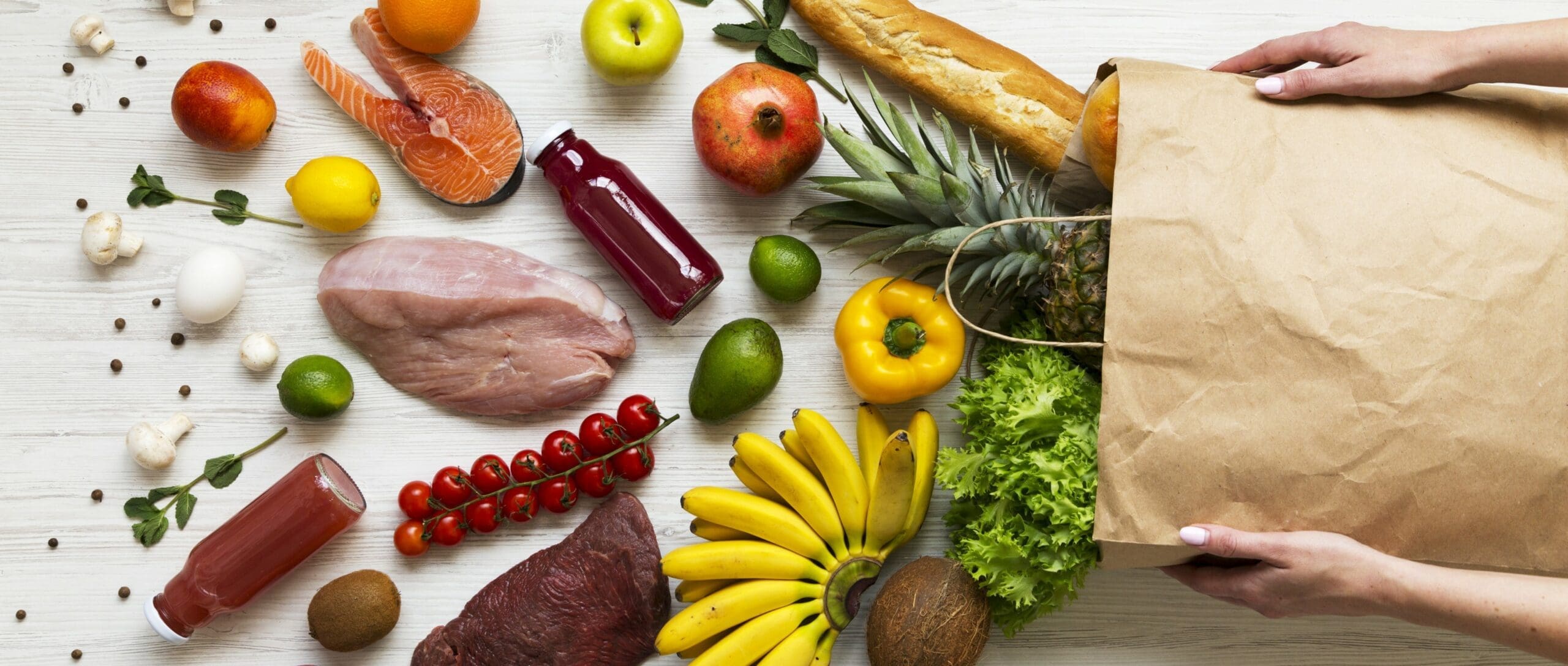
The updated Australian Dietary Guidelines (2013) are based on foods, food groups and eating patterns rather than individual nutrients. However, these evidence-based guidelines have been designed so you will get enough of the nutrients essential for good health and reduce your risk of heart disease, type 2 diabetes, some cancers and obesity.
Guideline 1: To achieve and maintain a healthy weight, be physically active and choose amounts of nutritious food and drinks to meet your energy needs
- Children and adolescents should eat sufficient nutritious foods to grow and develop normally. They should be physically active every day and their growth should be checked regularly.
- Older people should eat nutritious foods and keep physically active to help maintain muscle strength and a healthy weight.
Watch what you eat
- If you constantly eat even a little more than your body needs, you will gain weight.
- Eating too much may be due to quantity (large portions) or quality (too many discretionary products – often called ‘junk’ foods and drinks). Discretionary foods and drinks now contribute over one-third of adults’ and more than 40% of children’s kilojoule intake and are an important factor contributing to current high levels of obesity. Limiting these foods is essential for good nutrition and maintaining a healthy weight.
- Sugar-sweetened drinks are a particular hazard for weight gain in both adults and children. Studies show that, unlike solid foods, sweetened drinks have no impact on satiety (feeling full). Preferred drinks are water, moderate amounts of tea or coffee, and milk for children.
Help prevent weight gain: get active!
- A key message of the NHMRC dietary guidelines is to prevent weight gain by eating according to your energy needs. For those who have sedentary jobs and lifestyles, planned physical activity is important not only to burn kilojoules but also to maintain or increase lean muscle tissue. More lean tissue increases total energy expenditure.
- The NHMRC advises we follow international recommendations to include 45-60 minutes of moderate-intensity activity to avoid becoming overweight. People who were obese but have now lost their excess weight may need 60-90 minutes of moderate-intensity activity each day to maintain their weight loss.
Focus on healthy weight
Rather than thinking about the latest diet, try to maintain a healthy weight with healthy food choices and sufficient physical activity in your daily life. For example, limit discretionary foods and drinks, be as active as possible and reduce screen time and other sedentary activities. If you work in a sedentary job, balance your working day with some physical activity as well as keeping your energy intake from food and drinks in keeping with you body’s energy needs. Where possible, incorporate more activity into your daily routine, for example, by reducing the amount of time you spend being physically inactive, by walking or cycling where practical rather than driving, using public transport, doing housework and active play with children.
Guideline 2: Enjoy a wide variety of nutritious foods from these 5 food groups every day:
- Plenty of vegetables of different types and colours, and legumes/beans
- Fruit
- Grain (cereal) foods, mostly wholegrain and/or high cereal fibre varieties, such as breads, cereals, rice, pasta, noodles, polenta, couscous, oats, quinoa and barley
- Lean meats and poultry, fish, eggs, tofu, nuts and seeds, and legumes/beans
- Milk, yoghurt, cheese and/or their alternatives, mostly reduced fat
And drink plenty of water.
Eat plenty of vegetables, and include legumes
The Dietary Guidelines recommend a minimum of 5 servings of vegetables a day. Enjoy different types and colours for the best all-round nutritional value and remember to include vegetables at meals other than dinner. A serve is 1/2 cup of cooked vegetables such as broccoli or carrots or spinach or 1 cup of raw salad vegetables or 75g of vegetables such as potato or tomato. Currently, only 7% of Australians consume the recommended servings of vegetables, so this guideline is particularly important, especially in light of the many health benefits of consuming vegetables. A useful way to ensure variety is to use different coloured vegetables. Vegetables used in casseroles or pasta sauces or other dishes count towards the total.
Eat fruit
Two serves of fruit are recommended each day. A serve of fruit is a medium apple, banana, orange or pear, 2 apricots or kiwi fruit, or 1 cup of cooked or canned fruit (without added sugar) or 4 dried apricot halves. Note that average consumption of fruit in Australia is about half this level. Fruit juice lacks the dietary fibre found in fruit and is recommended for only occasional consumption and in small quantities (1/2 cup = a serving)
Enjoy a variety of grains (cereal) foods, mostly wholegrains
The Dietary Guidelines recommend mostly wholegrain varieties of grain foods. This includes oats, brown rice, wheat, rye, barley and corn, and products made from these grains such as wholegrain breads and breakfast cereals, polenta, couscous and pasta. Grains are sources of protein, carbohydrate, dietary fibre, vitamins of the B complex and vitamin E, iron, magnesium and zinc. The recommendation for women is 3-6 serves of grains a day (more during pregnancy and while breastfeeding), and for men 4 ½-6 serves a day. Those who are more active could select more serves. A serve of grain foods is 1 slice of bread, 1/2 cup of porridge or 30g of muesli or wheat flakes, ½ medium bread roll or 1/2 cup of cooked pasta, rice, polenta, bulgur or quinoa. Note that products such as cakes, biscuits and pastries are not part of this food group.
Enjoy lean meats and poultry, fish, eggs, tofu, nuts and seeds and legumes/beans
This diverse group of foods provide protein, but also a range of other nutrients, including iron, zinc and other minerals, vitamins and essential fatty acids. The NHMRC notes the World Cancer Research Fund’s convincing evidence that a high intake of red meat (which includes beef, lamb, pork, veal) increases the risk of bowel cancer, so weekly consumption should not exceed 455g (65g/day). This is less than most Australians eat. Choosing a variety of foods from this group is recommended. For women, the NHMRC recommends 2- 2 ½ serves a day, and 2 ½-3 serves for men. A serve is 65g of meat, 80g of poultry, 100g fish (or 1 small can), 2 eggs, 1 cup cooked beans, lentils, chick peas or other legumes, 170g tofu or 30g nuts or seeds. Note that processed and cured meats such as bacon and ham are not part of this food group.
Enjoy milk, yoghurt, cheese and/or alternatives, mostly reduced fat
Milk, cheese and yoghurt are good sources of protein, calcium, vitamins (A, D, riboflavin and B12), iodine and zinc. Alternative plant-based products such as calcium-enriched soy, rice or oat drinks are also suitable – but not as an alternative to breast milk or infant formula for infants. The nutrients present in almond and coconut milk drinks vary but those with sufficient added calcium can be used as part of a varied diet for older children and adults. Fat-reduced milk and yoghurt are recommended because they contain most of the nutrients of the full-fat varieties, but have fewer kilojoules. This may not apply to some brands of sweetened yoghurt. Women are advised to have 2 ½-4 serves from this group each day with 2 ½-3 ½ serves for men. The higher levels are for older adults. A serve is 1 cup of milk, ¾ cup (200g) of yoghurt, 40g of cheese, ½ cup (120g) of ricotta. Plant-based milk drinks should have at least 100mg calcium/100 mL.
Guideline 3: Limit intake of foods containing saturated fat, added salt, added sugars and alcohol
a. Limit intake of foods high in saturated fat such as many biscuits, cakes, pastries, pies, processed meats, commercial burgers, pizza, fried foods, potato chips, crisps and other savoury snacks.
- Replace high fat foods which contain predominantly saturated fats such as butter, cream, cooking margarine, coconut and palm oil with foods which contain predominately polyunsaturated and monounsaturated fats such as oils, spreads, nut butters/pastes and avocado.
- Low fat diets are not suitable for children under the age of 2 years.
b. Limit intake of foods and drinks containing added salt
- Read labels to choose lower sodium options among similar foods.
- Do not add salt to foods in cooking or at the table.
c. Limit intake of foods and drinks containing added sugars such as confectionery, sugar-sweetened soft drinks and cordials, fruit drinks, vitamin waters, energy and sports drinks.
d. If you choose to drink alcohol, limit intake. For women who are pregnant, planning a pregnancy or breastfeeding, not drinking alcohol is the safest option.
Why this guideline is important
Foods high in saturated fat, salt or added sugars – and also alcohol – are associated with an increased risk of many of the common health problems in Australia, including heart disease, type 2 diabetes and excess weight. Foods in this category are designated as ‘discretionary foods’. The high level of daily kilojoules these foods now contribute are inappropriate when over 60% of adults and 25% of Australian children are overweight or obese. These foods and drinks may be popular but they are not necessary and require most people to increase physical activity in order to burn up the extra kilojoules they provide. The NHMRC therefore advises that discretionary foods should only be consumed sometimes, and only in small amounts. To avoid becoming overweight, the smallest and least active adults will need to increase their physical activity if they wish to include any discretionary foods. For those who are already overweight or obese, the healthiest choice is to keep to the basic foods in the 5 food groups listed in Guideline 2.
Guideline 4: Encourage, support and promote breastfeeding
The NHMRC supports the World Health Organization in noting that breastfeeding offers an unequalled way of providing food for an infant’s healthy growth and development. Infants should be exclusively breastfed until around 6 months of age when solid foods should be introduced. Breastfeeding should be continued until the infant is 12 months old or older, as desired by the mother and child. Support for breastfeeding from the father, other family members, the workplace and the community is important for women who are breastfeeding. The Dietary Guidelines include advice on how many servings of each of the 5 food groups are needed during breastfeeding.
Guideline 5: Care for your food; prepare and store it safely
We can be grateful that Australia has a safe food supply compared with many parts of the world. However, health authorities estimate that more than 5 million cases of foodborne illness occur each year in Australia. It is therefore important that we understand the need for appropriate food handling, storage, preparation and cooking. Foods that present higher risk include raw meats, poultry and fish, dairy products, cooked rice and pasta, salads containing mayonnaise and processed or prepared foods containing eggs. Special care is needed in handling food that will be consumed by infants, pregnant women, older people and those with some medical conditions.
Dr Rosemary Stanton, Nutritionist, Visiting Fellow, School of Medical Sciences, University of New South Wales.
