
Sodium cromoglycate
Consumer Medicine Information
What is in this leaflet
This leaflet answers some common questions about Intal Solution for Inhalation. It does not contain all the information that is known about Intal Solution for Inhalation.
It does not take the place of talking to your doctor or pharmacist.
All medicines have risks and benefits. Your doctor has weighed the risks of you using Intal Solution for Inhalation against the benefits they expect it will have for you.
If you have any concerns about using this medicine, ask your doctor or pharmacist.
Keep this leaflet with the medicine. You may need to read it again.
What Intal Solution for Inhalation is used for
Intal Solution for Inhalation is used to prevent bronchial asthma due to allergy, exercise, cold air or irritants, in both adults and children.
With regular use, Intal Solution for Inhalation will help to prevent asthma symptoms from occurring.
Intal Solution for Inhalation will not relieve the symptoms of an asthma attack once the attack has started.
You should follow your doctor’s advice and prescribed treatment to obtain relief from a sudden asthma attack.
Intal Solution for Inhalation can also be used before exercise or before exposure to dust or other known asthma triggers, such as pollens or dust mite. This should prevent the symptoms (wheeze, cough, breathlessness) these triggers can cause.
Intal Solution for Inhalation works by reducing the inflammation of the airways, which occurs in asthma.
Your doctor may have prescribed Intal Solution for Inhalation for another reason.
Ask your doctor if you have any questions about why Intal Solution for Inhalation has been prescribed for you.
This medicine is only available with a doctor’s prescription.
There is no evidence that Intal Solution for Inhalation is addictive.
Before you use Intal Solution for Inhalation
When you must not use it
Do not use Intal Solution for Inhalation if you have ever had an allergic reaction to sodium cromoglycate. If you have an allergic reaction you may get a skin rash, have difficulty breathing, get symptoms of hayfever or feel faint.
Do not use Intal Solution for Inhalation after the expiry date (EXP) printed on the plastic ampoule and packaging. It may have no effect at all or, an entirely unexpected effect if you use it after the expiry date.
Do not use Intal Solution for Inhalation if the packaging is torn or shows signs of having been tampered with.
Do not use Intal Solution for Inhalation to treat any other complaints unless your doctor has instructed you to do so.
Before you start to use it
Ask your doctor to write an asthma management plan for you before you begin to use Intal Solution for Inhalation. Intal Solution for Inhalation is only one part of a general plan to help you manage your asthma. You should discuss this plan regularly with your doctor to check your treatment.
As part of your asthma management plan you will probably need to take another sort of medicine called a ‘reliever’ to relieve the symptoms of an asthma attack, which has started. If you need treatment for a sudden asthma attack, use the ‘reliever’ medicine your doctor has prescribed for you.
Tell your doctor if you are allergic to any other medicines or any foods, dyes or preservatives.
Tell your doctor if you are pregnant or plan to become pregnant. Intal Solution for Inhalation is not known to be harmful in pregnancy. However, if you are pregnant or plan to become pregnant you should discuss with your doctor the risks and benefits involved, before using Intal Solution for Inhalation.
Tell your doctor if you are breastfeeding or planning to breastfeed. This medicine is not recommended to be used for nursing mothers. Sodium cromoglycate passes into the breast milk and its safety in infants has not been established. Your doctor will discuss the risks and benefits of taking it if you are breastfeeding or planning to breastfeed.
Tell your doctor if you plan to have surgery. If you have not told your doctor about any of the above, tell them before you use Intal Solution for Inhalation.
Intal Solution for Inhalation can be used in children. Intal Solution for Inhalation should only be used in children when prescribed by your doctor. Always ask your doctor before giving medicines to children.
Intal Solution for Inhalation can be given to elderly patients. The effects of Intal Solution for Inhalation in elderly patients are similar to that in other patients.
Taking other medicines
Tell your doctor if you are taking any other medicines, including medicines that you buy without a prescription from a pharmacy, supermarket or health food shop. Some medicines may affect the way Intal Solution for Inhalation works. Your doctor or pharmacist can tell you what to do if you are taking any other medicines.
Intal Solution for Inhalation can be used with most other medicines, which are used to prevent or treat asthma.
The use of Bromohexine hydrochloride together with Intal Solution for Inhalation is not recommended.
Intal Solution for Inhalation can be mixed with certain other nebuliser solutions. Ask your doctor or pharmacist to tell you which nebuliser solutions can be mixed together with Intal Solution for Inhalation. Such mixed solutions should be used immediately. The mixture should not be used if it appears cloudy. Any solution left in the nebuliser after 15 hours must be thrown away and the chamber of the nebuliser cleaned.
Your doctor or pharmacist has more information on medicines to be careful with or to avoid while using this medicine.
How to use Intal Solution for Inhalation
How much to use
Your doctor will tell you how much Intal Solution for Inhalation to use. Use the amount your doctor tells you to.
The usual dose of Intal Solution for Inhalation for both children and adults is to inhale the contents of one ampoule, through a nebuliser four times a day. Some people may require more or less.
Do not use more than the dose your doctor has directed.
Talk to your doctor or pharmacist if you are unsure what dose to take. The dosage directed by your doctor may be different to the recommended dose.
How to use it
Intal Solution for Inhalation is recommended for use in power operated nebulisers with air flow rates of 6 – 8 litres per minute and equipped with a suitable face mask. Your doctor or pharmacist will advise you on the choice of a suitable nebuliser and how it should be used.
Hand operated nebulisers are not suitable for the administration of Intal Solution for Inhalation.
Plastic Intal Solution for Inhalation ampoules are easy to open.
- Take a strip of plastic ampoules from the box. Remove one ampoule from the strip and return the rest to the box.
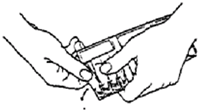
- Hold the ampoule upright. Open it by twisting and tearing off the top section.
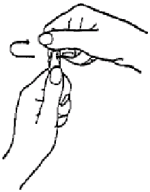
- Squeeze all of the Intal Solution for Inhalation out of the ampoule and into the solution holder of your nebuliser machine. Throw away the empty ampoule.
To inhale the Intal Solution for Inhalation, follow the instructions for use given below or those, which are supplied with the nebuliser device.
Once the nebuliser has been assembled and contains Intal Solution for Inhalation, hold the mask close to your face and switch on the device. You should breathe in through your mouth and out through your nose in a normal relaxed manner. Continue to breathe through the nebuliser for approximately 5 – 10 minutes.
Cleaning the nebuliser
It is essential that the face-mask and other parts of your nebuliser, which are in contact with Intal Solution for Inhalation are always kept clean. Follow the instructions given by the nebuliser manufacturer.
When to use it
Intal Solution for Inhalation is usually used four times daily. It is best for the doses to be evenly spaced throughout the day.
Use Intal Solution for Inhalation regularly to ensure the best possible control of your asthma symptoms. With regular use, Intal Solution for Inhalation will help to prevent asthma symptoms from occurring.
How long to use it
Ask your doctor how long you should use Intal Solution for Inhalation. To help prevent asthma symptoms, you will need to use Intal Solution for Inhalation regularly. The length of treatment with Intal Solution for Inhalation will depend on the severity and cause of your asthma.
Intal Solution for Inhalation may also be used to prevent an attack of asthma due to specific events such as exercise or other causes such as allergy.
Discuss the length of treatment with Intal Solution for Inhalation with your doctor.
Do not stop using it unless your doctor tells you to, even if you feel better.
What to expect
When used regularly, Intal Solution for Inhalation will improve your asthma symptoms such as wheezing, chest tightness, cough and shortness of breath.
Intal Solution for Inhalation may take some time to work. You may not feel the benefits for several days and the full benefits can take even longer. Do not stop taking Intal Solution for Inhalation when you feel better. If you do stop, your asthma may get worse.
When used to prevent wheezing or difficulty in breathing caused by exercise or other known asthma triggers, such as dust or pollen, Intal Solution for Inhalation will provide protection for 1 – 2 hours.
INTAL SOLUTION FOR INHALATION WILL NOT PROVIDE RELIEF FROM AN ACUTE ATTACK OF WHEEZING OR DIFFICULTY IN BREATHING ONCE IT HAS STARTED.
If you forget to use it
If you miss a dose and it is more than 2 hours before your next dose is due, take it straight away, and then continue as you normally would.
If it is less than 2 hours to your next dose, skip the dose you have missed but be sure to take the next dose when you are meant to.
Do not try to make up for missed doses by taking more than one dose at a time.
If you are not sure what to do, ask your doctor or pharmacist.
If you have trouble remembering when to use your medicine, ask your pharmacist for some hints.
If you take too much (Overdose)
Taking more than the usual dose of Intal Solution for Inhalation is very unlikely to do you harm, but, if you feel unwell or are worried about it, immediately contact your doctor or the Poisons Information Centre (telephone Australia 13 11 26) or go to Accident and Emergency at your nearest hospital.
While you are using Intal Solution for Inhalation
Things you must do
Use Intal Solution for Inhalation exactly as your doctor has prescribed. If you do not follow your doctor’s instructions, you may not get relief from your asthma. Try not to miss any doses and continue to use the medicine even if you feel well.
Tell your doctor immediately if you become pregnant while using Intal Solution for Inhalation. Your doctor can discuss with you the risks of using Intal Solution for Inhalation while you are pregnant.
Tell your doctor if you are breastfeeding or planning to breastfeed. This medicine is not recommended to be used for nursing mothers. Sodium cromoglycate passes into the breast milk and its safety in infants has not been established. Your doctor will discuss the risks and benefits of taking it if you are breastfeeding or planning to breastfeed.
Tell all doctors, dentists and pharmacists who are treating you that you are using Intal Solution for Inhalation, especially if you are being started on any new medicines.
If you plan to have surgery that needs a general anaesthetic, tell your doctor or dentist that you are using Intal Solution for Inhalation.
Things you must not do
Do not give this medicine to anyone else, even if their symptoms seem similar to yours.
Do not stop using Intal Solution for Inhalation suddenly. If you stop using Intal Solution for Inhalation suddenly following regular use, it may make your asthma worse. If you want to stop using Intal Solution for Inhalation, your doctor will tell you how to do it gradually.
Do not use more than the recommended dose unless your doctor tells you to.
Things to be aware of
Intal Solution for Inhalation does not cause drowsiness and does not appear to affect the ability to drive or to operate machinery.
Intal Solution for Inhalation has not been shown to increase the effects of alcohol.
However, as with any new medicines you should take care when driving, operating machinery or drinking alcohol until you know how Intal Solution for Inhalation affects you.
Side effects
Tell your doctor or pharmacist as soon as possible if you do not feel well while you are using Intal Solution for Inhalation. Intal Solution for Inhalation helps most people with asthma, but it may have unwanted side effects in a few people.
All medicines can have side effects. Sometimes they are serious, most of the time they are not. You may need medical treatment if you get some of the side effects.
Ask your doctor or pharmacist to answer any questions you may have.
Tell your doctor if you notice any of the following and they worry you:
- mild throat irritation
- coughing
- temporary chest tightness (bronchospasm).
These are mild side effects of Intal Solution for Inhalation and usually disappear after a short period of time.
Tell your doctor immediately or go to Accident and Emergency at your nearest hospital if you notice:
- severe chest tightness with coughing and difficulty in breathing
- allergy symptoms such as a rash, itching or hives on the skin, swelling of the face, lips, tongue or other parts of the body, shortness of breath, wheezing or trouble breathing. These symptoms are an indication of an anaphylactic reaction caused by a hypersensitivity to the product.
These are serious side effects. You may need urgent medical attention. Serious side effects are rare.
Tell your doctor if you notice anything else that is making you feel unwell. Some people may get other side effects while using Intal Solution for Inhalation.
Do not be alarmed by this list of possible side effects. You may not experience any of them.
After using Intal Solution for Inhalation
Storage
Keep Intal Solution for Inhalation in a cool place where the temperature stays below 25°C.
Do not freeze Intal Solution for Inhalation.
Do not leave Intal Solution for Inhalation in the car on hot days.
Keep Intal Solution for Inhalation away from direct sunlight.
Do not store Intal Solution for Inhalation or any other medicine in the bathroom or near a sink or stove. Heat, light and dampness can destroy some medicines.
Keep Intal Solution for Inhalation where young children cannot reach it. A locked cupboard at least one-and-a-half metres above ground is a good place to store medicines.
Disposal
Ask your pharmacist what to do with any Intal Solution for Inhalation you may have left over if your doctor tells you to stop using it, or you find that the ampoules have passed the expiry date.
Product description
What Intal Solution for Inhalation looks like
Intal Solution for Inhalation is presented as clear plastic ampoules containing the solution for inhalation. The ampoules are attached in strips. Each pack of Intal Solution for Inhalation contains 60 ampoules for inhalation.
Ingredients
Each ampoule of Intal Solution for Inhalation contains 20mg of sodium cromoglycate in 2mL of sterile purified water.
Sponsor
Intal Solution for Inhalation is supplied in Australia by:
Aventis Pharma Pty Ltd
12-24 Talavera Road
Macquarie Park, NSW 2113
Australia
This leaflet was prepared in March 2006. (#40460v3)
AUST R 27755
Published by MIMS August 2006