
What is meningitis?
Meningitis means inflammation of the meninges — the lining around the brain and spinal cord. It is usually caused by a bacterial or viral infection.
Meningitis is a serious condition that can develop suddenly and can be life-threatening. It’s important to seek immediate medical attention if your child has symptoms of meningitis so that it can be treated promptly.
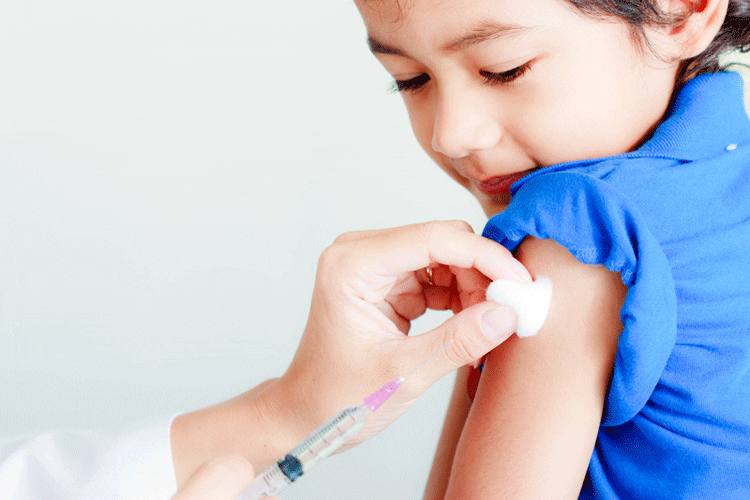
There are vaccines available that can help protect your child from many types of meningitis.
What are the symptoms of meningitis?
The symptoms of meningitis in babies and young children include:
- very high body temperature (fever) or very low body temperature;
- loss of interest in food;
- drowsiness and lethargy;
- irritability and fretting;
- vomiting;
- diarrhoea;
- red or purple skin rash;
- becoming ‘floppy’ or unusually stiff;
- irregular breathing;
- have a bulging or tight fontanelle (soft spot on top of a baby’s head); and
- sensitivity to light (disliking light as it hurts the eyes).
Symptoms in older children may also include:
- headache;
- sensitivity to light;
- neck stiffness;
- sore throat;
- joint pains;
- vomiting;
- irritability and confusion; and
- seizures.
Meningitis can develop suddenly and become serious very quickly, so urgent medical attention must be sought if you suspect a baby or child has meningitis.
Sometimes the early signs of meningitis are not obvious, and neck stiffness is often absent in infants. Parents are usually very instinctive about their children. If you believe there is ‘something not quite right’ with your child, you should take him or her to your doctor to exclude a serious illness.
What causes meningitis?
Meningitis in children is usually caused by a viral or bacterial infection. Bacterial meningitis is generally more severe than viral meningitis.
Bacterial meningitis
Most cases of bacterial meningitis in children in Australia are caused by one of 3 different types of bacteria:
- Neisseria meningitidis – commonly known as the meningococcus bacterium;
- Streptococcus pneumoniae – commonly known as the pneumococcus bacterium; and
- Haemophilus influenzae type B.
These bacteria can also cause septicaemia, where the bacteria invade the bloodstream. This is also a medical emergency and can be life-threatening.
Since immunisation against Haemophilus influenzae type B (Hib) became part of the National Immunisation Program Schedule in 1992, Hib meningitis has become rare.
The National Immunisation Program Schedule now also includes vaccines against several strains of pneumococcus and several strains of meningococcus, leading to a significant reduction in cases of pneumococcal and meningococcal meningitis as well.
Viral meningitis
Meningitis can also be caused by viruses, including enteroviruses, influenza virus and herpes simplex virus (HSV). Measles, chickenpox and mumps viruses can also lead to viral meningitis, but thanks to immunisation these infections are now rare in Australia.
How is meningitis spread?
Bacteria and viruses can be spread from person to person by close contact, or by breathing in tiny droplets sprayed into the air when an infected person coughs or sneezes. Kissing is another way that germs can be spread from one person to another.
Bacteria that can cause meningitis live in the nose and throat of some adults and children without affecting them or causing them to be unwell. In fact, about one in 10 Australians carries the meningococcus bacterium in their respiratory tracts without suffering any disease themselves. This carriage rate may be higher in groups of people living in crowded conditions. People who smoke are more likely to be carriers than non-smokers. Carriers can infect others by coughing or sneezing on or near them.
Diagnosis and treatment of meningitis in children
Your doctor will ask about your child’s symptoms and perform a physical examination looking for signs of meningitis. If your doctor suspects meningitis, they may recommend tests for your child, such as:
- blood tests; and
- a lumbar puncture (a procedure where a sample of cerebrospinal fluid – the fluid that surrounds the brain and spinal cord – is taken from the lower back and tested for infection).
In cases of suspected bacterial meningitis, your doctor may start treatment with antibiotics before any tests are done, so that your child will have the best chance of recovery. They may also give an injection of corticosteroids.
Children with meningitis usually need to be treated and closely monitored in hospital. Medicines and fluids are usually given via a drip into a vein (intravenously).
Bacterial meningitis needs treatment with antibiotics and corticosteroids to treat the infection and help prevent complications. Pain relievers are also given. Some types of viral meningitis can be treated with antiviral medicines, but in many cases there is no specific treatment for viral meningitis and children get better with rest, fluids and pain relief.
Can meningitis be prevented by a vaccine?
Haemophilus influenzae type B
As mentioned earlier, the Haemophilus influenzae type B (Hib) vaccination programme has drastically reduced the incidence of meningitis due to Hib in Australia. Several doses are needed to protect your child from Hib infection – these are all included as part of routine childhood vaccinations.
Meningococcus
There are several different serogroups, or strains, of meningococci – those that most commonly cause disease are groups A, B, C, W and Y.
In Australia, vaccines available against meningococcus include:
- Meningococcal A,C,W,Y vaccine (against meningococcal disease caused by meningococcus serogroups A, C, W or Y). This quadrivalent vaccine (called Nimenrix) is now given for free in childhood as part of the National Immunisation Program. It is also given at 14-16 years of age in school programs and is available to adolescents aged 15 to 19 years who missed receiving the vaccine at school. Quadrivalent vaccines are also used in people who have conditions that put them at risk of meningococcal disease. They are also recommended for people travelling to parts of the world where these 4 serogroups of meningococcus are common — particularly pilgrims attending the annual Hajj in Saudi Arabia.
- Meningococcal B vaccine. A vaccine against group B meningococcus is available in Australia, but is only funded on the National Immunisation Program schedule for indigenous children.
Pneumococcus
There are at least 90 different subtypes of Streptococcus pneumoniae that have been identified. Most of them cause disease, but only some cause serious infections. Vaccines against the pneumococcus that are available in Australia include:
- the 13-valent pneumococcal conjugate vaccine (13vPCV), which offers protection against the 13 serotypes that cause the majority of invasive pneumococcal disease in young children in Australia; and
- the 23-valent pneumococcal polysaccharide vaccine (23vPPV), which offers protection against the 23 most common or most disease-causing types of pneumococcus.
The pneumococcal conjugate vaccine (13vPCV) is recommended for all children, and is given as part of the National Immunisation Program Schedule. Vaccination with 23vPPV may also be recommended for certain children who are at increased risk of pneumococcal disease.
Viral meningitis
While there is no vaccine for enteroviruses (now the most common cause of viral meningitis), there are vaccinations available against many viral infections that can lead to meningitis. These include measles, mumps and chickenpox vaccinations, which are part of the National Immunisation Program Schedule. Influenza vaccination is also available and recommended each year for children older than 6 months.
Antibiotics to prevent meningitis
If you or your child has been in close contact with someone who has developed bacterial meningitis, your doctor may recommend that you take antibiotics to help prevent infection. Talk to your doctor if you are concerned about a possible exposure to bacterial meningitis.
| Meningitis: what the words mean | |
|---|---|
| Bacterium | Singular of bacteria, a type of germ. |
| Meningitis | Inflammation of the membrane covering the brain and spinal cord. |
| Meninges | Membrane covering brain and spinal cord. |
| Meningococcal infection | This can result in meningitis or septicaemia or both. |
| Meningococcus | Common name for a type of bacterium called Neisseria meningitidis. |
| Pneumococcus | Common name for a bacterium called Streptococcus pneumoniae. |
| Septicaemia | Blood poisoning. Invasion of the bloodstream by disease-causing bacteria, viruses or fungi. |
| Serotype | A subdivision of a particular species of bacterium or virus based on characteristic proteins it possesses. |
