
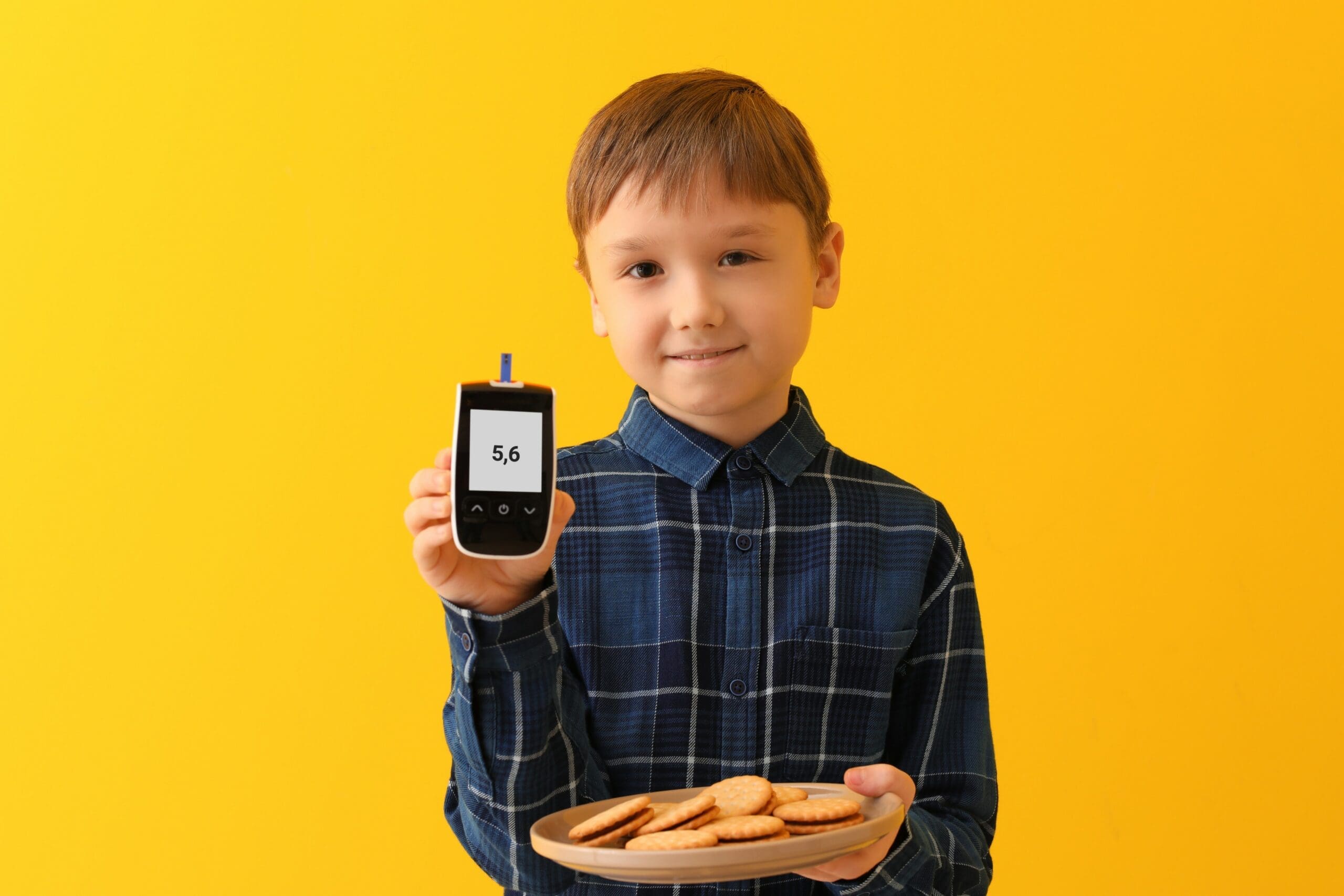
Diabetes is a chronic (ongoing) condition characterised by high blood sugar levels due to the body’s inability to produce or respond to insulin, a hormone that allows blood glucose to enter the cells of the body and be used for energy.
There are 2 main types of diabetes: type 1 and type 2. Children are most commonly affected by type 1 diabetes, although a growing number of young people are developing type 2 diabetes, a type of diabetes more commonly diagnosed in adults.
Type 1 diabetes is an autoimmune disease (caused by the body’s own immune system) in which the body attacks its own beta cells (the cells that produce insulin in the pancreas). This means the pancreas produces little or no insulin to regulate blood sugar, resulting in abnormally high levels of blood sugar. It most commonly develops during childhood, which is why it is also sometimes known as juvenile onset diabetes.
People who have type 1 diabetes need to take daily insulin to regulate their blood sugar.
Tips to help your school-aged child manage diabetes
1: Be aware of your child’s feelings
Young children who have been diagnosed with diabetes sometimes misunderstand their condition. They might feel that they are being punished for something they have done, or they might feel guilty and ashamed of their diabetes. You might find that your child believes you have the power to make their diabetes go away or, on the other hand, you might find that your child blames you for their condition and becomes hostile towards you for a time.
Whatever your child may be feeling, you can help by teaching your child to have a sense of control over their condition.
2: Be protective, but don’t be overprotective
It’s all too easy for anxious parents to be overprotective, particularly when their child has a chronic condition such as diabetes. However, being overprotective can have a negative effect on your child, by promoting a sense of low self-esteem. For example, if you are overprotective, you might inadvertently be encouraging your child to feel as if they can’t cope, thinking of themselves as sickly and helpless against their condition, instead of feeling able to manage their diabetes themselves. By getting your child involved in the management of their diabetes, you can remain protective of your child while encouraging self-reliance.
3: Encourage independence
A child with diabetes will have to master the daily challenges involved in controlling their condition. For example, they will gradually have to learn how to monitor their blood sugar, administer insulin, monitor their diet and know how to deal with hypoglycaemia if it occurs.
Hypoglycaemia is a condition in which blood sugar becomes too low, resulting in symptoms such as:
- headache;
- weakness or drowsiness;
- shaking;
- hunger;
- sweating;
- odd behaviour or irritability;
- faintness; and
- confusion.
It can be caused when a person with diabetes hasn’t eaten enough food, has exercised without eating extra food to meet the increased demand, or has administered too much insulin. Consuming sweet juices or food with sugar such as jellybeans or glucose tablets should help recovery. Your child should carry ’emergency’ food such as jellybeans with them at all times.
As a parent, you can encourage your child to learn the management skills they need so that, eventually, they can become adept at self-care and can manage their condition independently. Of course, supervision is vital at first, and some children will be physically and emotionally ready to take control of their diabetes earlier than others, so let your child go at their own pace.
As a guide, by the time your child starts primary school, your child should be able to ‘assist’ you in carrying out all the tasks associated with their diabetes.
By the age of about 8 years, your child may be able to perform their own blood glucose test (with supervision, of course), and by about the age of 10 years, they might feel ready to try administering their own insulin, again with supervision.
Older children should become adept at administering their own insulin and conducting their own blood glucose tests, with supervision, so that by the time they reach high school, your child should be able to administer insulin without supervision, and should be able to monitor their own blood glucose levels.
Of course, like anyone with diabetes, if their blood glucose becomes too low (that is, when they have hypoglycaemia or a ‘hypo’), they will need help to conduct their blood glucose test and get the treatment they need to recover. You should encourage your child to tell their friends about their diabetes and to teach their friends what to do in the case of a hypo.
4: Create a routine
To help your child learn to manage their diabetes, establish a daily routine. Encourage your child to eat at regular times, to administer insulin regularly, to plan ahead and have a snack when they are going to exercise, and to monitor their blood glucose throughout each day.
Informing the staff at your child’s school about your child’s diabetes should help to ensure that your child sticks to their management routine.
Eating and snacking
Make sure your child knows that they shouldn’t skip meals and they should try to eat at the same times each day. Your child might need additional snacks, such as at mid-morning, mid-afternoon or before bed. Make sure your child knows the timing of their snacks and meals so that they can manage their blood sugar levels to the best of their ability, and make sure they carry glucose tablets or jellybeans to help treat hypoglycaemia.
Ensure your child knows that they should choose foods from the school canteen that are healthy, well-balanced and low in simple sugars.
Exercising
Make sure your child knows they can enjoy sports and exercise like any other child, provided they take precautions. They might need to plan extra time before exercising so they can take a blood glucose test, or have a snack to prevent low blood sugar as a result of exercising.
Measuring blood glucose levels and taking insulin
Your child might need to monitor their blood glucose levels a few times a day, including before meals and before going to bed, and some children might need to take insulin during school hours. Make sure your child feels comfortable doing these tasks, or if they are too young to do them by themselves, make sure they know who to ask for help while at school.
5: Seek support from your child’s teachers
You can help improve your child’s diabetes management by talking to your child’s teachers. They should be made aware that your child has diabetes and, if necessary, you can inform them about what they might need to do to help your child while at school.
For example, teachers at your child’s school can:
- supervise or help your child to take their insulin or conduct a blood glucose test in a private area;
- ensure your child eats meals and snacks on time;
- ensure that your child has time to have a snack before starting exercise classes or sports;
- ensure that your child has permission to eat snacks in the classroom or during examinations, if they need to; and
- recognise the warning signs of hypoglycaemia and keep a source of sugar handy, such as jellybeans or glucose tablets, to treat your child quickly.
6: Encourage normal activity
A child who has diabetes has certain special needs, however, there’s no reason that your child should avoid taking part in group activities and normal classroom activities such as sports, exercise classes or excursions, provided your child knows the principles of managing their diabetes, and provided your child’s teachers know how to help manage your child’s diabetes while your child is in their care.
Be aware that your child may not like being the focus of special treatment, so you should arrange with your child’s teachers that your child be allowed to follow their diabetes routine inconspicuously.
7: Consider going to diabetes camp
Some organisations, such as Diabetes Australia, promote educational camps to help children use their diabetes management skills and encourage self-reliance and confidence in managing their diabetes. Meeting up with other children with diabetes often has a positive effect, and it can encourage children to take on tasks that they might previously have avoided, such as administering insulin by themselves.
By supporting your child as he or she learns the skills they need to manage their diabetes, you can ensure that diabetes does not become a barrier to a happy, normal childhood.
Diabetes in teenagers
If you have a teenager with diabetes, it’s important to be aware of some of the issues affecting your teen when it comes to managing their diabetes. Good family communication and problem-solving, along with reduced conflict between parents and teens, can help improve diabetes control. Among adolescents, those with parental involvement tend to have better diabetes control.
Here are 5 tips to help you and your teenager cope with their condition.
1: Promote self-reliance
While your child was growing up, you may have been teaching your child how to master the basics of diabetes management, such as learning to eat regularly, exercise regularly, take their insulin regularly and monitor their blood sugar.
Now is the time to consolidate that learning to encourage your teen to become self-sufficient when it comes to managing their diabetes. For example, older teens are likely to start making decisions about their treatment and management for themselves, rather than relying on you.
And they might prefer to visit their doctor alone, rather than with you. It is here that you may have to trust the expertise and help of your teen’s healthcare professionals. For example, if your teen is uncommunicative after meeting with their doctor, you should try to ensure that you are kept in the communication loop between your teen and their doctor or diabetes educator, always respecting the fact that your teen may now be the one making many of the decisions about their condition.
However, your teen should not be afraid to ask for help if they need it: for example, your teen can apply for special consideration during senior exam time in case their blood sugar becomes difficult to control during that stressful time.
Lots of hospitals and diabetes centres operate diabetes support groups for teenagers (and their parents), so that they can meet with others and share their experiences, and organisations such as Diabetes Australia promote educational camps to help teenagers learn diabetes management skills.
Attending a recognised Diabetes Australia camp can help teenagers with diabetes feel better about their condition, improve their self-esteem and boost their confidence in handling their condition.
2: Understand your teen’s metabolism
During adolescence, it can be very difficult to control blood glucose levels and this could be because of bodily changes that affect your teen’s metabolism.
During puberty, growth spurts and hormonal changes can result in the levels of blood glucose varying from too low to too high.
Sometimes, you may have to encourage your teen to accept that less tightly controlled blood glucose is no one’s fault, but that is not a reason to give up trying to control it.
3: Understand your teen’s lifestyle
Having diabetes should not be an impediment to enjoying life, and it’s important that your teen recognises this and finds strategies to manage their diabetes without affecting their lifestyle.
Adolescence is a time for trying things out — your teen might want to eat takeaway foods, go to parties, and do things on the spur of the moment. And they can. You can help your teen realise that they can have an enjoyable social life and stay within healthy limits, but this can only be achieved by being disciplined about their diabetes.
You can explain that by acting sensibly about their diabetes, with the help of their doctor, dietitian and diabetes educator, your teen actually has more freedom to enjoy life than if they let their diabetes get out of control.
4: Be aware of peer pressure
Although diabetes is a common problem, it is likely that a teen with diabetes will be in a minority at school and when with groups of friends. With adolescence bringing a plethora of physical, social and emotional issues at the best of times, it’s important that you understand what your teen may be going through.
During adolescence, being ‘part of the crowd’ is particularly important and your teen may be embarrassed about having to monitor their blood sugar or take insulin.
Encourage your teen to tell their close friends about their diabetes and offer suggestions as to how these friends could help. For example, your teen could teach their friends what to do if they become hypoglycaemic (where blood sugar becomes too low due to lack of food or too much insulin, resulting in sudden symptoms such as shaking, sweating, headache, hunger, weakness, dizziness, lack of concentration and irritability).
Also, be aware that your comments to other people might make your teen embarrassed, so ask your teen what they would like you to say in front of other people if the subject of their diabetes comes up in conversation.
5: Be realistic and seek help if you need it
Adolescence has its challenges for both parents and teens. You might find that the child who used to comply with everything you suggested gradually becomes unco-operative and may rebel against the routine management of their diabetes by going on food binges, or refusing to monitor their blood sugar levels.
So if you feel that, despite your best efforts, your teen is not managing their diabetes as well as they could, seek the help of your healthcare professional and take advantage of other help where it is available. Organisations such as Diabetes Australia may be able to offer advice and help you to help your teenager maintain control of their condition.
