
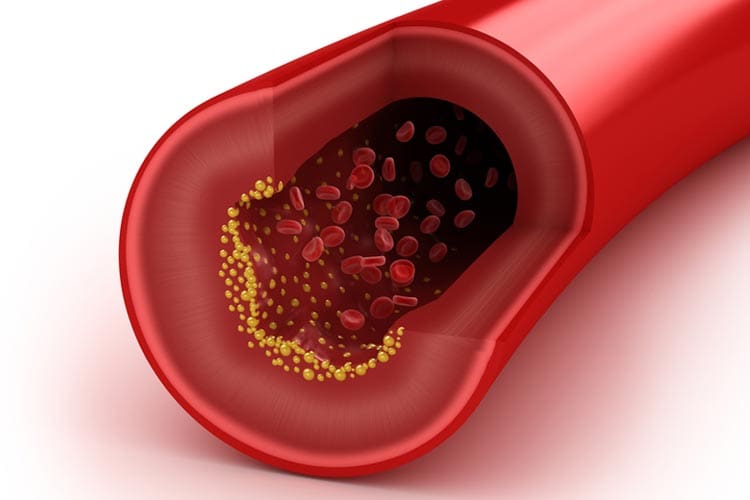
Atherosclerosis (also known as hardening of the arteries or stiffening of the arteries) is a disease of the blood vessels (the arteries) that carry blood and oxygen from the heart to the rest of the body. The arteries are normally quite flexible, but over many years, the artery walls gradually lose their elasticity. The walls become hardened and stiff due to the build-up of a substance called plaque that is rich in cholesterol. The plaque can restrict the flow of blood, which means parts of the body don’t get the oxygen they need. Atherosclerosis can affect arteries anywhere in the body, and may lead to a serious medical emergency, such as a heart attack, stroke or even death.
Atherosclerosis is also known as arteriosclerosis.
What is cholesterol?
Cholesterol is a fatty substance that is made by the body but which is also found in some foods. High levels in the blood of a type of cholesterol (called ‘bad’ cholesterol, or LDL-cholesterol) increases the risk of developing heart disease, including atherosclerosis. Estimates suggest that around a third of the adult Australian population has high levels of cholesterol.
Plaque in the arteries
Plaque is a mixture of ‘bad’ cholesterol, fats, calcium and white blood cells that slowly and silently builds up inside the walls of the arteries. As the plaque grows over many years, it can begin to interfere with the flow of blood through the artery. In severe cases, the flow of blood can be completely blocked.
The development of plaque is affected by what you eat, your weight, how much physical activity you do, and whether you’re a smoker. It is also affected by your age and gender, and whether you have a history of high cholesterol in your family.
There are 3 main stages in the development of atherosclerosis:
Stage 1 – Plaque builds up in an artery

The inside lining of a healthy artery is normally smooth to make it easy for blood to flow. However, if the inner lining of the artery becomes damaged – for example, due to high cholesterol, high blood pressure or smoking – it allows plaque to start accumulating within the artery wall.
Over time, a tough, fibrous cap or scar forms over the top of the plaque, so that the mixture of ‘bad’ cholesterol, fats (lipids), calcium and white blood cells is kept separate from the blood.
The growth of the plaque can narrow the artery, which reduces the flow of blood through the artery.
Stage 2 – The plaque gets bigger and becomes unstable

There are different types of plaque. Some plaques grow slowly and may never cause any symptoms, even if the plaque is large enough to severely restrict blood flow through the artery.
The most dangerous type of plaque is called unstable plaque. In these plaques, the tough fibrous cap on top of the cholesterol-rich plaque becomes thin and weak, which makes it more likely to burst.
Stage 3 – The plaque bursts and a blood clot blocks the artery

Narrowing of the artery due to the build-up of plaque makes it harder for blood to flow through the artery. Forcing the blood through a narrower space increases blood pressure in the artery, which can tear open the fibrous cap of the unstable plaque.
As the cap bursts, the contents of the plaque – including cholesterol, fats, and white blood cells – are released into the blood. This can trigger the development of a large blood clot (or thrombus) which can completely block the already narrowed artery.
Depending on where the blockage occurs, the blood clot can cause a medical emergency, such as a heart attack (if an artery supplying the heart becomes blocked) or a stroke (if the blockage affects an artery supplying the brain).
Which arteries can be affected by atherosclerosis?
Atherosclerosis can affect any artery in the body, and the outcome depends on where the affected artery is located.
Some of the important sites of atherosclerosis include:
- The coronary arteries which supply blood to the heart – A build-up up of plaque in these coronary arteries can reduce the flow of blood to the muscles of the heart. This can cause pain or discomfort (called angina) in the chest, shoulders, neck, jaw or arms. A heart attack may occur if a coronary artery becomes completely blocked due to a blood clot.
- The peripheral arteries which supply blood to your arms, legs, and pelvis – Narrowing or blockage of these major blood vessels is called peripheral arterial disease and can result in numbness or pain in the limbs, including pain in the legs when walking or climbing stairs (called claudication). Reduced blood flow to the toes, feet, and legs increases the risk of poorly healing wounds and infections in these areas. If blood flow is severely restricted, tissues in the lower parts of the limbs may rot and die (called gangrene) and need to be amputated.
- The carotid arteries on either side of your neck that supply blood and oxygen to your brain – Narrowing or blockage of these arteries can lead to a stroke. Symptoms of a stroke can include sudden weakness, paralysis, confusion, difficulty speaking, or loss of consciousness.
- The renal arteries which supply your kidneys with blood – If these arteries become narrowed or blocked, you may develop kidney disease, which means your body can’t effectively get rid of wastes and excess fluid. Symptoms of kidney disease can include changes in urination, loss of appetite, feeling sick, difficulty concentrating, and swollen hands or feet.
