
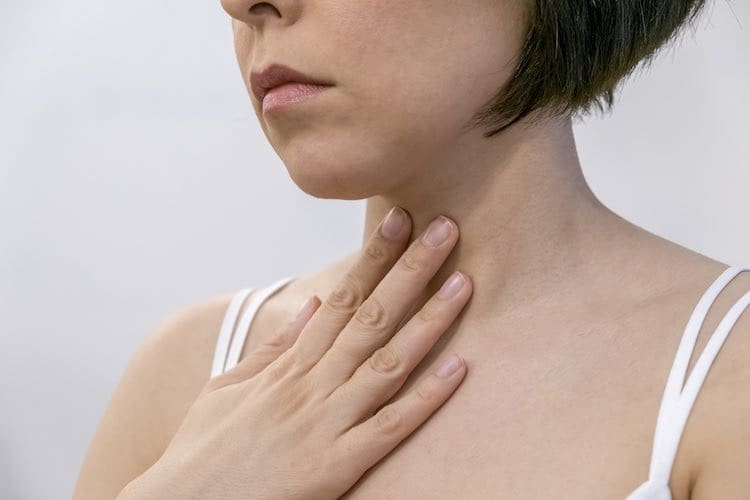
Thyroid nodules are lumps that develop within the thyroid gland in the neck. They are also sometimes called thyroid adenomas. Thyroid nodules are common, and can be either cystic (fluid filled), solid or a combination of both. They are more common in women than in men, and become more common with increasing age.

Sometimes the nodules secrete excessive amounts of thyroid hormone – this is called a toxic adenoma, hyperfunctioning nodule or ‘hot nodule’.
The vast majority of thyroid nodules are harmless, however a small proportion (up to 15 per cent) are malignant (cancerous). But even among nodules found to be malignant, many are small and thought to be unlikely to have an impact on your health.
Symptoms
Most thyroid nodules do not cause any symptoms, and are often only discovered during a routine medical examination.
Sometimes thyroid nodules become large enough that you can see and/or feel them. Occasionally, if nodules become quite large, they may put pressure on the trachea (windpipe) or oesophagus (food pipe). This can lead to symptoms such as difficulty with breathing or swallowing. Nodules can also affect your voice, as the thyroid is located near your larynx (voice box).
If nodules produce an excessive amount of thyroid hormone they may cause symptoms of hyperthyroidism. Symptoms of hyperthyroidism can include:
- fatigue;
- heat intolerance;
- weight loss; and
- a rapid or irregular heart rate.
Causes
In most cases, the cause of thyroid nodules is not known.
In some people the development of thyroid nodules may be linked to iodine deficiency. Iodine deficiency (resulting from a poor dietary intake of iodine) is not common in Australia.
Sometimes, what’s thought to be a solitary thyroid nodule is actually a multinodular goitre (an enlarged thyroid gland that contains several discrete nodules).
Tests and diagnosis
Your doctor will ask about any symptoms you have noticed, such as a lump in the neck or symptoms suggesting hyperthyroidism (an excess of thyroid hormone). They will want to examine your neck, including watching and feeling your neck while you swallow because the thyroid moves up and down when you swallow. They’ll also look for any signs of thyroid hormone imbalance.
There are several tests that can help with the diagnosis of thyroid nodules. The first test is usually a blood test to measure the level of thyroid stimulating hormone (TSH). This will give an accurate indication as to whether there is too much thyroid hormone in the body.
In cases where there is an abnormal amount of thyroid hormone, the next step will usually be a nuclear medicine scan to look for a ‘hot’, or hyperfunctioning, nodule. Sometimes multiple hot nodules are seen – this is called toxic multinodular goitre. The test involves having an injection of radioactive iodine and then scanning the thyroid. If there is a hot nodule it will show up as a bright spot on the scan because it will take up more of the radioactive iodine than the rest of the thyroid gland.
An ultrasound scan is recommended in people with a ‘cold’ nodule (nodule that’s not producing extra thyroid hormone according to blood tests). An ultrasound can help confirm the size and location of the nodule, and whether further testing with a biopsy is needed.
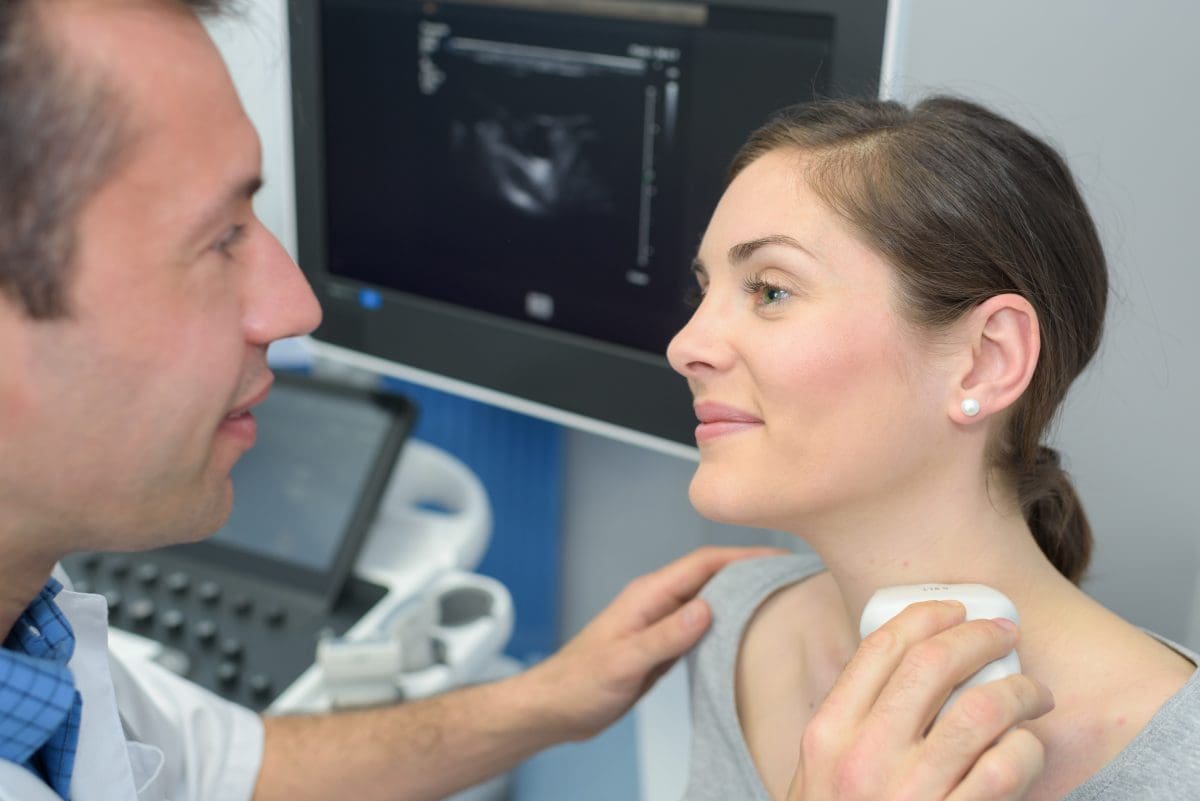
A biopsy may be recommended if the nodule has certain features (such as if the nodule is large or growing quickly) or you have risk factors for thyroid cancer (such as a family history). During the test, a fine needle is inserted into the thyroid nodule under ultrasound guidance, and a sample of cells is removed to be examined under a microscope.
In people with a thyroid lump that is growing quickly or causing symptoms such as difficulty swallowing, an ultrasound scan and biopsy may be the first test recommended.
Treatment for thyroid nodules
Treatment of thyroid nodules varies depending on their size and whether they are hot or cold (making excess thyroid hormone or not). Treatment will also depend on whether you have a solitary nodule or a multinodular goitre.
Treatment options for benign (non-cancerous) thyroid nodules may include medicines, radioactive iodine or surgery. There are pros and cons with every treatment option – your doctor will talk to you about the best treatment in your case and any expected or possible side effects of treatment.
Watchful waiting
If there are no complications or concerns that the nodule may be cancerous, ‘watchful waiting’ may be recommended. A watch and wait approach involves having regular checks with your doctor and repeat ultrasound scans to see if the nodule is growing or changing. If the nodule remains stable and unchanged, treatment may not be necessary.
If any new symptoms develop in between check-ups, you should see your doctor.
Radioactive iodine
‘Hot’ nodules and toxic multinodular goitre are usually treated by destruction with radioactive iodine. This treatment involves taking radioactive iodine as a tablet or liquid that you swallow. The iodine is then taken up by your thyroid, shrinking the nodule(s).
Medicines
Some cold thyroid nodules may respond to thyroid hormone suppression therapy. This involves taking thyroxine tablets (a synthetic form of thyroid hormone) to attempt to suppress the growth of the nodule, or even shrink it. However, there is a lack of evidence showing that this treatment is effective and reliable.
An antithyroid medicine called carbimazole may be prescribed to treat toxic multinodular goitre in some cases.
Surgery
Surgical removal of a thyroid nodule or all or part of the thyroid gland may be recommended for:
- large nodules that are putting pressure on underlying structures;
- multinodular goitre;
- some hot nodules;
- nodules that are found to be malignant; and
- nodules that have features that make them suspicious for cancer.
Talk to your doctor about the most suitable treatment for you.
