
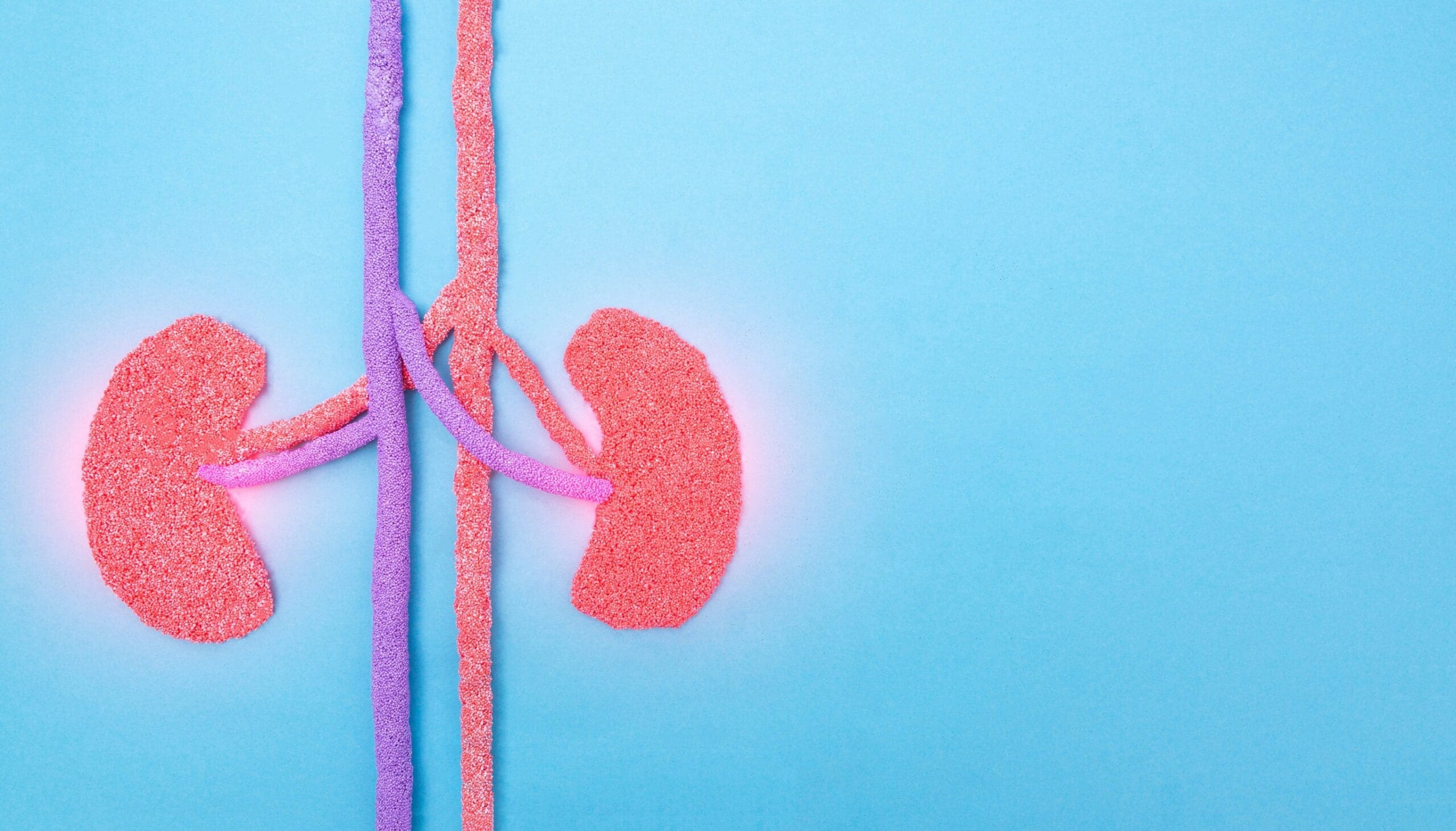
Chronic kidney disease (CKD) is when your kidneys are not working properly due to kidney damage that has developed over months or years. About one in 10 people in Australia has chronic kidney disease, but most people with CKD do not know that they have it.
Chronic means ongoing or long lasting. CKD is often also a progressive condition, meaning that it can get worse over time. When your kidneys can’t do their job properly, waste products can build up in your blood, which can make you sick.
Some people with CKD eventually develop kidney failure that needs treatment with dialysis or a kidney transplant. However, early diagnosis and treatment can stop kidney function getting worse or slow down its progression, and can sometimes even improve it, meaning many people with chronic kidney disease never need dialysis.
What happens when you have CKD

The kidneys have several functions:
- to filter the blood and regulate the amount of salt, water and other chemicals in the body;
- to remove waste products and excess water from the body; and
- to make hormones and other chemicals which are involved in regulating blood pressure, red blood cell production and calcium absorption.
When the kidneys are damaged and scarred, as in chronic kidney disease, these functions can become compromised. That means that:
- the blood is not filtered as effectively, which can cause an imbalance in chemicals and salts in the body and a build-up of waste products;
- water and fluids may build up (fluid retention); and
- the production of kidney hormones and chemicals may be affected, which can play a part in causing high blood pressure, anaemia and problems with calcium levels.
However, most people with chronic kidney disease don’t know that they have it and that their kidneys are not working properly. That’s because each kidney contains about a million tiny filters called nephrons (which filter our blood and make urine) which is more than we need to stay healthy. So it’s often not until a significant number of nephrons are damaged that symptoms and signs of CKD emerge.
Symptoms of chronic kidney disease
In the early stages, most people with chronic kidney disease do not have any symptoms. When symptoms do occur, they are mainly due to a build-up of fluid, salts and waste products in your blood.
Symptoms of chronic kidney disease can include:
- swelling in the feet, ankles and legs, and sometimes the hands and face due to excess fluid;
- tiredness and weakness;
- itching;
- weight loss;
- reduced appetite;
- nausea and vomiting;
- sleep problems;
- restless legs;
- muscle cramps;
- changes in the frequency and amount of urine you pass;
- blood in the urine or a change in the colour or appearance of your urine;
- emptying your bladder more often at night;
- difficulty concentrating;
- breathlessness due to fluid build-up in the lungs; and
- high blood pressure.
Tests and diagnosis
Doctors can make a diagnosis of chronic kidney disease when there is damage to the kidneys, problems with the way the kidneys are working, or both, that persists for at least 3 months.
Your doctor may suspect you have chronic kidney disease following the results of blood or urine tests as part of a routine checkup. If they suspect CKD, they will ask about your symptoms and examine you for signs of CKD. They will recommend tests to:
- measure how well your kidneys are working (kidney function tests);
- show evidence of kidney damage; and
- work out the cause of the kidney disease.
Blood and urine tests are usually the first tests done to check if you may have CKD. If the initial tests show possible CKD, your doctor will recommend several repeat tests of your kidney function over the next 3 months to help confirm the diagnosis. If you are found to have chronic kidney disease, your doctor may refer you to a nephrologist (renal medicine, or kidney, specialist).
Urine tests
One key test in assessing how your kidneys are functioning is a urine albumin test – this measures how much albumin (a type of protein) there is in your urine, if any. When your kidneys’ filters are not working properly, they let too much albumin pass from the blood into your urine. So measuring the amount of albumin in a urine sample helps in the diagnosis of CKD. Urine albumin levels can also be used to monitor kidney function over time.
Your doctor may first do a urine dipstick test, where they put a test strip into a sample of urine. The dipstick can detect high levels of protein in the urine, but is not sensitive enough to detect small amounts. Also, while albumin is the most common protein found in urine, there are other proteins that cause a positive test for urine protein.
The best test for albumin in the urine is the urinary albumin:creatinine ratio (urine ACR). This test can detect even small amounts of albumin in the urine. It’s best to do the test on a urine sample taken first thing in the morning (your first wee of the day). The sample is sent to a lab, where they measure the amount of both albumin and creatinine in the urine. This helps give a more accurate result, because it accounts for how dilute the urine is (how much water is in the urine, which can vary according to how much fluid you drink).
Urine microscopy, where a sample of urine is examined under a microscope, may also be done to help work out the cause of kidney disease.
Blood tests
A simple blood test can be done that measures the levels of creatinine and urea (waste products) and electrolytes (salts such as sodium and potassium) in the blood.
Urea and creatinine are normally filtered by the kidneys, so high levels of these in the blood can indicate kidney problems. However, creatinine levels vary depending on your age, gender and your weight, so they’re not always a reliable indication of your kidney function. It’s possible to have CKD despite having a normal creatinine level on a blood test.
A better test of kidney function is the estimated glomerular filtration rate (eGFR). This test estimates how many millilitres of blood your kidneys filter per minute, based on your blood creatinine level, your age and gender. A result below 60 millilitres per minute is considered low and may mean that you have kidney disease and some loss of kidney function. This test is more sensitive than creatinine alone and gives a more accurate measure of how well your kidneys are working.
Other blood tests that your doctor may recommend you have include:
- cholesterol (lipid) levels;
- blood sugar level – also called blood glucose level;
- HbA1C, which measures long-term glucose control in people with diabetes;
- full blood count;
- calcium and phosphate levels;
- vitamin D levels; and
- blood tests for inflammation.
Imaging tests
An ultrasound of the kidneys and urinary tract is usually recommended when determining the cause of CKD. Other imaging tests, such as a CT scan may also be recommended.
Kidney biopsy
Sometimes a kidney biopsy may be recommended to help work out the cause of your kidney disease. This is where a small sample of kidney tissue is taken and examined under a microscope.
What causes chronic kidney disease?
The most common causes of CKD in Australia are diabetes, glomerulonephritis (inflammation of the kidneys) and high blood pressure. Kidney disease due to diabetes is called diabetic nephropathy.
While high blood pressure is one of the causes of chronic kidney disease, having CKD can also cause high blood pressure (which in turn can make your kidney disease worse).
Other causes of chronic kidney disease include:
- polycystic kidney disease (an inherited condition);
- reflux nephropathy (damage to the kidneys due to backflow of urine from the bladder);
- damage caused by certain medicines or drugs;
- prolonged blockage of the flow of urine (the blockage can be anywhere along the urinary tract, from the kidneys to the urethra – the tube that empties your bladder);
- some conditions that affect the immune system, including lupus;
- recurrent kidney infections; and
- renal artery stenosis (narrowing of the blood vessels supplying the kidneys).
Risk factors
One in 3 Australians is at increased risk of developing CKD.
Diabetes and high blood pressure are 2 of the main risk factors for CKD. High blood sugar levels and high blood pressure can damage the tiny filters in your kidneys. The risk increases the longer you’ve had these conditions, especially if they are not well controlled.
Heart disease and CKD seem to be linked – having either condition can increase the risk of developing the other.
Other people at increased risk of CKD include those who:
- have a family history of kidney failure;
- are smokers;
- are older than 60 years;
- are of Aboriginal or Torres Strait Islander descent;
- are obese; and
- have had a kidney injury in the past.
Kidney health checks
In the early stages of chronic kidney disease there are generally no symptoms. For that reason, it’s recommended that people who are at risk of developing CKD, such as people with high blood pressure or people with diabetes, are regularly tested for signs of CKD.
Kidney Health Australia recommends a Kidney Health Check for early detection of CKD. This includes:
- a blood pressure check;
- a urine test to detect a protein called albumin; and
- a blood test to estimate kidney function (eGFR).
Kidney Health Checks are recommended once every 1 to 2 years for people at increased risk of CKD. That includes those with diabetes, high blood pressure, cardiovascular disease (including coronary heart disease, stroke or TIA) or a family history of kidney failure. They are also advised for people who are overweight or smoke.
It is recommended that all Indigenous Australians older than 30 have a Kidney Health Check at least every 2 years.
Sometimes more frequent checks are recommended – your doctor or specialist will be able to advise you.
Complications
Chronic kidney disease is associated with several health risks and complications. However, early diagnosis and treatment can help prevent complications from developing.
The major complications associated with CKD include:
- progressing to kidney failure, or end-stage kidney disease, which usually means that the kidneys are functioning below 15 per cent of their normal capacity; and
- developing cardiovascular disease (such as high blood pressure, heart attack and stroke).
Your risk of cardiovascular events such as heart attack is increased even if you have early CKD. In fact, the risk of heart and blood vessel problems is higher than the risk of kidney failure. The good news is that treatment of kidney disease can help reduce your risk.
Other complications of CKD can include the following.
- Anaemia (reduced haemoglobin – the protein that carries oxygen in the red blood cells).
- Weak bones that are prone to fractures.
- Restless legs syndrome, which is common in those with CKD and very poor kidney function.
- Lowered immunity, making you more vulnerable to infections.
- Depression, which affects up to one in 5 people with CKD and one in 3 people who are on dialysis.
- High potassium levels, which can cause dangerous heart rhythms.
- High cholesterol levels.
- Sexual problems such as lowered libido (sex drive), erectile dysfunction in men and problems with fertility.
- Sleep apnoea.
- Pregnancy complications that can affect the mother and/or baby.
Treatment for chronic kidney disease
Treatment for CKD is aimed at:
- preserving as much kidney function as possible;
- relieving symptoms; and
- reducing complications.
The type of treatment will depend on the cause and what stage the disease is at. Chronic kidney disease can be classified into stages, depending mainly on the eGFR result and on other signs of kidney disease. Treatment of the underlying cause can stop further kidney damage, preventing or delaying progression to kidney failure. If kidney failure does develop, treatment with dialysis or a kidney transplant is needed.
Lifestyle measures
Making healthy lifestyle choices helps prevent further damage to your kidneys and reduces your risk of complications developing. Lifestyle measures that can help in the treatment of CKD include:
- not smoking;
- maintaining a healthy body weight;
- getting regular physical activity; and
- eating a healthy diet that’s low in salt.
What you eat and how much fluid you drink can have an impact on the symptoms and complications of CKD. Depending on how well your kidneys are functioning, you may need to limit or monitor your intake of fluids and certain foods. Your doctor will probably refer you to a dietitian who specialises in treating people with kidney disease for further information and advice on your diet and fluid intake.
Some general foods that you may need to avoid or eat in moderation include:
- high salt foods such as fast foods, salty snacks, pre-prepared and packaged foods and deli meats;
- high potassium foods such as bananas, oranges, potatoes, tomatoes, spinach, brown and wild rice, beans, nuts and dairy foods;
- salt substitutes that contain potassium; and
- high protein foods such as meat, beans, nuts, eggs, and dairy foods.
Medicines
Most people with CKD take medicines to control their blood pressure. More than one type of blood pressure medicine (antihypertensive) is often needed. Angiotensin-converting enzyme inhibitors (ACE inhibitors) and angiotensin II receptor blockers (ARBs) are antihypertensive medicines that also help slow the progression of kidney disease and reduce the risk of heart disease. ACE inhibitors or ARBs may be recommended for certain people with CKD whether they have high blood pressure or not. Diuretics (fluid tablets) are also often prescribed.
If you have diabetes, you may need to take medicines to control your blood glucose levels or inject insulin.
Cholesterol-lowering medicines (statins) may be recommended, regardless of your cholesterol level, to reduce the risk of heart and blood vessel disease.
Other medicines to help treat or prevent complications of CKD include:
- vitamin D supplements;
- medicines to regulate the levels of calcium, phosphate and potassium in your blood;
- medicines to treat anaemia; and
- medicines to treat swelling due to fluid overload (diuretics).
It’s also very important that people with CKD don’t take any medicines that could potentially harm their kidneys. Sometimes this means avoiding certain combinations of medicines. If you are taking ACE inhibitors (or ARBs) and a diuretic medicine (fluid tablet), it’s important that you avoid NSAIDs and COX-2 inhibitors. These 3 medicines together can damage your kidneys.
Always check with your doctor before taking any medicines, including pain relievers and herbal or complementary medicines.
Self-care tips
There are things you can do to help relieve some of the symptoms and complications of CKD.
- To relieve itchy skin: wash with a non-soap cleanser and moisturise your skin regularly. Avoid soaps and detergents. You may want to try evening primrose oil.
- To relieve muscle cramps: try drinking tonic water, doing regular stretches and massaging the affected muscles.
- To relieve restless legs: massage your leg muscles, have warm baths and try a warm or cool compress. Gentle exercise and relaxation techniques may also help.
If you have ongoing symptoms or complications that are not helped by self-care measures, talk to your doctor about medicines or other treatments that might help.
Treatments for end-stage kidney disease
End-stage kidney disease (also known as kidney failure) is when your kidneys no longer function well enough to support your body’s needs. Without treatment, a person with end-stage kidney disease may only be able to survive for a few months, depending on their general health.
Treatments for end-stage chronic kidney disease include dialysis and kidney transplant. There are various pros and cons of these treatments – your doctor can help you decide which type of treatment is best for you.
Dialysis
People with CKD who progress to kidney failure need to have their blood filtered in another way. Dialysis is a way of filtering the blood and removing waste. The 2 main types of dialysis are haemodialysis and peritoneal dialysis.
Haemodialysis involves connecting to a dialysis machine that filters your blood. Before you can start haemodialysis, you need to have a procedure to allow easy access to your bloodstream. Most often, this involves having surgery to connect an artery and a vein, usually in your arm. When you have haemodialysis, 2 thin, flexible tubes are connected to the access site with needles. The tubes take your blood to and from the machine, where it is gradually filtered over several hours.
You may have to attend a clinic or hospital dialysis unit 3 times a week for haemodialysis. Each treatment lasts about 4-6 hours, so it is very time consuming. Sometimes it is possible to have haemodialysis at home 3 to 5 times a week, which makes it possible to have your haemodialysis overnight while you are sleeping. People on home haemodialysis need to be trained on how to administer the treatment.
Anyone on haemodialysis needs to follow a strict diet and needs careful monitoring (including regular blood pressure checks and blood tests).
Peritoneal dialysis makes use of the peritoneum – the membrane that lines your abdominal (peritoneal) cavity and covers the organs in your abdomen – to filter your blood. The peritoneal membrane naturally allows some substances to cross it, but not others, so it can be used as a filter.
Peritoneal dialysis works by infusing a bag of special fluid (dialysate) into your peritoneal cavity via a small catheter (thin tube). The dialysate remains in place for a certain amount of time (often 4-8 hours). During this time, waste products in your blood gradually pass across your peritoneal membrane and into the dialysate. Then the dialysate, along with the waste products, are drained from the abdominal cavity and a new bag of fluid is infused to repeat the process.
Continuous ambulatory peritoneal dialysis (CAPD) is when you change (exchange) the bags of fluid yourself several times during the day. Once an exchange is complete, you disconnect the bags from the catheter and go about your usual daily activities while the dialysis is taking place. The bags can be changed at home or work (or any clean place).
Automated peritoneal dialysis (APD) is when you connect to a machine that automatically exchanges the fluid several times overnight while you sleep. You need to stay connected to the machine every night for 8-10 hours.
Peritoneal dialysis is usually effective for about 2-5 years. After this, haemodialysis or a kidney transplant may be needed to adequately filter the blood.
Kidney transplant
Some people with kidney failure are treated with a kidney transplant. This involves surgically transplanting a healthy kidney from a donor. The donor kidney needs to be a good match for you so that your body’s immune system doesn’t reject it. The kidney can either be from a known donor, such as a close family member, or from a deceased organ donor. There is usually a long waiting list for kidney transplants from deceased organ donors (the wait is about 3-7 years).
In most cases, kidney transplants are successful and you won’t need to have dialysis anymore. That means you should have improved lifestyle flexibility, meaning you can do things such as travel and work without restrictions. You will need to take medicines for the rest of your life to stop your body rejecting the donor kidney.
Support groups
There are many types of support available for people with chronic kidney disease. Support can be a great help and comfort to people with CKD and their families, especially those with kidney failure. Ask your doctor or search the internet for a support group that suits you.
