
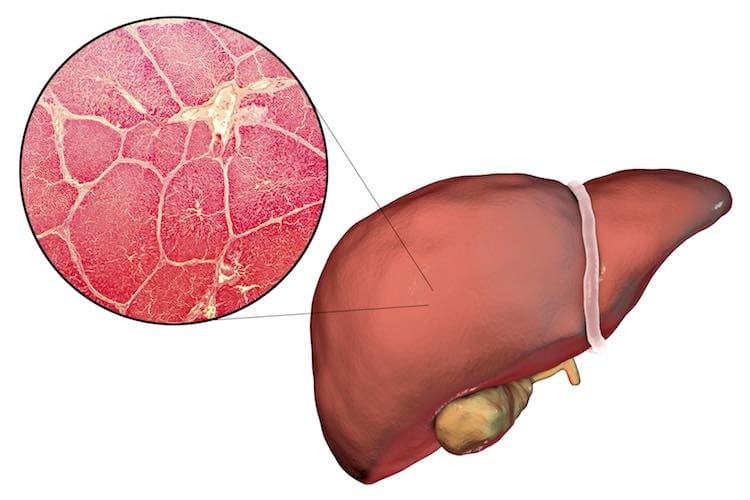

The liver is your largest internal organ, weighing about 1.5 kilograms in adults. It sits in the upper, right-hand side of your abdomen, just under your diaphragm (a sheet of muscle that separates your chest from your abdomen). Your liver is divided into 2 main lobes — the right and left lobes — by a membrane called the falciform ligament.
The liver is a dark reddish-brown organ, and holds up to half a litre of blood at any one time. It receives blood from the hepatic artery, as well as from the portal vein. The hepatic artery delivers oxygen-rich blood from the heart, while the portal vein delivers blood that has just left your gastrointestinal tract. Blood reaching the liver via the portal vein is rich in nutrients that need to be processed by the liver.
Functions of the liver
The liver performs more than 500 functions, including:
- processing nutrients from food;
- storing energy;
- filtering toxic chemicals and bacteria from the body;
- processing alcohol;
- producing certain proteins and fats (including cholesterol), and controlling their metabolism;
- storing iron;
- making certain vitamins, including vitamin A;
- helping with blood clotting; and
- processing medicines.
Bile
The liver also produces bile — a yellow-green fluid that consists of water, bile salts and a chemical called bilirubin. Bile is made in liver cells and travels through a system of channels and ducts in the liver before eventually leaving the liver via the hepatic ducts. Bile is then transported to the gallbladder and the duodenum (the first part of your small intestine) to help with digestion of dietary fats and the removal of certain waste products from the body.
Damage to the liver
The liver is a unique organ because it can lose 80-90 per cent of its cells to disease before it stops functioning, and has the capacity to regenerate itself. However, it is possible for toxins such as alcohol and diseases such as hepatitis or conditions that block the flow of bile to permanently damage the liver. Because the liver has such a large excess capacity, signs and symptoms of disease may not occur until it has been severely damaged.
Signs and symptoms of liver disease
One indication that the liver may be damaged or not working properly is jaundice — a yellow discolouration of your skin and the whites of your eyes, which is caused by a build-up of bilirubin in the body.
Other symptoms of liver disease include persistent itching, fatigue, nausea, loss of appetite and sometimes abdominal swelling or pain. Some forms of liver disease cause dark urine and pale stools.
Testing the liver and its function
A simple blood test, called a liver function test, can be used to assess the basic functioning of the liver. It measures various enzymes and proteins that are produced by the liver, as well as bilirubin, to determine whether the liver is functioning within normal limits.
Other tests commonly used to detect problems with the liver include imaging tests such as magnetic resonance imaging (MRI), CT scan or ultrasound of the liver.
