
Gilbert syndrome is a harmless liver condition in which there is sometimes an excess of bilirubin in the blood. Bilirubin is a yellow-brown coloured pigment that comes from the breakdown of red blood cells. If the levels of bilirubin are high enough, it can cause jaundice – a yellowing of the skin and eyes. Gilbert syndrome is a lifelong condition.
Gilbert syndrome is named after the French doctor who first described the syndrome in 1901, and is usually pronounced “Jeel-bear”. It is also known as benign unconjugated hyperbilirubinaemia.
What causes Gilbert syndrome?
People with Gilbert syndrome have a deficiency of the enzyme (referred to as UGT) that is responsible for processing bilirubin in the liver.
Bilirubin is normally transported in the blood to the liver, where it is processed before being excreted into bile. If there is a deficiency in UGT, then the liver can’t keep up with processing the bilirubin, and this leads to a mild increase in the bilirubin level in the blood, which may be noticed as a raised bilirubin on blood tests. Apart from this problem with processing bilirubin, the liver functions normally.
Blood levels of bilirubin in someone with Gilbert syndrome go up and down and sometimes they will be normal.
Symptoms
Many people with Gilbert syndrome will not notice any symptoms. However, you may at times develop mild jaundice, with slight yellowing of the skin and the whites of the eyes. The jaundice is usually more obvious at times when you have another illness, such as a cold or flu. Other possible triggers for people with Gilbert’s syndrome for developing jaundice are dieting or fasting, dehydration, menstruation, stress and strenuous exercise.
As the jaundice is mild, it may only be noticeable in the whites of the eyes and not the skin.
Some people report symptoms during episodes of jaundice which can include abdominal pain, tiredness and a sense of feeling unwell. The jaundice goes away on its own and does not require treatment.
Risk factors
Gilbert syndrome is quite common, affecting about 5 per cent of the Australian population. It is an inherited disorder, with a family history sometimes known. If both your parents have an abnormal copy of the gene that causes Gilbert syndrome, you are at risk of developing it.
Men are more commonly affected than women.
Diagnosis
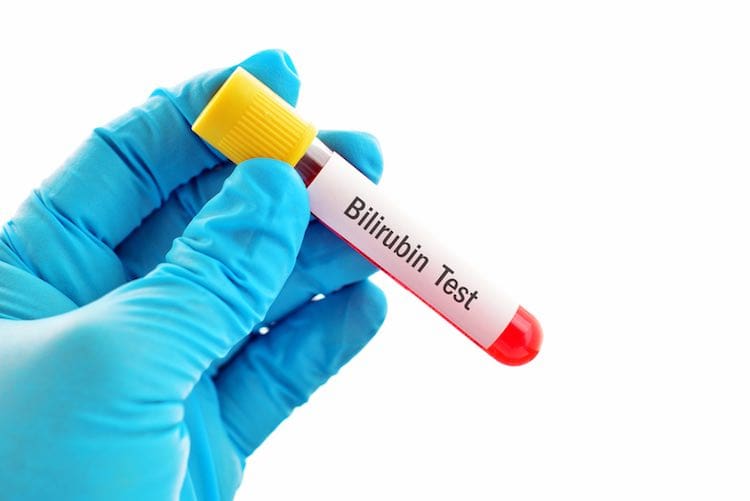
Gilbert syndrome is diagnosed by testing the bilirubin levels in the blood or urine. Because the symptoms are frequently so mild that they go unnoticed, Gilbert syndrome is often only picked up on a blood test that is performed for another reason.
Bilirubin is one of the chemicals usually measured in a liver function test, so this is one way that Gilbert syndrome may be discovered. Liver function tests are done on a blood sample taken from a vein, usually in the arm. Apart from the mild increase in the bilirubin level, the results of liver function tests will be normal in a person with Gilbert syndrome.
The raised level of bilirubin in the blood will usually be more pronounced if the person is fasting (not eating) or has a fever. So, typically, a fasting blood sample would give a higher bilirubin than a non-fasting sample.
A genetic test is available to detect the enzyme deficiency in Gilbert syndrome, but it is rarely necessary.
What’s a normal bilirubin level?
Liver function tests will usually give a result for total bilirubin. In Australia, the normal range for total bilirubin on a blood test is between 3 and 20 micromoles/litre. A bilirubin of 20 or more on a blood test will be marked as high. Jaundice may occur when the blood total bilirubin reaches a level roughly between 35 and 50 micromoles/litre.
Total bilirubin measures 2 forms of bilirubin – conjugated and unconjugated bilirubin. Unconjugated bilirubin is produced by the normal breakdown of old red blood cells. It is not soluble in water. The unconjugated bilirubin is sent to the liver where it is conjugated (combined) with glucuronic acid, making it soluble in water. Conjugated bilirubin can then be excreted in the bile into the intestine and out of the body.
Bilirubin in the urine
Bilirubin can also be measured from a urine test. Only conjugated bilirubin (which is soluble) is found in the urine. If bilirubin is found in the urine, it may be a sign of liver disease. Doctors may test the urine for bilirubin to give more information about the cause of a raised bilirubin result on a blood test.
Other causes of a high bilirubin
Although Gilbert syndrome causes a raised bilirubin level from time to time, it is not the only possible cause of elevated bilirubin. Other liver diseases can cause bilirubin to be high.
A raised bilirubin can indicate liver damage, so the full range of liver function tests may be done to rule out a high bilirubin due to liver disease. More specific blood tests that measure the levels of direct (conjugated) and indirect (unconjugated) bilirubin can help to diagnose what is causing the problem.
Blocked bile ducts, such as from gallstones, are one cause of a high bilirubin. The blocked ducts can cause bile to build up in the liver, which in turn leads to bilirubin building up in the bloodstream.
Excessive breakdown of red blood cells is another cause of high bilirubin. Bilirubin is produced by the normal breakdown of a percentage of the red cells in a process called haemolysis. But, if too many red cells are broken down at once, more bilirubin is released. So any condition that causes excessive haemolysis can result in a high bilirubin, for example haemolytic anaemia.
Bilirubin levels are often raised in people who drink too much alcohol. The liver damage from long-term overconsumption of alcohol means the liver can’t process the bilirubin and it builds up in the bloodstream.
Complications
People with Gilbert syndrome are at increased risk of side effects from certain medicines that are processed by the same bilirubin-processing enzyme they are deficient in (known as UGT). Because sometimes there isn’t enough of the UGT enzyme to process the medicines, they build up in the body, causing side effects.
Medicines that can be a problem for people with Gilbert syndrome include certain cancer chemotherapy medications and anti-HIV medicines (protease inhibitors), and the cholesterol-lowering medicines gemfibrozil and also statins when used with gemfibrozil.
Self-help
Gilbert syndrome is a harmless condition that typically does not cause serious problems and does not need treatment. By simply avoiding situations that trigger a rise in bilirubin levels, you can help keep bouts of jaundice under control. Eat a healthy diet, avoid dieting, fasting and skipping meals, and manage your stress levels. Drink plenty of water as dehydration can trigger a rise in bilirubin.
Because Gilbert syndrome affects how your body processes certain medicines, potentially increasing side effects, you should tell your doctor you have Gilbert syndrome before taking any new medicines.
Gilbert syndrome and alcohol
Alcohol consumption can cause raised levels of bilirubin in people with Gilbert syndrome, so it is probably worth avoiding alcohol if your bilirubin is high.
Which doctors are involved in Gilbert syndrome?
Gilbert syndrome may be diagnosed by your General Practitioner (GP), or a specialist doctor called a gastroenterologist, who is an expert in the gastrointestinal system, including the liver. No ongoing care or monitoring is usually required if you have Gilbert syndrome.
