
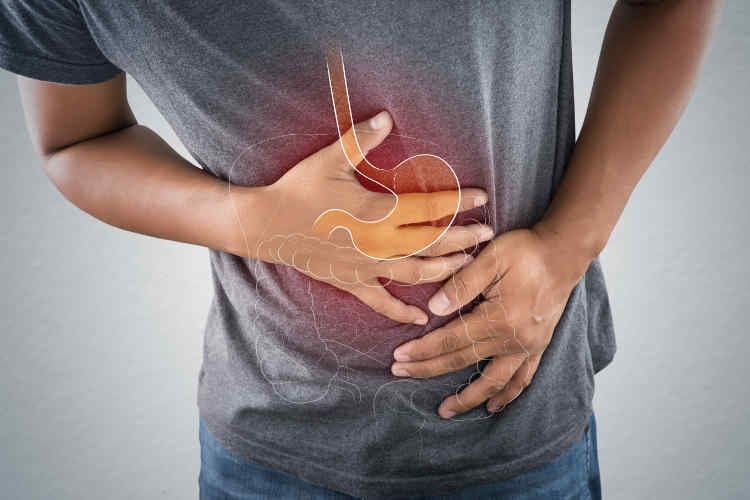
Crohn’s disease (also sometimes called Crohn disease) is a type of inflammatory bowel disease. Most people are diagnosed with Crohn’s disease between the ages of 15 to 40 years, usually after experiencing symptoms such as abdominal (tummy) pain and ongoing diarrhoea.
There is currently no cure for Crohn’s disease but there are treatments available that can help keep the inflammation under control, relieve symptoms and prevent complications.
Symptoms of Crohn’s disease
The first symptoms of Crohn’s disease commonly include:
- cramping abdominal pain (the pain usually comes and goes, and is often felt in the bottom right-hand area of the abdomen);
- diarrhoea that is ongoing; and
- weight loss.
These symptoms usually come on gradually, but sometimes the onset is sudden and severe and can be mistaken for appendicitis or a bowel obstruction.
Other symptoms of Crohn’s disease, which may vary depending on which part of the digestive tract is involved, can include:
- fever;
- loss of appetite;
- tiredness;
- blood in your stool;
- mouth ulcers; and
- nausea and vomiting.
What is Crohn’s disease?
Crohn’s disease is a type of inflammatory bowel disease that causes areas of the digestive tract to become inflamed, causing pain, swelling, ulceration and bleeding. The inflammation most commonly affects the end of the small bowel (the terminal ileum), the large bowel and the area around the anus, but it can happen anywhere along the digestive tract.
What causes Crohn’s disease?
The cause of Crohn’s disease remains unknown, although research is continuing. A combination of several factors is thought to be involved, including the following.
- The body’s immune system (which normally provides a defence against foreign matter) not recognising its own tissues and attacking itself. This may be triggered by an infection.
- Reduced diversity of the gut microbiome (disruption in the normal balance of good and bad bacteria in your gut).
- Environmental factors, such as smoking which is known to increase the risk of Crohn’s disease. Some studies have shown a link between diet and the development of inflammatory bowel disease, but diet has not been proven to cause Crohn’s disease.
- Genetic factors — having a close relative with Crohn’s disease increases your risk of developing the disease.
What is the difference between Crohn’s disease and ulcerative colitis?
Crohn’s disease and ulcerative colitis are the 2 main types of inflammatory bowel disease. There are several differences between these 2 conditions.
- Crohn’s disease can occur in any part of the gastrointestinal tract from the mouth to the anus, while only the large bowel (the colon and rectum) is affected in ulcerative colitis.
- In Crohn’s disease, the full thickness of the bowel wall can become inflamed, but in ulcerative colitis only the innermost lining (the mucosa) is affected.
- In Crohn’s disease there are normal areas of bowel between areas of inflammation, but in ulcerative colitis the inflammation is continuous.
Both types of inflammatory bowel disease are different from irritable bowel syndrome (IBS). While the symptoms can sometimes be similar, people with IBS do not have evidence of inflammation in the bowel.
Complications
Inflammation of the bowel wall in people with Crohn’s disease can lead to the development of complications in some people, which can sometimes be serious.
Complications of Crohn’s disease can include the following.
- Fistulas, which are abnormal openings or narrow passageways that can connect the bowel to another organ (such as the bladder). They can also connect the bowel to the skin – this usually happens near the anus.
- Anal fissures, which are small tears in the tissue or skin around the anus. They can cause pain, bleeding and itching.
- A perianal abscess is a collection of pus near the anus. It causes a painful lump and occasionally a fever may develop.
- Obstruction of the bowel can happen when the bowel is inflamed and swollen. It can also happen when ongoing inflammation leads to scarring and narrowing of sections of the bowel.
- Malnutrition, vitamin and mineral deficiencies can develop if nutrients are not absorbed properly from an inflamed or scarred bowel.
- Anaemia can develop if there is ongoing blood loss and inflammation.
- People with inflammatory bowel disease have an increased risk of developing bowel cancer.
Crohn’s disease can also cause inflammation in other parts of the body and lead to:
- pain and swelling in the joints similar to arthritis;
- skin rashes or inflammation;
- inflammatory problems in the eyes; and
- inflammation of the liver or bile ducts – leading to jaundice (a yellowing of the skin).
People with Crohn’s disease area also at increased risk of psychological conditions, such as anxiety and depression.
Tests and diagnosis
If you are concerned that you or a family member may have Crohn’s disease, see your GP (general practitioner). Your doctor will ask about your symptoms and how long you have had them, as well as perform a physical examination looking for signs of Crohn’s disease.
Because symptoms can be similar to those of other conditions such as irritable bowel syndrome or a gastrointestinal infection, your doctor may ask questions to rule out other illnesses. If your doctor suspects Crohn’s disease, they will recommend some tests to confirm the diagnosis and work out if you have any complications.
Blood and stool tests
Blood tests may be done to test for anaemia, inflammation and vitamin and mineral deficiencies.
Testing of stool samples may be recommended to check for inflammation and to help rule out other problems such as infection. A special test called faecal calprotectin can help confirm whether there is inflammation in the bowel or not.
Imaging tests
Your doctor may recommend first having an ultrasound examination or your small bowel and pelvis, or a plain X-ray of your abdomen. These are simple tests that can give information on whether further imaging tests may be needed.
A colonoscopy is the best test to confirm a diagnosis of Crohn’s disease. Colonoscopies are usually performed in hospitals or special clinics, and are done under sedation. The procedure involves a flexible tube with a light and a camera on the end being inserted into your rectum and gently pushed along the bowel, allowing the inside of your bowel to be examined. Tiny samples of tissue (biopsies) can also be taken during the procedure for examination under a microscope.
Depending on your symptoms, an upper endoscopy is sometimes also recommended. In this procedure, a lighted flexible tube is passed through the mouth and used to view the oesophagus, stomach and first part of the small intestine (duodenum).
Occasionally, a wireless capsule endoscopy (pill cam) may be performed. This test involves swallowing a capsule that has a tiny camera inside it. The camera takes photos throughout your small bowel, which are transmitted to a data recorder that you wear around your waist. The capsule is single-use only, and will exit the body painlessly in your stool after a couple of days. It can be flushed down the toilet.
A CT or MRI scan may be recommended to provide images of the small bowel or problems such as fistulas around the anus. These scans can also show problems with tissues outside the bowel.
Which doctor treats this?
If Crohn’s disease is diagnosed or suspected, your doctor will refer you to a gastroenterologist (specialist in conditions affecting the digestive system) for investigation, treatment and monitoring.
Treating Crohn’s disease
There is no cure for Crohn’s disease. However, there are various treatments for Crohn’s disease available in Australia. The aims of treatment are to improve long-term outcomes, control symptoms and inflammation, prevent flare-ups and reduce the risk of complications.
Treatment will depend on how severe your condition is, whether your disease is active at present and where in your bowel it’s located.
There are several different types of treatments, and some work better than others for different people and at different stages of the disease. Sometimes different treatments need to be tried to work out the ones that will work best for you.
What are flare ups?
Once diagnosed and started on treatment, many people with Crohn’s disease feel well most of the time. However, a flare up of symptoms (also called a relapse) may happen from time to time.
People with Crohn’s disease who smoke are more likely to have relapses. Other possible triggers for flare-ups include:
- infections;
- stress;
- certain medicines; or
- particular foods.
Always let your doctor know if you are experiencing a flare up of symptoms. Your doctor may recommend tests to confirm a relapse and specific treatment.
Medicines for Crohn’s disease
There are a variety of medicines that can be used to treat Crohn’s disease. Your gastroenterologist will discuss different treatment options with you, and will recommend medicines based on several factors. These include your age, the severity of your disease, whether you have complications and the side effects of different medicines.
Aminosalicylates
These anti-inflammatory medicines are similar to aspirin and include:
- mesalazine (brand name Mesasal, Salofalk, Pentasa); and
- sulfasalazine (Salazopyrin, Pyralin).
These medicines are available as tablets or granules with a delayed-release coating to be taken by mouth. They can treat active inflammation in the colon (large intestine), but are not effective in treating Crohn’s that affects the small intestine. These medicines can also be given as suppositories or enemas that you insert into the back passage.
Aminosalicylate medicines may be given during a flare-up or as maintenance treatment, but these medicines are more effective in the treatment of ulcerative colitis than Crohn’s disease.
Side effects of aminosalicylates include:
- heartburn;
- headaches;
- nausea;
- diarrhoea; and
- abdominal pain.
Corticosteroids
Corticosteroids can be given to treat active disease. They are not used for ongoing maintenance therapy, but can be used short-term to help induce remission. They are usually only used in those with severe disease or if aminosalicylates are not effective or not well tolerated during a flare-up.
Corticosteroid medicines for Crohn’s disease are usually taken by mouth. In severe flare ups, treatment in hospital may be needed, where steroids can be given intravenously (through a drip into a vein).
Steroids are very potent anti-inflammatory medicines and are effective in treating active Crohn’s disease. However, a major problem with using them is their side effects, which include:
- weight gain;
- increased risk of infection;
- acne;
- mood changes;
- sleep disturbances;
- wasting of the muscles;
- high blood pressure;
- thinning of the bones (osteoporosis);
- cataracts; and
- diabetes.
Immunomodulators
These medicines suppress or modulate the activity of the body’s immune system and control inflammation. They can be prescribed as maintenance therapy for Crohn’s disease to prevent flare-ups. These medicines may take several weeks or even a couple of months to work.
Immunosuppressant medicines include:
- azathioprine;
- 6-mercaptopurine; and
- methotrexate.
Side effects of immunomodulators can include:
- liver problems;
- tiredness;
- increased risk of infections;
- nausea;
- pancreatitis (inflammation of the pancreas);
- increased risk of developing certain cancers; and
- low white blood cell count.
Blood tests to check your immunity and vaccinations are often recommended before treatment is started with any medicines that affect the immune system.
When taking some of these medicines, frequent blood tests are needed to check on your blood cell counts and liver function.
Biologic therapy
Infliximab (brand name Remicade, Renflexis, Inflectra), adalimumab (Humira), vedolizumab (Entyvio) and ustekinumab (Stelara) are biologic medicines that may be prescribed by specialist gastroenterologists for people with moderate to severe Crohn’s disease, usually if other medicines are poorly tolerated or ineffective. They are given by injection or through a drip into a vein.
Possible side effects of biological therapies include allergic reactions to the injection, increased risk of infection, and risk of certain cancers (such as lymphoma).
Other medicines
Antibiotics may be needed if there is an infection or for complications such as an abscess or fistula. Medicines to control diarrhoea and pain may also be prescribed.
Bowel rest
In some circumstances, your doctor may recommend resting the bowel by not eating solid foods for a short period to help relieve the inflammation in the bowel. This treatment is for severe disease, and involves drinking only clear fluids, or sometimes having no oral intake.
Fluids and nutrients are given via a feeding tube or via a drip into a vein during this time.
Surgery for Crohn’s disease
Surgery is sometimes recommended for people with Crohn’s disease. Surgery may be recommended:
- For people with severe Crohn’s disease that isn’t controlled by medicines.
- If there is a bowel obstruction, abscess, fistula or other complications.
Surgery may involve an operation to cut out the inflamed section of bowel and join the 2 ends of unaffected bowel together (anastomosis). Unfortunately, surgery is often not a permanent fix, with inflammation recurring over time, frequently near the reconnected tissue.
Nutrition and nutritional supplements
Eating a healthy balanced diet is important, particularly as it’s important for a person with Crohn’s disease to maintain a healthy weight. If you find that certain foods make symptoms such as diarrhoea worse, it makes sense to avoid these.
The inflammation in Crohn’s disease can cause pain, diarrhoea, loss of appetite, reduced dietary intake and poor nutrition. Some people with Crohn’s disease don’t have good absorption of nutrients, vitamins and minerals from the foods they eat.
Your doctor may refer you to a dietitian who specialises in treating inflammatory bowel disease. A dietitian can work with you to make sure you are getting adequate nutrition during flare-ups and eating a balanced and healthy diet when you are symptom-free.
Nutritional supplements (usually taken as a drink) and vitamin and mineral supplements may also be recommended. Always discuss any supplements you are planning to take with your doctor.
Monitoring and outlook
People with Crohn’s disease need lifelong monitoring of their condition. Monitoring aims to check that the disease is well controlled, as well as check for complications and side effects associated with any of the treatments.
How frequently you need to have follow-up visits with your doctor, and tests (such as blood tests, stool tests, scans or colonoscopy) will vary from person to person. It mainly depends on your disease severity and your treatments.
Although Crohn’s disease is a serious condition, many people who have it lead productive lives and feel well and free of symptoms in between flare-ups.
Support for people with Crohn’s disease
If you or a family member has been diagnosed with inflammatory bowel disease, there is support available. Talking to others with Crohn’s disease may help you feel less isolated and give you an opportunity to share insights on self-care. See the Crohn’s & Colitis Australia website for more information.
