
Some people have tests for bowel cancer because they have symptoms. Others may not have any symptoms, but have a strong family history of bowel cancer or have received a positive result from a screening test (see below).
The tests you have to diagnose bowel cancer depend on your specific situation. They may include general tests to check your overall health and body function, tests to find cancer, and tests to see if the cancer has spread (metastasised).
Some tests may be repeated during or after treatment to check how well the treatment is working. It may take up to a week to receive your test results. If you feel anxious while waiting for test results, it may help to talk to a friend or family member, or call Cancer Council 13 11 20 for support.
Early and advanced bowel cancer
Some bowel cancers are diagnosed when they have already spread beyond the bowel (advanced bowel cancer). This may be because the primary cancer never caused obvious symptoms. The tests discussed in this article are used for diagnosing both early and advanced bowel cancer. The treatments for early and advanced bowel cancer are covered in Bowel cancer: treatments.
General tests
Physical examination
Your doctor will examine your body, feeling your abdomen for any swelling. To check for problems in the rectum and anus, your doctor will insert a gloved, lubricated finger into your anus and feel for any lumps or swelling. This is called a digital rectal examination (DRE).
The DRE may be uncomfortable, but it shouldn’t be painful. Because the anus is a muscle, it can help to try to relax during the examination. The pressure on the rectum might make you feel like you are going to have a bowel movement, but it is very unlikely that this will happen.
Blood test
You may have a blood test to assess your general health and to look for signs that suggest you are losing blood in your stools.
The blood test may measure chemicals that are found or made in your liver, and check your red blood cell count. Low red blood cell levels (anaemia) are common in people with bowel cancer, but may also be caused by other conditions.
Immunochemical faecal occult blood test (iFOBT)
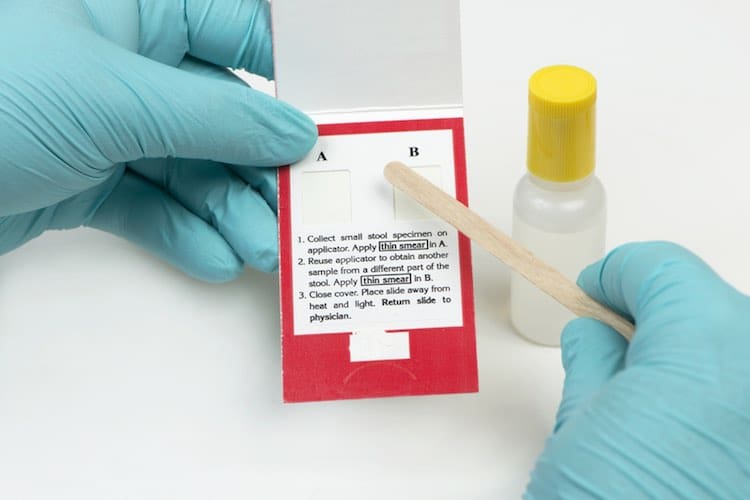
Depending on your symptoms, you may have an iFOBT. This test is generally not recommended for people who are bleeding from the rectum, but may be used for people with unexplained weight loss, abdominal pain, changes to their bowel habits or anaemia.
The iFOBT involves taking a sample of your stools at home. The stool sample is examined for microscopic traces of blood, which may be a sign of polyps, cancer or another bowel condition. An iFOBT does not diagnose cancer, but if it finds blood, your doctor will recommend you have a colonoscopy (see below) as soon as possible, but no later than 120 days after getting the result.
Screen test for bowel cancer
Screening is the process of looking for polyps or cancer in people who don’t have any symptoms.
Screening is particularly important for bowel cancer, which often has no symptoms in its early stages.
It is generally recommended that people aged 50–74 have an iFOBT every two years. Finding bowel cancer early can significantly improve the chance of surviving the disease.
Through the National Bowel Cancer Screening Program, people aged 50 to 74 are automatically sent a free iFOBT kit. A kit can also be purchased from some pharmacies.
You complete the test at home. For more information, phone 1800 118 868 or visit cancerscreening.gov.au.
The National Bowel Cancer Screening Program is aimed at low-risk people without symptoms of bowel cancer. If you have:
- symptoms of bowel cancer, talk to your doctor about having a colonoscopy or other tests
- another bowel condition, such as chronic inflammatory bowel disease, talk to your doctor about appropriate surveillance
- a strong family history or a genetic condition linked to bowel cancer, talk to your doctor about when you need to start iFOBTs or screening colonoscopies.
Tests to find cancer in the bowel
The main test used to look for bowel cancer is a colonoscopy. Other tests that are sometimes used to diagnose bowel cancer include CT colonography and sigmoidoscopy.
Colonoscopy and biopsy
A colonoscopy examines the whole length of the large bowel. It is still possible, however, that small polyps may be missed, especially if they are behind one of the many folds in the bowel or the bowel is not completely empty.
Before a colonoscopy, you will have a bowel preparation to clean your bowel (see below). On the day of the procedure, you will usually be given a sedative or light anaesthetic so you don’t feel any discomfort or pain. This will also make you drowsy and may put you to sleep.
During the procedure, the doctor will insert a colonoscope (a flexible tube with a camera on the end) into your anus and up into your rectum and colon. Carbon dioxide or air will be passed into the colon.
If the doctor sees any suspicious-looking areas (such as polyps), they will remove the tissue for examination. This is known as a biopsy. During the colonoscopy, most polyps can be completely removed (a polypectomy). A pathologist will examine the tissue under a microscope to check for signs of disease and may look for specific genetic changes (see Molecular testing).
A colonoscopy usually lasts about 20–30 minutes. You will need to have someone take you home afterwards, as you may feel drowsy or weak. An occasional side effect of a colonoscopy is temporary flatulence and wind pain, especially if air rather than carbon dioxide is passed into the bowel during the test. More serious but rare complications include damage to the bowel or bleeding. Your doctor will talk to you about the risks.
Less commonly used tests
CT colonography – This uses a CT scanner (see below) to create images of the colon and rectum and display them on a screen. It is also called virtual colonoscopy. It may be used if the colonoscopy was unable to show all of the colon or when a colonoscopy is not safe.
A CT colonography is not often used because it is not as accurate as a colonoscopy and exposes you to radiation. Your doctor also may not be able to see small abnormalities and cannot take tissue samples. This test is covered by Medicare only in some limited circumstances.
Flexible sigmoidoscopy – This test allows the doctor to see the rectum and lower part of the colon (sigmoid colon) only. To have a flexible sigmoidoscopy, you will need to have a light bowel clean-out, usually with an enema. Before the test, you may be given a light anaesthetic.
You will lie on your side while a thin, flexible tube called a sigmoidoscope is inserted gently into your anus and guided up through the bowel. The sigmoidoscope blows carbon dioxide or air into the bowel to inflate it slightly and allow the doctor to see the bowel wall more clearly. A light and camera at the end of the sigmoidoscope show up any unusual areas, and your doctor can take tissue samples (biopsy).
Bowel preparation
Before some diagnostic tests, you will have to clean out your bowel completely. This is called bowel preparation and it helps the doctor see inside the bowel clearly. The process can vary, so ask if there are specific instructions for you. It’s important to follow the instructions so you don’t have to repeat the test. Talk to your doctor if you have any questions about the bowel preparation process or side effects.
Change diet
For a few days before the diagnostic test, you may be told to avoid high-fibre foods, such as vegetables, fruit, wholegrain pasta, brown rice, bran, cereals, nuts and seeds. Instead, choose low-fibre options, such as white bread, white rice, meat, fish, chicken, cheese, yoghurt, pumpkin and potato.
Drink clear fluids
Your doctor might advise you to consume nothing but clear fluids (e.g. broth, water, black tea and coffee, clear fruit juice without pulp) for 12–24 hours before the test. This will help to prevent dehydration.
Take prescribed laxatives
You will be prescribed a strong laxative to take 12–18 hours before the test. This is taken by mouth in tablet or liquid form over several hours, and will cause you to have several episodes of watery diarrhoea.
Have an enema, if required
One common way to clear the bowel is using an enema. This involves inserting liquid directly into the rectum. The enema solution washes out the lower part of the bowel, and is passed into the toilet along with any faeces. You may be given an enema before a colonoscopy if the laxative hasn’t completely cleaned out the bowel or on its own before a sigmoidoscopy.
Barium enema
Barium enema has been largely replaced by colonoscopy. Barium is a white contrast liquid that is inserted into the rectum and shows up any lumps or swellings during an x-ray.
Further tests
If any of the initial tests show you have bowel cancer, you will have additional tests to see if the cancer has spread to other parts of your body.
CEA blood test
Your blood may be tested for a protein called carcinoembryonic antigen (CEA). This protein is produced by some cancer cells. If the results of the blood test show that you have a high CEA level, your doctor may organise more tests. This is because other factors, such as smoking or pregnancy, may also increase the level of CEA. Your CEA level may be retested after treatment to see if the cancer has come back.
CT scan
A CT (computerised tomography) scan uses x-ray beams to create detailed, cross-sectional pictures of the inside of your body. A scan is usually done as an outpatient. Most people are able to go home as soon as the test is over.
Before the scan, dye is injected into a vein to make the pictures clearer. This dye may make you feel hot all over and leave a strange taste in your mouth for a few minutes. You might also feel that you need to urinate, but this sensation won’t last long.
During the scan, you will lie on a table that moves in and out of the CT scanner, which is large and round like a doughnut. Your chest, abdomen and pelvis will be scanned to check if the cancer has spread to these areas. The scan takes 5–10 minutes and is painless.
MRI scan
An MRI (magnetic resonance imaging) scan uses a powerful magnet and radio waves to create detailed, cross-sectional pictures of the inside of your body. An MRI is recommended to more accurately determine the position and extent of rectal cancer. An MRI may also be used to scan the liver if your doctor suspects the cancer has spread to the liver. Usually only people with cancer in the rectum have an MRI; it is not commonly used for cancers higher in the bowel.
A dye might be injected into a vein before the scan to help make the pictures clearer. During the scan, you will lie on a treatment table that slides into a large metal tube that is open at both ends. The noisy, narrow machine makes some people feel anxious or claustrophobic. If you think you could become distressed, mention it beforehand to your medical team. You may be given a medicine to help you relax and you will usually be offered headphones or earplugs. The MRI scan may take between 30 and 90 minutes, depending on the size of the area being scanned and how many images are taken.
Before having scans, tell the doctor if you have any allergies or have had a reaction to dyes during previous scans. You should also let them know if you are diabetic, have kidney disease or are pregnant.
PET-CT scan
A positron emission tomography (PET) scan combined with a CT scan is a specialised imaging test. The two scans provide more detailed and accurate information about the cancer. A PET-CT scan is most commonly used after surgery to help find out where the cancer has spread to in the body or if the cancer has come back after treatment.
Before the scan, you will be injected with a glucose solution containing a small amount of radioactive material. Cancer cells show up brighter on the scan because they take up more glucose solution than the normal cells do. You will be asked to sit quietly for 30–90 minutes as the glucose spreads through your body, then you will be scanned. The scan itself will take around 30 minutes. Let your doctor know if you are claustrophobic as the scanner is a confined space.
Medicare only covers the cost of PET-CT scans for bowel cancer in limited circumstances. If this test is recommended, check with your doctor what you will have to pay.
Less common types of cancer
About 9 out of 10 bowel cancers are adenocarcinomas, which start in the glandular tissue lining the bowel. Rarely, other less common types of cancer can also affect the bowel. These include lymphomas, squamous cell carcinomas, neuroendocrine tumours and gastrointestinal stromal tumours. These types of cancer aren’t discussed in this booklet and treatment may be different. Call Cancer Council 13 11 20 for information about these cancer types, or speak to someone in your medical team.
Key points about diagnosing bowel cancer
General tests
General tests to investigate abnormal symptoms include a digital rectal examination (DRE), blood tests, and an immunochemical faecal occult blood test (iFOBT) to look for traces of blood in the stools.
Main test
- A colonoscopy looks for polyps and cancer in the entire large bowel.
- Before a colonoscopy you will have a bowel preparation to clean out the bowel so the doctor can see inside more clearly.
- If the doctor sees a suspicious-looking area, they will take a tissue sample (biopsy).
Other tests
Other tests can give more information about the cancer to help guide treatment. These tests may include:
- a blood test to check for a protein called carcinoembryonic antigen (CEA), which is produced by some cancer cells
- imaging scans (CT, MRI or PET-CT) to show the location of the cancer and whether it has spread
- molecular testing for gene mutations in the cancer cells.
Staging and prognosis
The stage shows how far the cancer has spread through the body. Early bowel cancer is stage I. Locally advanced bowel cancer is stages II and III. Advanced bowel cancer is stage IV. In general, earlier stages have better outcomes.
Staging bowel cancer
The tests described above help show whether you have bowel cancer and whether it has spread from the original site to other parts of the body. Working out how far the cancer has spread is called staging and it helps your health care team decide the best treatment for you.
In Australia, there are two main systems used for staging bowel cancer:
- the Australian Clinico-Pathological Staging (ACPS) system
- the TNM staging system – TNM stands for tumour–nodes– metastasis. Each letter is assigned a number to show how advanced the cancer is.
Your doctor will combine the results of your early tests, as well as the tests on the cancer tissue and lymph nodes removed during surgery (see below), to work out the overall stage of the cancer:
- stage I (ACPS A) – tumours are found only in the lining of the bowel (early or limited disease)
- stage II (ACPS B) – tumours have spread deeper into the layers of the bowel walls (locally advanced disease)
- stage III (ACPS C) – cancer has spread to nearby lymph nodes (locally advanced disease)
- stage IV (ACPS D) – tumours have spread beyond the bowel to other parts of the body, such as the liver or lungs, or to distant lymph nodes (advanced or metastatic disease).
In general, earlier stages have better outcomes. Almost 50% of bowel cancers in Australia are diagnosed at stages I and II. If you are finding it hard to understand staging, ask someone in your medical team to explain it in a way that makes sense to you.
Molecular testing
If you are diagnosed with advanced bowel cancer, your doctor may order extra tests on the biopsy sample to look for particular features that can cause the cancer cells to behave differently. These tests may look for mutations in the RAS and BRAF genes or features in the cancer cells suggesting that further genetic testing is required. Knowing whether the tumour has one of these features may help your treatment team determine suitable treatment options.
Prognosis
Prognosis means the expected outcome of a disease. You may wish to discuss your prognosis and treatment options with your doctor, but it is not possible for any doctor to predict the exact course of the disease. Instead, your doctor can give you an idea about the general prognosis for people with the same type and stage of cancer.
Generally, the earlier that bowel cancer is diagnosed, the better the chances of successful treatment. If cancer is found after it has spread beyond the bowel to other parts of the body, it may still respond well to treatment and can often be kept under control.
Test results, the type of cancer, the rate and depth of tumour growth, the likelihood of response to treatment, and factors such as your age, level of fitness and medical history are important in assessing your prognosis. These details will also help your doctor advise you on the best treatment options.
Questions checklist
Asking your doctor questions will help you make an informed choice. You may want to include some of the questions below in your own list.
Diagnosis
- What type of bowel cancer do I have?
- Has the cancer spread? If so, where has it spread? How fast is it growing?
- Are the latest tests and treatments for this cancer available in this hospital?
- Will a multidisciplinary team be involved in my care?
- Are there clinical guidelines for this type of cancer?
Treatment
- What treatment do you recommend? What is the aim of the treatment?
- Are there other treatment choices for me? If not, why not?
- Will I need a stoma? If so, will it be temporary or permanent?
- Will you refer me to a stomal therapy nurse?
- If I don’t have the treatment, what should I expect?
- I’m thinking of getting a second opinion. Can you recommend anyone?
- How long will treatment take? Will I have to stay in hospital?
- Are there any out-of-pocket expenses not covered by Medicare or my
private health cover? Can the cost be reduced if I can’t afford it? - How will we know if the treatment is working?
- Are there any clinical trials or research studies I could join?
Side effects
- What are the risks and possible side effects of each treatment?
- Will I have a lot of pain? What will be done about this?
- Can I work, drive and do my normal activities while having treatment?
- Will the treatment affect my sex life and fertility?
- Should I change my diet or physical activity during or after treatment?
- Are there any complementary therapies that might help me?
After treatment
- How often will I need check-ups after treatment?
- If the cancer returns, how will I know? What treatments could I have?
