
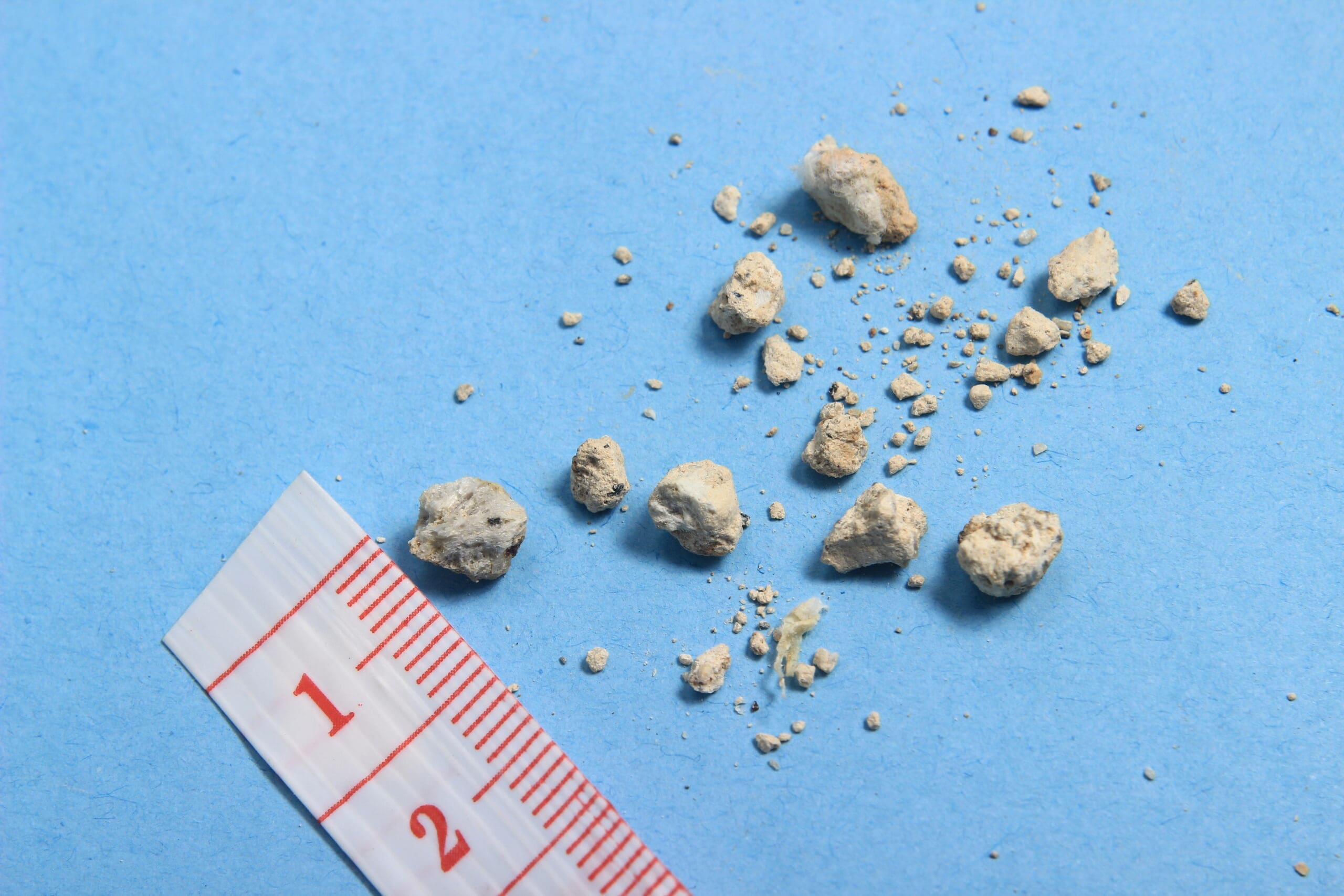
What are kidney stones?
Kidney stones are hard crystalline masses of varying shapes and sizes that form on the inside surface of the kidney.
Types of kidney stones
Types of kidney stones include:
- calcium stones — usually calcium oxalate, or calcium phosphate (calcium stones are the most common type of kidney stone);
- uric acid stones;
- cystine stones; and
- stones that are associated with infection, known as struvite stones.
How do kidney stones form?
Kidney stones form when certain substances in a person’s urine become too concentrated. This results in minerals and other substances in their urine crystallizing out onto the inner surfaces of the kidney. The crystals can combine to form hard stones. Normally, urine contains chemicals that inhibit the crystals from forming.
Symptoms
You may have kidney stones and not know about it. Most small kidney stones pass via the ureters (the tubes connecting the kidneys and bladder) into the bladder without causing any problems. However, if you pass a large kidney stone, you will know about it, because you will be in pain, often excruciating pain. Other symptoms of kidney stones are:
- blood in the urine;
- nausea and vomiting;
- an urgent feeling of needing to urinate;
- shivers and fever; and
- passing small stones in the urine (gravel).
When a stone starts to move into the urinary tract, a person may experience ‘renal colic’, which is an intense pain in the back, just below the ribs. The pain commonly radiates down into the groin — and the testicle in men.
Risk factors
Men tend to get kidney stones 2-3 times as often as women. The peak incidence of kidney stones is between the ages of 20 to 40 years, but people of any age can be affected.
People who have had recurrent urine infections and people who have a family history of kidney stones are more susceptible to developing them, as are people with gout.

Tests for kidney stones
A plain X-ray of the abdomen can identify the majority of stones, showing their size and location in the urinary system.
A non-contrast CT scan of the kidneys, ureters and bladder (CT KUB) is often recommended when kidney stones are suspected. The CT machine rotates around the body to take pictures, and shows all types of kidney stones. An ultrasound of your abdomen can also be useful in diagnosing kidney stones.
An intravenous pyelogram (IVP) is a test where dye is used to highlight the kidneys on an X-ray. An IVP can identify any obstruction to the flow of urine that may be associated with a stone lodged in the urinary system, but requires the use of injected contrast dye (which can have side effects).
Your doctor may also suggest a blood test to look for excess calcium or uric acid, or urine tests to see if you are over-excreting minerals, or have a lack of the chemicals that inhibit crystal formation. Analysing the stone itself (once it has passed or been removed) can also provide useful information to help prevent future stones from forming.
Treatment
Most kidney stones that are less than 5 mm in diameter will pass naturally without any specific treatment. In these cases, drinking adequate water can help.
Pain relievers, such as non-steroidal anti-inflammatory drugs (NSAIDS), can be used to treat pain and discomfort associated with kidney stones.
Stones may need to be removed if:
- they are too large to pass on their own;
- they are causing severe pain or bleeding, or
- they are causing other problems, such as blockage of urine or infection.
Treatments used when a stone needs to be removed include the following.
- Stone fragmentation using lithotripters or lasers. Extracorporeal shockwave lithotripsy (ESWL) uses shockwaves to shatter the stone, which can then pass as small fragments in the urine.
- Some stones can be directly removed from the ureter by a ureteroscope, a fine instrument inserted into the ureter via the bladder.
- Percutaneous nephrolithotomy involves a small incision in the back and the insertion of a needle-thin instrument called a nephroscope, which can be used to locate and remove the stone.
- Open surgery is rarely needed to treat kidney stones.
Prevention of stones
The following tips can help prevent the development of kidney stones.
- Drink plenty of water. People who have previously had a stone should drink enough fluids, especially water, to ensure their urine is dilute in appearance.
- Some types of kidney stone can be avoided by restricting particular foods.
- Avoid added salt in your diet.
- Review your medicines with your doctor, as some medicines can increase your risk of developing kidney stones.
- See your doctor at the first sign of a urinary tract infection.
- Depending on the type of kidney stone you have had, there are some medicines that can help prevent stones forming again (e.g. allopurinol lowers the uric acid level in urine and can help prevent uric acid stones).
