
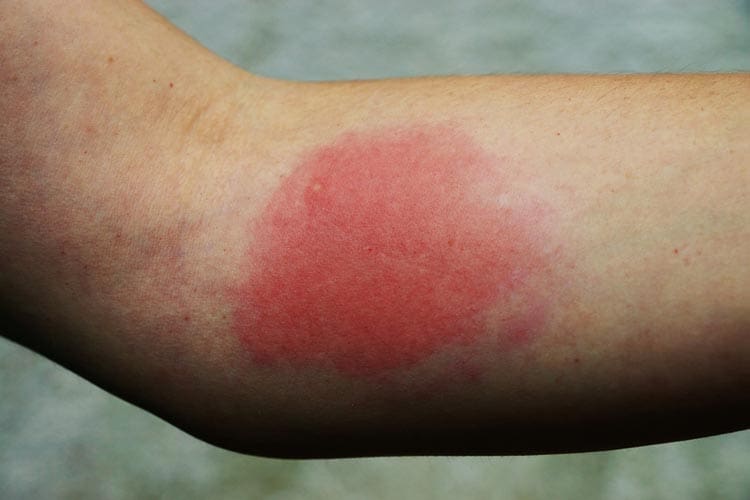
Allergies to insect stings
There are many stinging insects found in Australia, and a surprising number of Australians are allergic to their stings. The most common allergic reactions occur with stings from bees, wasps and ants. The degree of allergy varies widely, however, most people experiencing only mild symptoms such as local itching and minor swelling are not considered ‘allergic’ to insect bites.
Other people, though, may have severe allergic reactions when stung, and about 3 deaths are recorded every year. Most stings tend to occur in summer.
The majority of insect stings only cause discomfort and result in local pain, itching, some swelling and redness at the site of the sting, and this is not considered an allergic reaction. Local treatment is generally all that is needed to treat this type of sting. In these cases, the area should be washed and disinfected and ice applied to relieve the swelling and general discomfort.
In cases where the swelling continues to expand, antihistamine or possibly steroid treatment may be needed. On rare occasions, the sting site may become infected and antibiotics may be required to treat the infection.
What is an allergic reaction?
The severity of allergic reactions varies from person to person. Most allergic reactions are minor, and cause only local swelling and itching. Anaphylaxis is a severe form of allergic reaction, which can be fatal. It involves swelling of the airways, difficulty breathing and a drop in blood pressure. Anaphylaxis can also occur following exposure to a number of other triggers, such as certain foods or medicines, as well as insect stings.
Signs of severe allergic reactions include:
- rash and intense itching in areas other than the sting site;
- puffy eyelids;
- wheezing and difficulty in breathing;
- difficulty in swallowing due to swelling of the tongue, and hoarseness; and
- dizziness and fainting — this is a very serious reaction.
Severe allergic reactions generally occur within minutes of the sting, but may occur up to 24 hours after the sting. Cases of severe allergic reaction are a medical emergency and require immediate medical treatment.
Treatment of insect allergies
If stung by a bee, do not pull or squeeze the sting that is left in the skin as this can cause more venom to be released. The bee sting should be removed by scraping it sideways with a fingernail, blunt knife or similar object. A wasp does not generally leave a sting in the skin.

Anaphylactic reactions need to be treated with adrenaline. Self-injectable devices (such as EpiPen and Anapen) are available for people with known reactions. People with known anaphylactic reactions, whether to insect stings, certain foods or other triggers, are advised to carry the device at all times. These devices are already filled with adrenaline and should be injected into the muscle at the front of the thigh. These types of device hold only one dose, and people should be taken to hospital after the adrenaline shot — specialist observation is required and in some cases, further doses of adrenaline are needed.
Immunotherapy
Long-term desensitisation, called immunotherapy, can be undertaken for bee, wasp and jack jumper ant allergy to train a person’s immune system to not react to the insect’s venom. Immunotherapy takes between 3-5 years. It typically involves weekly injections for the first 3 months, and then injections at longer intervals. It is recommended for people who have life-threatening allergic reactions to insect venoms.
