
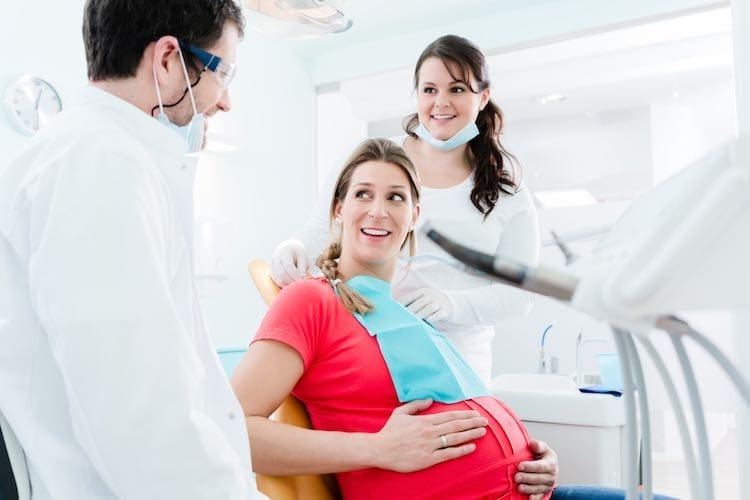
Pregnancy can trigger a number of physical changes in oral health, including pregnancy gingivitis (inflammation of the gums) and pregnancy epulis (a growth on the gum).
Pregnancy gingivitis
Gingivitis, a form of periodontal (gum) disease, is common in pregnancy. The hormonal changes that occur at this time lead to increased blood flow to the gum tissue and increased inflammation in response to dental plaque.
If you have pregnancy gingivitis, your gums will appear swollen and bleed easily. The severity can be minimised by greater attention to oral hygiene. Brushing your teeth thoroughly twice a day with fluoride toothpaste will help reduce plaque, as will flossing after each meal.
There is a little evidence linking more severe gum disease (periodontal disease) in pregnancy to an increased risk of premature birth, but this is far from certain since intervening by treating gum disease during pregnancy (such as through scaling and root planing) does not seem to reduce the risk of preterm delivery.
Pregnancy epulis
Occasionally, some pregnant women will develop a localised swelling on the gum, known as a pregnancy epulis or pregnancy granuloma. Typically this will occur in the second or third trimester, sometimes even appearing for the first time in the final month of the pregnancy.
A pregnancy epulis will often bleed easily, and can appear red and inflamed, however they are generally not painful. A pregnancy epulis is a benign (harmless) tumour and does not have the potential to become malignant (cancerous).
Some women who have an epulis will have it removed during pregnancy, usually because of bleeding, for cosmetic reasons, or because the diagnosis is uncertain. However, if left alone, the epulis will usually become smaller or disappear after childbirth.
Special considerations
Special considerations regarding oral health during pregnancy include:
Nutrition
You should eat a balanced diet including foods with sufficient quantities of calcium, protein, phosphorus, and vitamins A, C, and D. This is important for your baby’s dental health as well as your own. Do not take supplements without your doctor’s advice.
Tooth decay
Hormonal changes during pregnancy and the acid from vomiting if morning sickness is present can all contribute to an increased risk of dental caries (tooth decay) during pregnancy. It’s really important to prevent and treat your dental decay because it can affect the baby’s teeth.
Dental procedures
Your dentist will advise what care is appropriate before and during pregnancy. In general, any procedure involving X-rays and anaesthesia should be postponed if possible.
A toothache should be considered a dental emergency. It is particularly important for your dentist to treat infections that cause toothache, because the bacteria can potentially spread throughout the body and affect your pregnancy.
If you need to have a filling, it is important to note there is no evidence that amalgam (silver-coloured) fillings are linked to mercury toxicity. Nevertheless, if you are concerned about having amalgam fillings, there are commonly used alternatives.
It is safe to treat gum disease during pregnancy and this may reduce the risk of adverse pregnancy outcomes, such as preterm birth, as discussed above.
Antibiotics
Some antibiotics, including tetracyclines, are not suitable during pregnancy as they can cause discolouration of your baby’s developing teeth.
Therefore it is important that your doctor or dentist is aware you are either pregnant or possibly pregnant. There are many antibiotic options available that have been proven to be safe in pregnancy.
