
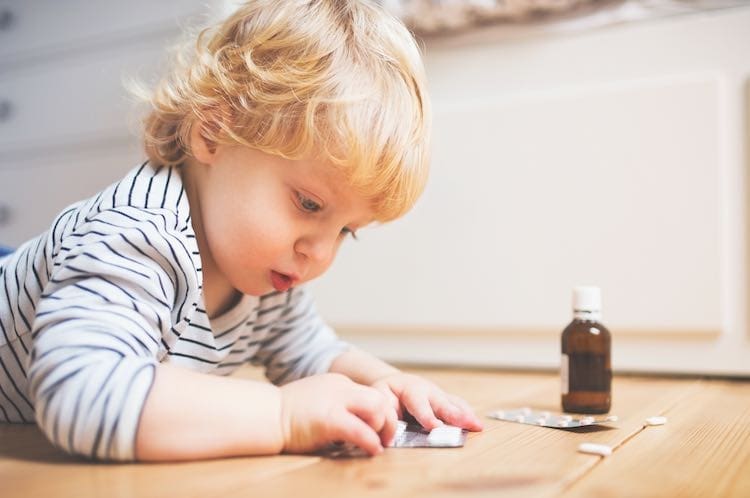
Childhood poisoning may be accidental, but it can still be prevented. Because it is impossible to keep your eyes on a young child 24 hours a day, protection is vital for those times when you do take your eyes away – even for a second.
Children are most at risk of poisoning
Children are, by nature, explorers. Their lives are full of new sensations which they want to find out about. This normal curiosity can sometimes lead them into danger. Unintentional poisoning is one of the greatest of these dangers, particularly for children under the age of 5.
It is important to remember that young children learn about new things by putting them in their mouths. Feeding has been their main source of pleasure and it is natural, when something new comes their way, to see what it tastes like. But if the wrong things go in, serious, even fatal, poisoning may result.
Although in most instances the poison will not kill, many Australian children are hospitalised each week from unintentional poisoning. The number who are taken to hospital but not admitted is much much greater.
Poisoning can occur at any time and in any place, for example your own home, while visiting relatives, holidaying, while moving and when guests are visiting.
Causes of accidental poisoning
Many everyday household items can be the cause of accidental poisoning in young children.
Medicines
Among the items that can cause serious harm to a young child are medicines, including over-the-counter products such as paracetamol, ibuprofen, iron tablets, cold preparations, complementary medicines and herbal products, and vitamins. Medicines account for around two-thirds of accidental poisonings in young children.
Prescription medicines that are commonly involved in childhood poisoning are antidepressants, blood pressure medicines and painkillers.
Paracetamol is a common cause of accidental poisoning in young children.
Fentanyl patches can be a cause of opioid overdose in young children. A patch may detach and then be handled or even worse, chewed by a child, resulting in the child being exposed to a toxic dose of fentanyl. Patches should be disposed of safely, according to the instructions.
Cleaning products
Dishwasher detergents, laundry products, cleaning products such as bleach, oven cleaners, and drain cleaner, are all common products that may be poisonous and cause harm if swallowed.
Other household products
Other common products around the house that can be poisonous include cockroach baits, pool chemicals, car cleaning products, garden sprays, and silica gel.
Personal care products, cosmetics and perfumes
Many creams and ointments, cosmetics, and perfumes are poisonous if ingested. Mouthwash contains alcohol.
Hand sanitiser
Hand sanitiser is a common part of everyday life in Australia now due to the COVID-19 pandemic, but this had led to a doubling in calls about poisoning due to alcohol-based sanitiser. Given that the recommended level of alcohol in hand sanitisers is typically 70 per cent, and their ubiquity around the home, the risk of a child imbibing a lethal amount of alcohol is quite high.
Three-quarters of calls to the NSW Poisons Information line regarding hand sanitiser in the few months to July 2020 were regarding children under the age of 5 who had ingested hand sanitiser.
Alcohol, illicit drugs and nicotine
It goes without saying that alcohol and illicit drugs around the house are also potential items that could poison a child.
Cigarette butts or cigarettes can also be swallowed – there is enough nicotine in a cigarette butt to poison a child. Nicotine patches or gum are also highly poisonous to a child.
Button batteries
Button batteries can cause devastating injuries in young children – they can be swallowed, inserted into the ears or nose or under the eyelid. They cause damage either by causing burns, by blocking the oesophagus or by leaking chemicals which can erode the oesophagus wall.
Often a parent won’t witness their child ingest the battery and will only be alerted to the problem when symptoms start. Do not try and make your child vomit. Act immediately and call 000 if the child is having any breathing difficulties. If not, call the Poisons Information Centre immediately on 13 11 26.
Plants
There are many plants in Australian gardens that are poisonous. It may be the leaves, flowers, fruit or berries that are poisonous, depending on the plant.
Here are some examples:
- Black bean (Castanospermum australe) or Moreton Bay chestnut has toxic seeds that can cause vomiting and diarrhoea if eaten. The sawdust from the wood can cause nasal irritation and eczema.
- Stinging brush, mulberry-leaved stinger, gympie stinger (Dendrocnide moroides). The stinging hairs deliver a neurotoxin. Grows in rainforest areas in north-east Australia. The pain recurs over weeks or months.
- Oleander – all parts of the plant are toxic – flowers, leaves, sap, seed pods etc – even when dry. A single leaf eaten, could kill a small child. Even smelling the perfume from the flowers may irritate the respiratory system. The poisons in the plant (cardiac glycosides) affect the heart. Ingestion of oleander can result in death. It is poisonous to most animals also.
- Angel’s trumpets. Every part of the plant is poisonous. Ingesting the plant can cause hallucinations, fast heartbeat (tachycardia), paralysis and death.
- Mushrooms – Several species of mushroom found in Australia are poisonous, some deadly including the death cap mushroom.
- Deadly nightshade is a common garden plant which along with its dark coloured berries is very poisonous. Ingestion of one leaf or around 20 berries could be fatal to an adult, even less for a child.
- Strychnine tree. Has small orange berries, which are neurotoxic and can cause convulsions.
- Rhus tree (Toxicodendron succedaneum). All parts of the tree are highly toxic and its sap or parts of the plant can cause serious allergy, starting with rash, redness and blisters, often progressing to swelling of the face, arms and legs. It can take hours to days for the symptoms to develop. Even the smoke created by burning the shrub can cause reactions.
- Asthma weed, also known as pellitory or sticky weed, is a perennial herb that may cause skin rashes on contact and hay fever, rhinitis, conjunctivitis and asthma from its pollen.
If your child has been poisoned
If you suspect that a child has been exposed to a poison or been incorrectly dosed with a medicine, don’t wait for symptoms to occur.
Call the Poisons Information Centre on 13 11 26 immediately for advice
You can call 24 hours a day, 7 days a week from anywhere in Australia
Prevention of poisoning
Ensuring a child has no access to poisonous things is the best line of defence. Everyone can take responsibility to reduce the chances of a child being poisoned, whether children live in your home, or if they come to your home on an occasional visit. Prevention takes a few minutes and in most instances costs nothing to implement.
While medicines (both prescription and over the counter) are responsible for about 60 per cent of poisonings in Australia, 2016 data show that household products are responsible for about 40 per cent of toxic symptoms and hospitalisations due to exposure or ingestion.
The 2016 ACCC report uses information from the NSW Poisons Information Centre of calls they received over 12-month period.
It shows the main causes of poisonings in the home were:
- Batteries (disc/button)
- Pool chlorine
- Superglue
- Oven cleaner
- Cyalume glowsticks
- Denture cleaner (mistaken for medication)
- Hair dye
- Insecticide
- Hand sanitiser
- Dessicant (silica gel) – often found as small bags in amongst consumer packaging to absorb moisture.
- Eucalyptus oil
The report found that the most serious incidents related to carbon monoxide exposure from heaters and cookers, button batteries, caustic cleaners, pool chemicals, household bleaches and herbicides.
How to poison-proof your home
There are precautions you can take to poison-proof your home and try to keep your children safe.
- Check all the rooms in the house for poisons. Don’t forget the bedroom and living room.
- Put all poisonous substances away immediately after using or buying. Don’t leave them on the bench. Most poisoning happens this way.
- If the door or phone rings when you are using a potentially harmful product, take it with you. Don’t turn your back on a child when a poisonous product is nearby.
- Put poisonous products out of reach (at least 1.5 metres off the ground), out of sight and locked away; use child resistant locks on cabinets and cupboards containing medicines, toiletries, household cleaners and garden products.
- Ask for child-resistant containers when you buy medicines and household cleaners.
- Keep the poison in its original container and store it in a different cupboard from food products. Never store poisons in old soft drink bottles or other food containers.
- Always read the labels.
- Make a distinction between medicines and other products. Don’t call medicines ‘lollies’ to encourage a child to take them.
- Take your own medicines out of sight of children.
- Keep handbags out of reach of children. Only store one day’s supply of medication in your handbag.
- Discard old medicines and poisons safely. Ask your pharmacist about disposing of old medicines.
- Be aware that poisoning is more likely when household routines are disrupted, such as when you are moving house, going on holidays or having visitors.
- Check that the plants in your garden are not poisonous. Don’t plant new poisonous plants and remove or fence off established poisonous plants in areas where small children play.
