
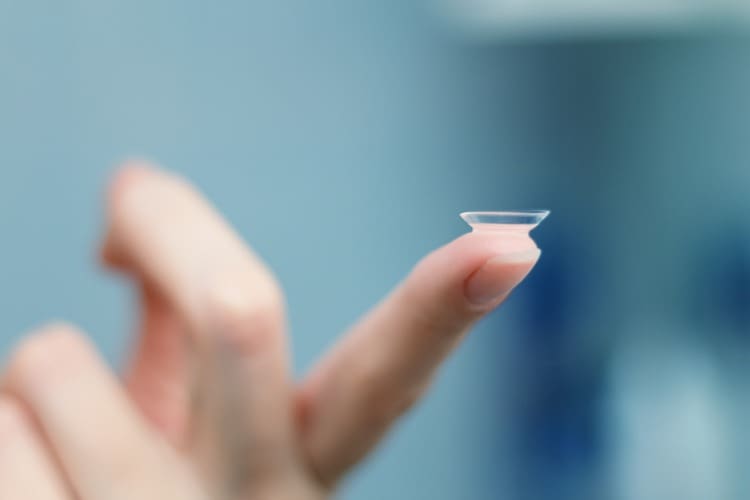
There are 2 types of contact lenses: hard lenses, or rigid gas permeable lenses; and soft lenses. Soft lenses are the most popular.
Types of soft contact lenses
There are various types of soft contact lenses, including the following.
- Disposable contact lenses, which depending on the type need to be replaced daily, weekly, fortnightly or monthly.
- Non-extended wear (daily wear) contact lenses, which are applied in the morning and removed each evening for cleaning before wearing again.
- Extended wear contact lenses, which can be worn continuously – day and night – for a period of 7 to 30 days. These lenses are not suitable for everyone.
Advantages of soft contact lenses
Soft contact lenses are generally more popular than hard lenses, for a number of reasons.
- Many people find soft lenses more comfortable and easier to remove than hard contact lenses.
- Soft lenses are less likely to become dislodged from the eye and are useful for wearing during sports.
- Soft lenses are less likely to trap dust, eyelashes or other foreign material under the lens.
Disadvantages of soft contact lenses
- The disadvantage of soft contact lenses is that their wearable life is shorter than hard lenses.
- Soft contacts are more easily damaged if not cared for properly.
- Soft contact lenses are a hydrogel-type product and prone to contamination, so it is important that they are cleaned and disinfected regularly.
Caring for contact lenses
Caring for contact lenses requires a combination of cleaning, disinfecting, rinsing and storing. Some products combine 2 or more of these steps. It is likely that your optometrist has prescribed a particular lens care system suited to your particular type of lenses.
Normal tears can leave protein and oil deposits on contact lenses. If these deposits are not cleaned off they harden and can cause distorted vision, as well as reducing the wearable life of the lenses. Contact lenses can be cleaned by using contact lens solution and rubbing the contact lenses with your finger to remove any residue. Some lenses also need to be disinfected using another type of solution.
After cleaning your contact lenses, rinse and soak them in sterile solution. Use only the recommended contact lens solutions – never use tap water to clean, rinse or store your lenses.
Tips for handling contact lenses
The following are some helpful tips for handling contact lenses.
- Always wash and dry your hands well when handling contact lenses.
- Soft lenses become very brittle when they dry out. If a lens becomes dehydrated, rehydrate it with saline before handling it. Do not use saliva to wet the lens.
- Don’t wear lenses when around noxious fumes or smoke.
- Follow the expiry dates on contact lens solutions and discard unused solution, especially if it does not have a preservative.
- Clean your lens case with sterile contact lens solution after each use and leave it to dry.
- Replace the lens case every 3 to 6 months.
- Insert lenses before applying make-up.
- Take lenses out before removing make-up.
- Remove contact lenses before activities that involve contact with water, such as swimming or using a hot tub.
- If a hard lens is lost or dropped, use a vacuum cleaner with pantyhose over the inlet to catch the lens.
- If a soft lens is lost, turn out the light and shine a torch around the room — light will reflect off the lens.
Medicines and contact lenses
In general, contact lenses should be removed before applying eye drops, ointments or gels into the eye, as the medicines and preservatives they contain may be absorbed into the lens. The only exceptions are when using lens wetting agents or when directed by your eye care professional. You should always check with your optometrist or pharmacist to ensure that the drops are compatible with the lens.
Although uncommon, soft lenses, in particular, can change colour when exposed to chemicals in diagnostic eye drops and to medicines which are secreted into tears. For example, rifampicin (a type of antibiotic) is secreted into the tears after it is swallowed, staining the tears and lenses orange.
Some medicines such as diuretics, antihistamines, decongestants and anticholinergics may cause dry, red eyes. Other medicines can also cause eye irritation or change the effectiveness of the lens. For example, sedatives can reduce the blink rate, which normally helps lubrication by washing tears around the lens.
In general, you should use your normal wetting solution, or artificial tears, for lubrication. However, even artificial tears may cause some lens wearers initial discomfort if they are not ideally suited to the type of lens being worn. If you are experiencing problems with dry eyes, speak with your pharmacist who will be able to recommend a suitable lubricant. Contact an optometrist if there is any unusual or ongoing irritation, redness or pain, or if you are having problems with your eyesight.
