
People with type 1 diabetes are unable to produce enough insulin to regulate the glucose (sugar) levels within their blood, so they need to take insulin to manage their diabetes. Some people with type 2 diabetes and gestational diabetes (diabetes that develops during pregnancy) may also need insulin to control their blood sugar levels.
There are a variety of types of insulin and ways to give it, including injections, pens and pumps. Your doctor and diabetes educator can recommend the most suitable type of insulin and delivery device for you.
Types of insulin
There are different types of insulin available to manage diabetes. These days, most types of insulin are synthetic (created in a laboratory), but there are some that are extracted from the pancreas of animals.
Types of insulin vary, according to:
- how quickly they take effect;
- how long their effect lasts; and
- when they reach their peak, in terms of ability to lower blood-glucose levels.
Ultra-short-acting insulin
Ultra-short-acting (also called very-short-acting or rapid-acting) insulin starts to work about 15 minutes after being injected, peaks after about 1-2 hours, and lasts for about 4-5 hours. This type of insulin is injected immediately before meal times and is also used in insulin pumps.
Types of ultra-short-acting insulin include:
- insulin glulisine (brand name Apidra);
- insulin lispro (Humalog); and
- insulin aspart (NovoRapid).
These are all synthetic copies (analogues) of human insulin and are clear in appearance.
Short-acting insulin
Short-acting insulin (insulin neutral) starts to work about half an hour after being injected, peaks from between 3 and 5 hours, and lasts for about 6-8 hours. Short-acting insulin is given 20-30 minutes before a meal. It is clear in appearance.
Types of short-acting neutral insulin include:
- Actrapid and Humulin R (human short-acting insulins); and
- Hypurin Neutral (short-acting insulin obtained from the pancreas of cattle – bovine insulin).
Intermediate-acting insulin
Intermediate-acting insulin (isophane insulin) is cloudy in appearance. It starts to work 1-2 hours after being injected, peaks at 4-12 hours and lasts for 16-24 hours. Intermediate-acting insulin is usually given once or twice a day.
Types of intermediate-acting insulin include:
- Humulin NPH and Protaphane (human isophane insulins); and
- Hypurin Isophane (NPH) (bovine isophane insulin).
Intermediate-acting insulin is often used in conjunction with short-acting insulin.
Long-acting insulin
Long-acting insulin starts to work several hours after being injected and lasts for about 24 hours. It has no peak effect. Long-acting insulin is usually given once (or sometimes twice) daily, and should be given at the same time every day.
Types of long-acting insulin include:
- insulin glargine (brand names Lantus, Toujeo); and
- insulin detemir (brand name Levemir).
Both types of long-acting insulin are human insulin analogues (synthetic copies of human insulin) and are clear in appearance.
Mixed insulin
Mixed insulin (also called biphasic premixed or combination insulin) is a premixed combination of 2 different types of insulin.
Mixed insulin that contains short-acting neutral insulin and intermediate-acting isophane insulin include the following. (The numbers written after the brand name show the mix of the 2 types of insulin.)
- Humulin 30/70 (which contains 30 per cent short-acting and 70 per cent intermediate-acting);
- Mixtard 30/70; and
- Mixtard 50/50.
The ultra-short acting insulins lispro and aspart are also available in a biphasic form. In this form some of the insulin is combined with a protein (protamine) to slow down its action.
- Humalog Mix25 (insulin lispro);
- Humalog Mix50 (insulin lispro); and
- NovoMix 30 (insulin aspart).
There is also a mixed insulin that contains a new type of ultra-long-acting basal insulin (insulin degludec) plus short-acting insulin aspart. This type of mixed insulin can be used in adults with diabetes. It is injected once (or sometimes twice) daily, with its effects lasting longer than 24 hours. The brand name is:
- Ryzodeg 70/30.
Mixed insulin is available in a pre-filled insulin pen and is particularly convenient for people who have poor eyesight or coordination, or who are unable to draw up insulin accurately from 2 different bottles of insulin.
Which insulin is best?
The type of insulin that is best for you and the timing of doses will depend upon a range of different factors such as:
- the type of diabetes you have;
- your eating and exercise patterns; and
- your individual reaction to the different types of insulin available.
How is insulin taken?
For people with type 1 diabetes, insulin can be given in one of the following ways.
- Multiple daily injections: long-acting (or intermediate-acting) insulin is given once or twice a day as background insulin to maintain blood sugar levels – this is called a basal dose of insulin. Ultra-short-acting (or short-acting) insulin is also given just before meals and, if needed, to correct high blood sugar levels – these are called bolus doses of insulin.
- Mixed insulin doses: combination (biphasic premixed) insulin is given once or twice daily.
- Continuous insulin infusion: very short-acting insulin is given via an insulin pump.
Type 2 diabetes is usually treated with medicines and lifestyle changes to begin with, but most people with type 2 diabetes eventually also need to take insulin. Insulin treatment for type 2 diabetes usually starts with a once-daily basal dose of long-acting insulin. In people with very poorly controlled blood sugar levels, twice-daily basal doses, mixed insulin doses or multiple daily injections may be recommended.
Insulin delivery devices
Insulin is usually given using a needle and syringe, insulin pen injector or pump, and is injected into the layer of tissue just under your skin called the subcutaneous tissue. Insulin is absorbed fastest from the subcutaneous tissue of the abdomen, but can also be given to the thigh or buttocks.
Needle and syringe
A common way of administering insulin is with a needle and syringe. Syringes come in a range of capacities (1 mL, 0.5 mL or 0.3 mL) and with a range of needle types (different gauges — that is thicknesses — and lengths) attached. The needles have very fine points and special coatings to make injections relatively pain-free.
Your diabetes educator can help you select a syringe that suits the size of the insulin dose you take and that has your preferred needle type and needle size attached.
One of the main advantages of the syringe system is the variety of products available. Needles and syringes also make it easy to use a mixture of different types of insulin. However, some people find syringes daunting and not very convenient.
Insulin pens
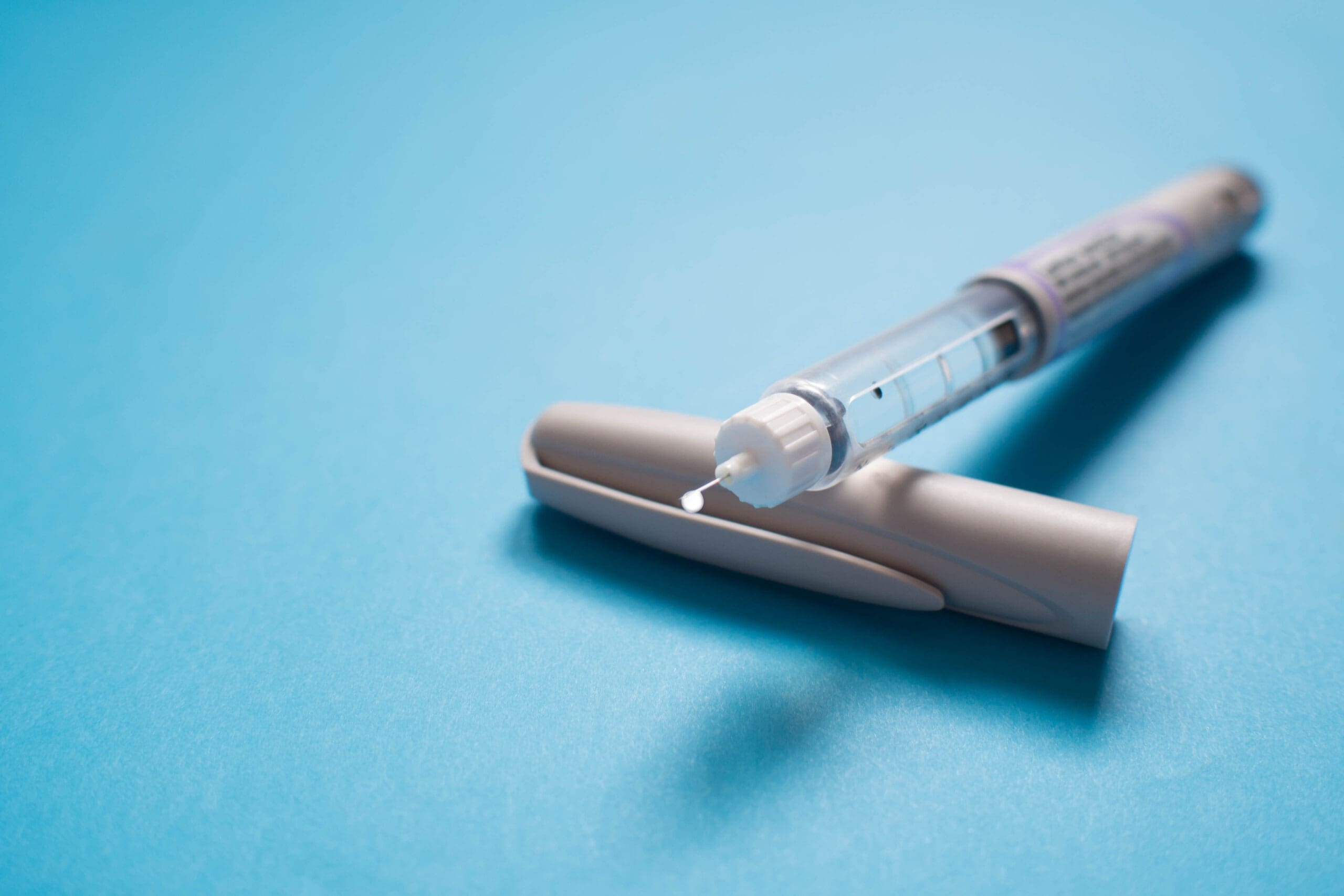
Insulin pen injectors (pen needles) are a convenient and discreet way of administering insulin. Many people find insulin pens easier to use than a needle and syringe.
Insulin pens have a built-in dial that allows you to determine the amount of insulin to be injected, a short needle at one end, and a plunger at the other. Some are disposable, and don’t need to be assembled before use, while others have a replaceable insulin cartridge that needs to be inserted (much like a fountain pen cartridge).
Insulin pens are particularly useful if you take premixed insulin. They are also useful for people who have problems with their eyesight or problems such as arthritis of the hands that make it difficult to use a needle and syringe.
Insulin pumps
Insulin pumps are small devices that run off batteries and are worn on your belt or in your pocket. They deliver insulin at a slow, continuous rate throughout the day, and also release larger quantities of insulin at meal times or when blood sugar levels are high.
The pump delivers the insulin via an infusion set (also called a giving set) – a thin tube ending in a cannula that is inserted under the skin of your abdomen and remains in place for several days (the cannula needs to be changed every 2-3 days).
The main advantage of insulin pumps is that they closely mimic the release of insulin by the pancreas. Pumps can help you achieve tighter blood glucose control and reduce the frequency of episodes of severe low blood sugar (hypoglycaemia). Many people with type 1 diabetes find that using insulin pumps improves their quality of life. However, using an insulin pump can be expensive.
When using an insulin pump, monitoring your blood glucose levels regularly (at least 4-6 times per day) is essential. Because pumps use ultra short-acting insulin, problems such as blockages can quickly lead to high blood sugar levels and ketoacidosis. You should never disconnect from the pump for more than 2 hours without using an alternative method of delivering insulin, such as injections.
The latest types of insulin pumps can link with a continuous glucose monitoring system (CGMS) – a sensor device that is inserted under the skin and continuously measures glucose levels in the interstitial fluid (fluid in the body’s tissues). CGMS devices can detect patterns in glucose levels during the day and night, providing insight on your overall glucose control.
Some CGMS devices can sound an alarm when glucose levels quickly become too high or too low, and when linked to an insulin pump can temporarily stop the pump delivering insulin if glucose levels fall too low.
Blood glucose checks with finger prick testing must still be done to determine insulin doses and also to calibrate the CGMS device.
Artificial pancreas device – automated insulin delivery system
Clinical trials are currently underway in Australia using an ‘artificial pancreas’ device to treat type 1 diabetes. The device is a closed-loop insulin pump system, where blood sugar levels are frequently monitored and then the appropriate amount of insulin is automatically delivered via an insulin pump.
Calculations to work out how much insulin to give are made using an algorithm (maths program) that mimics a healthy pancreas. The amount of insulin needed is adjusted based on your blood sugar levels and activities. This means that the person does not have to be constantly involved in monitoring their blood sugar levels and administering insulin. However, they can override the system if needed.
Treatment with this technology will hopefully allow people to have improved blood sugar control as well as greater flexibility and fewer injections.
Other delivery devices
Several other ways of delivering insulin have been investigated. These devices, which are not currently available or not commonly used in Australia, include the following.
- Insulin inhalers, which deliver dry powdered insulin into the bloodstream via the lungs, have been used to deliver pre-mealtime insulin. Currently not available in Australia.
- Insulin jet injectors work by sending a fine spray of insulin into the skin using a pressurised jet of air instead of a needle. However, jet injection isn’t any less painful than administering insulin with a needle, and may cause bruising or altered absorption levels. Jet injectors also require frequent cleaning and maintenance. They are not commonly used.
- Insulin sprays, either for the nose or mouth, and insulin pills are methods of insulin delivery that continue to be investigated.
- Insulin patches are also currently under development, but it is difficult for insulin to be absorbed through the skin. The patch is designed to release insulin slowly and continuously.
Islet cell transplantation
Islet cell transplantation is a surgical procedure whereby islet cells from the pancreas of a human organ donor are injected into the liver of a recipient with type 1 diabetes. Islets (of Langerhans) contain beta cells, which secrete insulin. The transplanted cells begin to secrete insulin over time, and insulin doses may be reduced or, in some cases, insulin injections are no longer needed.
In Australia, islet cell transplantation is usually considered for people with type 1 diabetes who have difficulty keeping their blood sugar levels stable. It can help prevent episodes of low blood sugar (hypoglycaemia). The recipient needs to take immunosuppressive medicines for life to prevent rejection of the transplanted tissue.
Glossary of insulin terms
| Insulin: glossary of terms | |
|---|---|
| Term | Definition |
| Aspart | A copy of human insulin made by recombinant DNA technology (genetic engineering). This is a very-short (ultra-short) acting insulin. That means it starts to work very quickly. |
| Bovine | From cattle. Bovine insulin is usually made from the pancreas of cattle. |
| Degludec | Insulin degludec is an ultra-long-acting basal insulin. Its effect lasts for over 24 hours. |
| Detemir | Detemir insulin is a long-acting human insulin analogue that has a slow onset and long duration of action. |
| Glargine | Insulin glargine is a long-acting human insulin analogue. Its effect lasts for over 24 hours. |
| Glulisine | Insulin glulisine is an ultra-short-acting human insulin analogue. It starts to work very quickly and lasts only a relatively short time. |
| Human insulin | An insulin produced in the laboratory, using genetic engineering technology, that has the same structure as the insulin found in the human pancreas. |
| Human insulin analogue | Insulin produced in the laboratory, using genetic engineering technology, that has a slightly altered structure compared to the insulin found in the human pancreas; this alteration changes the onset and duration of action of the insulin. |
| Isophane | Scientific name for a type of intermediate-acting insulin. Also known as NPH. |
| Lispro | Insulin lispro is an ultra-short acting human insulin analogue. This means it starts to work very quickly. |
| Neutral insulin | Scientific name for a type of short-acting insulin. It is a clear fluid with zinc and insulin crystals dissolved in it. Sometimes referred to as regular, soluble insulin, it may have the word neutral or the letter ‘R’ (for regular) after its brand name. |
