
Keeping track of your blood glucose level is an important part of managing diabetes mellitus (commonly known as diabetes). It keeps you informed of how well your diabetes is being controlled — good glycaemic control (control of your blood glucose) will ultimately help you to avoid or delay diabetic complications.
Blood glucose control
Achieving well-controlled diabetes means keeping the amount of sugar in your blood — your blood glucose level — as closely as possible within the target range.
| Blood glucose targets in type 2 diabetes | |
|---|---|
| Before a meal (preprandial blood glucose) |
After a meal (postprandial blood glucose) |
| 4 to 8 mmol/L | Lower than 10 mmol/L |
These figures are a guide only — your doctor will discuss with you the blood glucose range that is ideal for you. Avoiding a low blood sugar level (hypoglycaemia) comes into consideration as well as achieving good control.
Why check my blood glucose?
It is important to understand that your blood glucose will vary with your day-to-day activities, for example, blood glucose levels will generally decrease with:
- fasting;
- exercise; and
- after administering insulin.
On the other hand, blood glucose levels will increase after you have:
- eaten food; and can also increase in response to
- illnesses, such as a viral infection; and
- emotional stress, for example, a change in jobs or upcoming exams.
Knowing how your blood glucose changes in response to these influences helps you to plan your day and modify your treatment to aid control of your diabetes. Monitoring also tells you how well your diabetes treatment — whether medication or lifestyle changes — is working.
Writing down your blood glucose levels in a log book will provide you and your doctor with a useful source of information when making decisions about managing your diabetes.
Being unaware of persistently high blood glucose levels can put you at risk of immediate complications of diabetes such as diabetic ketoacidosis. Equally important when you are on insulin injections or tablets for diabetes is being aware of and quickly treating dangerously low blood glucose levels, which can lead to a hypoglycaemic coma.
How do I check my blood glucose?
Most people check their blood glucose level using a personal blood glucose meter. There are many brands currently available; select one that is affordable for you and that you find easy to use. Ask your diabetes educator or doctor for advice.
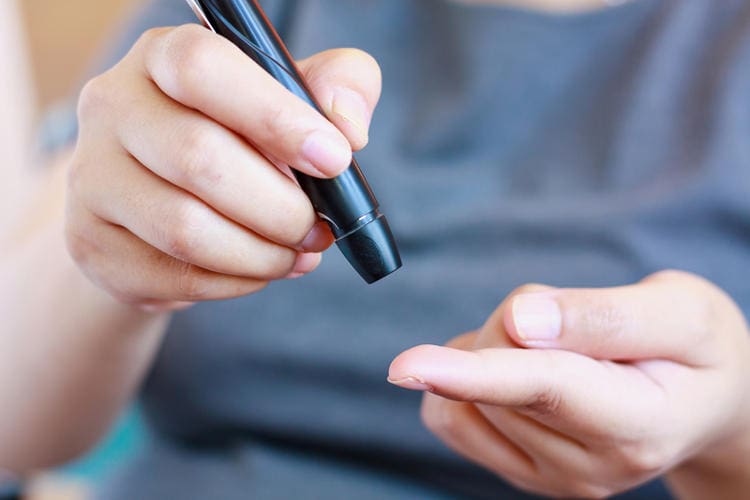
Blood glucose meters are usually compact and often pocket-sized. You use a disposable lancet (a small, sharp-pointed pin), often contained within a button-activated lancet device, to obtain a small drop of blood from your fingertip. You then place this drop of blood on the disposable test strip which is inserted into the meter. After a few seconds the meter will produce a digital reading of your current blood glucose level.
This type of blood glucose meter is reliable and accurate when used according to directions. To minimise the chance of taking inaccurate readings, have your diabetes educator show you how to use the monitor you have selected, including proper storage of the test strips, as well as how to collect the drop of blood.
When and how often do I check my blood glucose?
Blood glucose readings are usually taken before a meal or 2 hours after a meal, or at both times. Your doctor will advise you of the best monitoring schedule for you.
If you are prescribed insulin injections you will usually need to check your blood glucose level often — up to several times daily — and adjust your insulin dose, food intake and activity level in response to your blood glucose readings.
If you are not on insulin therapy, it is unlikely that you would need to monitor your blood glucose this frequently. If you are on tablets for your diabetes you may need to check your blood glucose level one or more times daily.
If you have been prescribed lifestyle measures to control your diabetes, regular monitoring of your blood glucose will let you know how your blood glucose is responding to such things as increasing your level of physical activity and changing your diet. At least several days of readings are needed to interpret the impact on your blood glucose readings of a change in your daily routine.
Being unwell, being pregnant or having a change in your diabetes medicine are examples of times that require more frequent blood glucose monitoring.
Again, your doctor will advise you on how often to measure your blood glucose.
Glycosylated haemoglobin (HbA1c) measurement
Apart from regularly checking your own blood glucose level, your doctor will usually recommend that you have your glycosylated haemoglobin (HbA1c) level measured every 3 to 6 months.
Haemoglobin is a protein contained within red blood cells that will combine with glucose molecules — becoming increasingly ‘glycosylated’ — if an excess of glucose is present in the blood when new red blood cells are formed. Red blood cells last for several months in the bloodstream, making HbA1c a very useful indicator of how tight your blood glucose control has been over the last 2 to 3 months.
HbA1c measurement is obtained from a simple blood test. The result used to be given as a percentage – with the goal for most people to be 7 per cent or less, but now the results are reported in millimoles/mole (mmol/mol). The new equivalent target for HbA1c is 53 mmol/mol or less.
