
Type 1 diabetes (insulin-dependent diabetes mellitus) is an autoimmune disease in which the pancreas is unable to produce enough of a hormone called insulin. This reduced insulin production results in a higher-than-normal level of glucose in the blood – a condition called ‘hyperglycaemia’ (high blood glucose).
About 120,000 people in Australia have Type 1 diabetes. It’s usually diagnosed during childhood or early adulthood, but it can develop at any age.
Glucose is a type of sugar that comes from carbohydrates in your food and it’s your body’s main source of fuel. Insulin enables glucose in your blood to enter your body’s cells, where it is converted into useable energy.
If your pancreas doesn’t produce enough insulin, then glucose is less able to enter your body’s cells. Your body’s cells are then less able to access the fuel they need for energy, and there will also be a corresponding build-up of glucose in your blood. This will eventually lead to the development of hyperglycaemia (high blood glucose) and it is this hyperglycaemia that causes the characteristic symptoms – and potential complications – of Type 1 diabetes.
Symptoms of Type 1 diabetes
The common symptoms of Type 1 diabetes are due to the higher-than-normal blood glucose levels that are associated with the disease.
Increased urination: When you have too much glucose in your blood, your kidneys have to filter increased sugar which makes them produce larger amounts of urine. Experiencing a need to pass urine more often than usual is therefore one of the common symptoms of Type 1 diabetes.
Unquenchable thirst: Another common symptom of Type 1 diabetes is unquenchable thirst. The thirst is a response to dehydration resulting from the excess urine production and also from water being drawn from the tissues due to high blood sugar levels.
Increased thirst and urination are often the first noticeable symptoms of Type 1 diabetes.
Other commonly reported symptoms of Type 1 diabetes include:
- tiredness;
- unexplained weight loss (a sign that the body’s cells are having to use stored fat for energy, because they cannot access glucose in the blood);
- hunger (often for sweet foods);
- blurred vision; and
- slower-than-normal healing of cuts or wounds.
Causes
Type 1 diabetes is an ‘autoimmune’ disease. An autoimmune disease is one in which the body’s immune system, which normally protects the body against anything it recognises as being ‘foreign’, such as bacteria or viruses, mistakenly identifies a healthy part of the body as being foreign and attacks it.
In cases of Type 1 diabetes, the body’s immune system is thought to attack and destroy insulin-producing cells in the pancreas, creating a shortage of insulin.
Risk factors
Scientists are still unsure what causes the body’s immune system to attack insulin-producing cells in the pancreas.
We do know that Type 1 diabetes usually runs in families, which means that the disease may be at least partly due to genetic (inherited) factors.
Most cases of Type 1 diabetes are likely to be the result of both genetic factors and the action of one or more environmental ‘triggers’ (e.g. viral, dietary or chemical). Possible triggers or risk factors (none of which have been proven) include exposure to certain viruses, early exposure to cow’s milk, weight gain during early life and vitamin D deficiency.
Nothing has been proven to help delay or prevent the onset of the disease.
Complications
Having a persistently high blood glucose level can lead to many possible complications.
Diabetic ketoacidosis
For example, if your blood glucose levels remain high, you are at risk of developing a potentially life-threatening condition called ‘diabetic ketoacidosis‘.
Diabetic ketoacidosis occurs when the body’s cells are unable to take up glucose from the blood (due to insufficient insulin production in the pancreas) and – instead – start breaking down fat, to use as energy. Unfortunately, this breakdown of fat results in the production of toxic acids called ketones. And these ketones can build up in the blood.
The presence of large amounts of ketones in the blood is called ketoacidosis and it’s a condition that can lead to a coma, and even death, if left untreated. It’s therefore important to be able to recognise the possible symptoms of diabetic ketoacidosis (e.g. nausea; vomiting; abdominal pain; deep rapid breathing or breathlessness; extreme drowsiness; sweet or ‘fruity’-smelling breath, especially in the setting of rapid weight loss and newly diagnosed type 1 diabetes) and to know what to do if you suspect that you might be developing the condition.
Having a persistently high blood glucose level can also lead to a number of potential longer-term complications that tend to develop gradually, over many years or even decades. These include the development of damage to blood vessels, increasing the risk of:
- Heart and blood vessel disease (increasing the risk of heart attack and stroke);
- Peripheral vascular disease (e.g. damage to small blood vessels in the feet, which can reduce blood supply to the feet, causing delayed healing from blisters or sores and, in very serious cases, lead to a need for surgery or amputation);
- Kidney damage (nephropathy; in severe cases, this nephropathy may lead to kidney failure, requiring dialysis or a kidney transplant);
- Eye damage (e.g. retinopathy, which is damage to the retina at the back of the eye and can lead to blindness if left untreated; people with Type 1 diabetes are also at increased risk of developing cataracts or glaucoma); and
- Nerve damage (neuropathy), which may lead to tingling, numbness, burning sensations or pain in the hands, feet or legs, as well as erectile problems in men.
Be aware that having a high blood glucose level can weaken the body’s immune system, increasing the risk of infection.
People with diabetes may be more susceptible to developing skin and mouth problems, including bacterial and fungal infections, such as thrush or recurrent boils.
Diagnosis
To make a diagnosis of Type 1 diabetes, your doctor will need to consider multiple factors, including your symptoms, age, family history of diabetes, body weight and current medications. However, a diagnosis can only be confirmed after a blood test has revealed the presence of a raised blood glucose level. In Australia, this diagnostic blood test may be either:
- A fasting blood glucose test (FBGT), where the blood sample to be tested is taken no less than about eight hours eating; or
- A ‘random’ blood glucose test (RBGT), where the blood sample to be tested is taken at any time.
You are likely to have diabetes if your:
- FBGT shows that your blood glucose level is 7.0 millimoles (mmol) per litre (L) or higher; or
- RBGT shows that your blood glucose level is 11.1 mmol/L or higher.
If a blood glucose test result is borderline or inconclusive, then an oral glucose tolerance test (OGTT) may be needed to confirm a diagnosis of diabetes; this involves the testing of 2 or more blood samples, taken before and after drinking a prepared glucose drink.
Other possible tests that might be performed in cases of Type 1 diabetes include:
- Islet cell autoantibody test – a blood test to check for the presence of antibodies targeted against islet cells, the insulin-producing cells in the pancreas.
- Blood or urine test for ketones – to check the level of ketones in the body.
- Glycated haemoglobin (HbA1C) test – a blood test that shows what your average blood glucose level has been over the past 2–3 months (in Australia, HbA1c testing is not used to diagnose Type 1 diabetes; but it is used to help monitor the effectiveness of diabetes treatment).
Treatment
Type 1 diabetes is a life-long disease, for which there is currently no cure.
The overall aim of treatment in cases of Type 1 diabetes is to maintain a normal, healthy level of glucose in the blood. Doing this will not only help to prevent or relieve the symptoms of diabetes, but will also help to prevent, delay or minimise potential complications of the disease.
Blood glucose monitoring
People with Type 1 diabetes need to regularly monitor their blood glucose level every day, at a variety of different times (e.g. fasting, before meals, 2 hours after meals), as well as be mindful of things that are likely to affect this level (e.g. the type and amount of foods they eat, the length of time they leave between meals, the amount of exercise they do) and how each of these things is likely to affect it.
Insulin injections
Importantly, people with Type 1 diabetes also need to inject insulin several times each day (or receive insulin via an insulin pump) – to replace the insulin that their pancreas is not producing. Insulin allows your body’s cells to take up glucose from the blood and thereby reduces the amount of glucose in your blood.
The ideal level of blood glucose will vary from person-to-person. If you have been diagnosed with Type 1 diabetes, your doctor and/or Credentialled Diabetes Educator will help you determine what target you need to aim for. He or she will also explain:
- When you need to check your blood glucose level and how to do this (usually by ‘finger prick’ testing, using a portable glucose meter);
- When you need to inject your insulin and how to do this (including how to calculate the correct dose); and
- What else you can do to help manage your blood glucose level and keep it within the recommended target range.
In Australia, there are a number of different types of insulin available via the Pharmaceutical Benefits Scheme (PBS), which differ in how quickly they work and how long they last in the body; these include:
- Very short-acting insulin (e.g. insulin aspart [NovoRapid], insulin glulisine [Apidra], insulin lispro [Humalog]);
- Short-acting insulin (e.g. insulin neutral bovine [Hypurin Neutral], insulin neutral human [Actrapid, Humulin R]);
- Intermediate-acting insulin (insulin isophane bovine [Hypurin Isophane], insulin isophane human [Humulin NPH, Protaphane]);
- Long-acting insulin (e.g. insulin detemir [Levemir], insulin glargine [Lantus, Toujeo]); and
- Pre-mixed formulations containing a mix of different amounts of short- and intermediate-acting insulin (e.g. NovoMix 30, Humalog Mix 25, Humalog Mix 50, Humulin 30/70, Mixtard 50/50, Mixtard 30/70). There is also a pre-mixed formulation called Ryzodeg 70/30 that contains a new type of ultra-long-acting basal insulin (insulin degludec) and short-acting neutral insulin (insulin aspart).
Once again, if you have been diagnosed with Type 1 diabetes, your doctor and/or Credentialled Diabetes Educator will help you determine what type of insulin is likely to best meet your specific needs.
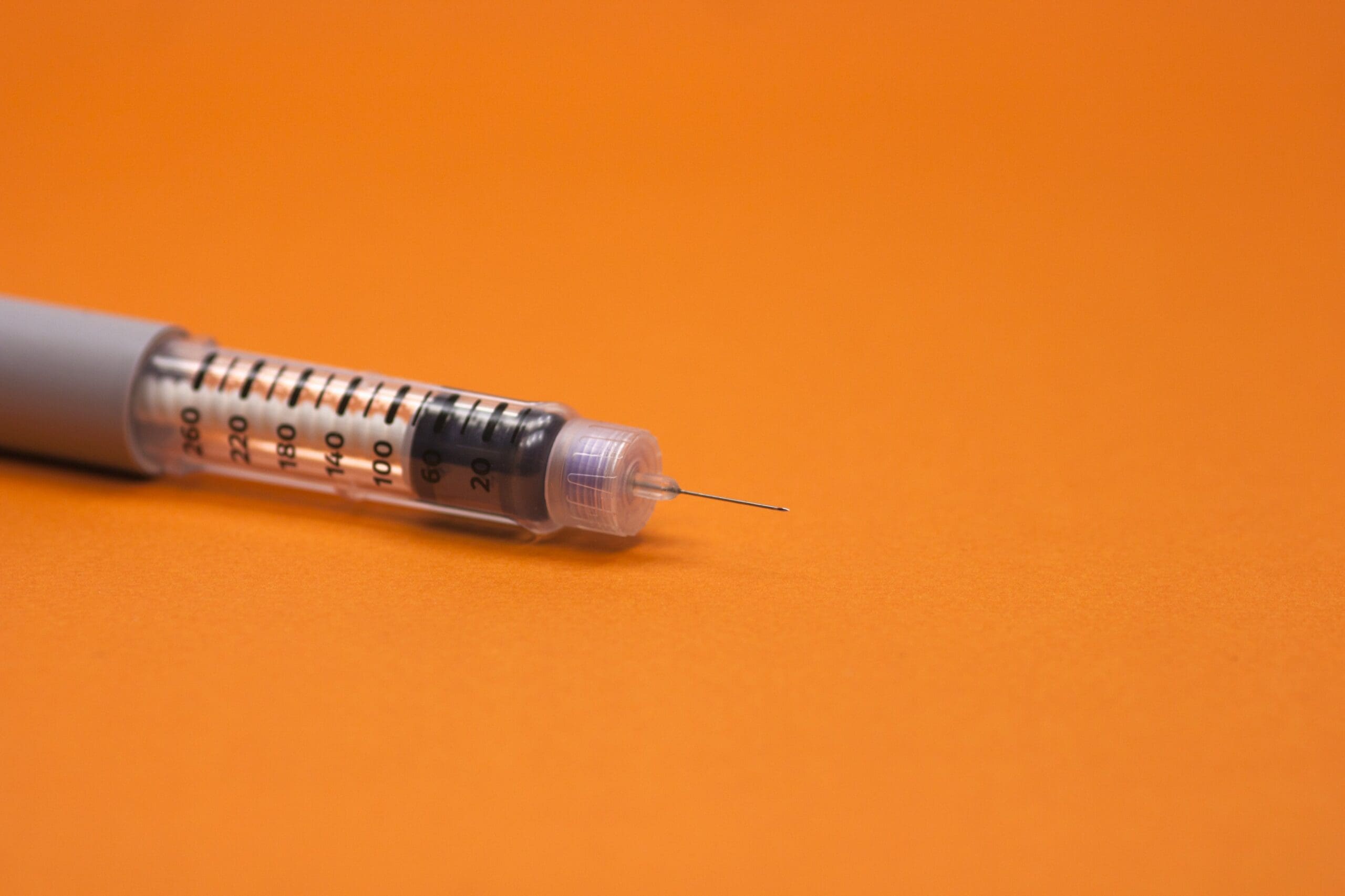
The good news is that injecting insulin tends to be easier than most people think it will be. The most common way to inject insulin is by using a fine needle and syringe or by using a ‘pen’ injector device (a ‘pen needle’). In Australia the needles are free for people who are registered with the National Diabetes Services Scheme (NDSS).
Insulin pump
In some cases, insulin may be administered using an insulin pump, a small device that is worn outside the body (e.g. on a belt) and programmed to deliver small, regular doses of insulin via a flexible tube that is inserted under the skin. This type of insulin administration is sometimes called continuous subcutaneous insulin infusion (CSII).
Lifestyle and self-help
In addition to monitoring and managing their blood glucose level, and using their prescribed insulin therapy as directed, people with Type 1 diabetes are advised to maintain a healthy, balanced diet and also to try to remain as physically active as possible. Doing these things will help to maintain a healthy weight (a possible side effect of insulin therapy is weight gain), may help to improve blood glucose control and might also help to prevent or minimise some of the longer-term complications of diabetes (e.g. heart disease).
People who have Type 1 diabetes need to know how to manage several situations:
- Hyperglycaemia. Know what to do if their blood glucose level becomes too high and they begin to develop symptoms of possible ketoacidosis. If you have Type 1 diabetes, many possible things can cause your blood glucose level to rise unexpectedly; for example, it may rise if you eat too much, if you eat the wrong types of food, if you don’t inject enough insulin or if you have an illness.;
- Ketoacidosis. Test for ketones (either in their urine [using urine test strips] or in their blood [using some blood test meters]), particularly during acute illness or stress, if their blood glucose level is consistently higher than 15 mmol/L or if they have any symptoms of ketoacidosis (such as feeling sick, vomiting or abdominal pain). People with type 1 diabetes should also know when to call their doctor immediately or when to go to the nearest emergency department.
- Hypoglycaemia. People with Type 1 diabetes also need to know what to do if they develop ‘hypoglycaemia’ (too low blood sugar). Hypoglycaemia is what happens when the level of glucose in a person’s blood falls too low, commonly referred to as having ‘a hypo’. Blood glucose levels can fall too low for many reasons; for example, they may fall too low if you skip or delay a meal (or don’t eat enough), do more physical activity than usual or inject a larger dose of insulin than usual. Symptoms of hypoglycaemia can include weakness, trembling or shaking, sweating, light-headedness, headache, inability to concentrate, behaviour change, dizziness, tearfulness/crying, irritability, numbness around the lips/fingers and/or hunger.
Of course, people with Type 1 diabetes should always contact their doctor or Credentialled Diabetes Educator (or another healthcare professional involved in the management of their diabetes) if they ever have any specific concerns about their diabetes, its management or any related issues (e.g. if they have trouble managing their blood glucose level or if they are unsure what they should do in a particular situation).
In addition, people with diabetes are encouraged to inform people around them about their condition, to wear an appropriate medical alert bracelet and to carry a kit that contains everything they might need if they experience hypoglycaemia.
Prevention
Type 1 diabetes cannot be prevented, but – if you have the disease – there are many things you can do to help prevent, delay or minimise its potential complications; this includes:
- Doing all the things you have been advised to do to help keep the level of glucose in your blood within the recommended target range;
- Taking prescribed medications as directed (including medications to help manage diabetes-related health problems or to help reduce the risk of specific diabetes-related complications, such as blood pressure-lowering medication or cholesterol-lowering medication);
- Knowing what to do if you develop symptoms of possible ketoacidosis or hypoglycaemia;
- Trying to keep your blood pressure and blood cholesterol levels within recommended target ranges;
- Not smoking (smoking increases the risk of several long-term diabetes-related complications, such as heart disease and stroke);
- Being as physically active as possible (e.g. walking briskly for at least 30 minutes, 5 times a week);
- Following a healthy eating plan;
- Limiting your alcohol intake (no more than 2 standard drinks per day);
- Maintain a healthy body weight;
- Checking your feet each day and choosing footwear that protects them;
- Remembering to visit your GP for all recommended check-ups (e.g. 6-monthly HBA1c, annual lipids (cholesterol) test), etc; and
- Remembering to get your eyes and feet regularly checked.
