
What is acupuncture?
Acupuncture is an ancient system of healing that was developed as part of the traditional medicine of China, Japan and other Eastern countries. Its spread to the West has been relatively slow but steady, and in recent years acupuncture has found increasing acceptance in Western medical practice, particularly in pain relief.
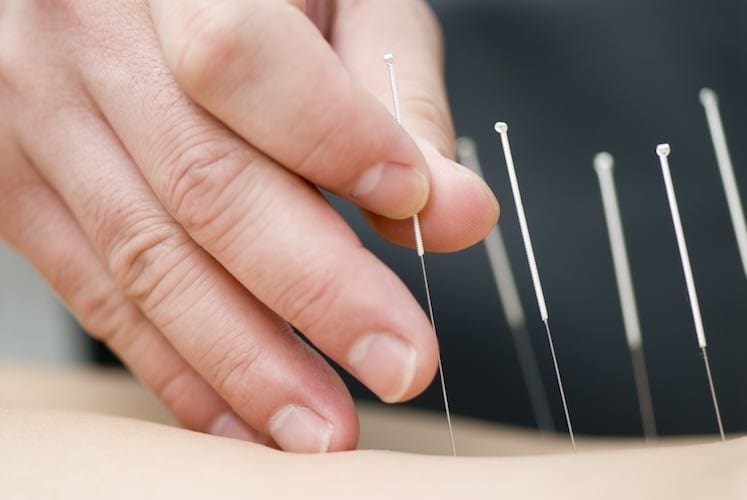
The theory behind acupuncture is that stimulation of specific areas on the skin affects the functioning of certain organs of the body. The current practices have evolved into a system of medicine that aims to restore and maintain health by the insertion of fine needles into points (called acupuncture points or acupoints) just below the surface of the skin. These points are in very specific locations and lie on special channels of energy that are called meridians.
Acupuncture points can be stimulated in various ways, including:
- insertion of needles — the needles can also be stimulated with a small electric current (electro-acupuncture);
- warming with a smouldering herb (moxibustion);
- manual pressure alone (acupressure);
- suction using glass or plastic cups that apply a vacuum to the skin (cupping); and
- laser (commonly used in children).
How does acupuncture work?
Acupuncture is just one part of the broader system of treatment known as Traditional Chinese Medicine (TCM) which is based on the concept of an energy flow through the body called Qi or Chi. This energy is circulated through the body via several main energy pathways called meridians. Each one of these pathways or channels is thought to be linked to an internal organ. It is believed that if this flow of energy is blocked, imbalances occur which in turn lead to health problems.
This block in the energy flow can be cleared away with the insertion of acupuncture needles at special acupuncture points along the meridians. When the needles are applied to the points the organ function is stimulated. There are hundreds of acupuncture points within the meridian system.
Acupuncture and acupressure (the stimulation of the points with the fingers and hands) treatments are aimed at unblocking the meridians, easing muscle tension, and stimulating the energy and blood flow so the natural healing mechanisms of the body are adjusted, striking a balance in the body.
Acupuncture treatment
When the patient is seen for the first time, the practitioner will take a complete history and then may take a strictly Chinese approach to medical examination or they may use a combination of Eastern and Western techniques. Palpation or testing of the meridians is often done prior to needle insertion.
When the acupuncture needle is inserted, a slight, dull pain, tingling or electrical-like sensation may be felt which is called the ‘De Qi’ sensation and this indicates the Qi has been accessed. Once the needle is in place, no further discomfort should be felt. In actual fact, often there will be an occasional agreeable tingling or warm feeling experienced along the meridians.
The needles are usually left in place for between 10 and 30 minutes, depending on the conditions being treated. The removal of the needles usually causes no discomfort and only rarely is there any very minor bleeding from an insertion point.
The inserted needle may also be stimulated by manually rotating the needle or heating with a moxastick to enhance the effect. The needles can also be stimulated electrically using various frequencies and intensities. Some patients may require only one or 2 treatments, but others may require many sessions to achieve a successful outcome.
What is acupuncture used for?
Traditionally, acupuncture practitioners have treated a large number of different illnesses; however, in Australia, the primary use is often to alleviate pain, but its therapeutic applications have been gradually expanding. Today, acupuncture can be used in treating addictions, controlling weight and enhancing recuperation following surgery or the effects of a stroke.
Some common conditions that may successfully be treated or relieved by acupuncture include:
- headache and migraine;
- anxiety, depression, nervous tension, stress;
- addictions such as smoking and alcoholism;
- insomnia;
- digestive problems such as indigestion, flatulence, diarrhoea, constipation;
- bowel problems such as colitis and haemorrhoids;
- liver and gallbladder problems;
- nausea and vomiting that’s caused by chemotherapy;
- kidney and bladder problems;
- respiratory problems such as asthmatic conditions, bronchitis, tonsillitis, sinusitis, sore throat, earache, cold and influenza;
- skin conditions such as acne, eczema or psoriasis;
- muscle problems including athletic injuries, cramps, strains and sprains;
- arthritic conditions including the general pain of arthritis, sciatica, bursitis, tendonitis, gout; and
- toothache, gum problems and mouth ulcers.
Acupuncture needles
There are several types of acupuncture needles. In ancient China, 9 different types of acupuncture needle were used. Today, the most commonly used needle is the metal filiform (thread-like) needle that is made from stainless steel. Very occasionally, silver or gold needles are used.
Acupuncture needles come in different gauges (diameter) and lengths to be used on the different areas of the body where they are to be inserted. The needles used nowadays are mostly very fine — they vary from 0.12 mm to 0.35 mm in diameter. Chinese acupuncture techniques tend to use thicker needles than Japanese techniques.
Are acupuncture needles safe?
The majority of needles used today in Australia are pre-sterilised, single use, disposable types. They are manufactured and packed under sterile conditions into foil-backed blister packs with plastic guide tubes.
The most commonly used needles are made of stainless steel and range in length from 8 mm to 7 cm. They are usually inserted 2.3 mm to 2.5 cm into the body. Acupuncture needles are covered by the Therapeutic Goods Administration’s Good Manufacturing Practice legislation in Australia.
How long are the needles left in for?
Acupuncture needles can be left in for any length of time between a few seconds and half an hour or so. The acupuncturist may twist or lightly flick the needles during this time. Some specialised very small, short needles can be left in for a few days.
Specialised acupuncture needles
Apart from filiform needles, there are a number of specialised needle types that may be used for specific conditions. Here are some types of specialised needle.
Three-edged needle
This is a thick needle with a round handle and a triangular body and a very sharp tip. It looks like a lance. The three-edged needle is used to puncture specific acupuncture points with the aim of removing a few drops of blood.
Plum blossom needle
This is also called a seven star needle and is actually a group of seven filiform needles arranged together in the shape of a flower and attached like a hammer head to a long handle. The handle is often flexible. Some types are disposable — others have a detachable head for sterilising. The needling is done by tapping the needles on the skin lightly and swiftly. The plum blossom needle can be tapped along a channel or at specific points.
Intradermal needles
These are very thin, very short needles that are used on specific points, often the ears (auricular acupuncture). Inserted to a very shallow depth in the skin (1-3 mm), these needles are left in place and covered with waterproof tape. They are often used to treat chronic pain and addictions.
Press needles
These are used in treatments where the needles need to be left in for extended periods of time (usually one to 3 days) because prolonged stimulation of a point is needed. They are very small needles (1-3 mm long) that are ‘pressed’ onto the point and are held in place with a small, sterile surgical adhesive patch. At the base of the needle, the metal forms a spiral loop, stopping the needle from being pushed too far into the body. They are often used for acupuncture of the external ear. If you are treated with indwelling needles, care should be taken so that dirt does not collect under or around the tape.
Ear seeds, ‘press seeds’ and ‘pellets’
Although they aren’t needles, ear seeds, ‘press seeds’ and ‘pellets’ are all tiny, round objects that are taped to the acupuncture point — often on the ear — to give ongoing acupressure. They do not penetrate the skin.
Sometimes the wearer is instructed to press or gently stimulate the object a few times a day. Some of these objects are also magnetic. Press seeds are often small seeds of a type of Vaccaria plant — the seeds of the plant have natural irritant properties.
