
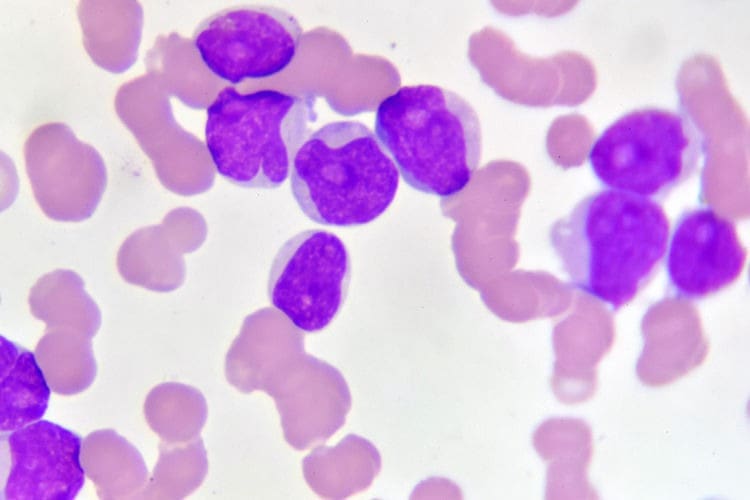
What is leukaemia?
Leukaemia is cancer of the parts of the body that make blood, including the bone marrow and lymphatic system.
The 3 main types of blood cells include:
- white cells that fight infections;
- red cells that carry oxygen; and
- platelets that help the blood to clot.
In leukaemia, the bone marrow makes too many white blood cells that are abnormal and don’t function properly. This can result in infections, because the abnormal white cells can’t do their usual job properly. Also, the leukaemia cells may crowd out normal cells in the bone marrow, leading to a reduction in red cells (causing anaemia) and platelets (which can result in bleeding).
Types of leukaemia
Leukaemia can be either acute or chronic.
Acute leukaemia
Acute leukaemia happens suddenly and progresses rapidly. There are 2 major types of acute leukaemia.
- Acute lymphocytic (lymphoblastic) leukaemia (ALL), which is the most common type of leukaemia among children, but can also affect adults.
- Acute myeloid leukaemia (AML), which can affect adults and children.
Chronic leukaemia
Chronic leukaemia involves more mature blood cells than acute leukaemia. Chronic leukaemia most often affects middle-aged to older adults and may produce little in the way of symptoms for many years.
There are 2 major types of chronic leukaemia.
- Chronic lymphocytic leukaemia (CLL), a type of leukaemia that may not need treatment. When it is needed, life expectancy can still be many more years.
- Chronic myeloid leukaemia (CML) may also be stable for many years, but eventually turns into an aggressive, life-threatening disease.
Causes of leukaemia
The cause of leukaemia is unknown. A combination of genetic and environmental factors seems to be involved. Factors that can increase the risk of leukaemia include:
- exposure to very high levels of radiation (for example survivors of nuclear reactor accidents or atomic bomb explosions);
- previous treatment with certain types of chemotherapy or radiotherapy for other types of cancer;
- genetic disorders, such as Down syndrome;
- certain blood disorders;
- exposure to certain chemicals, such as benzene;
- smoking;
- family history; and
- certain viral infections, such as the Human T-cell leukaemia virus.
Chronic myeloid leukaemia is linked to an abnormal chromosome called the Philadelphia chromosome.
Symptoms
Symptoms may be caused by anaemia (reduced red cells), reduced platelets and a lack of properly functioning white blood cells. They include:
- tiredness;
- pale skin;
- weakness;
- breathlessness;
- easy bruising and bleeding;
- bleeding gums;
- fevers and night sweats; and
- repeated infections, including mouth sores, sore throat, cough, infected scratches.
Other symptoms include:
- bone pain;
- rashes;
- swollen, tender gums;
- enlarged lymph nodes (often in the neck or armpits);
- abdominal pain or tenderness (which can be due to an enlarged spleen).
Many people with chronic leukaemia do not have any symptoms. The disease may be discovered during a routine blood test.
Diagnosis
A blood test called a full blood count can determine if there are elevated levels of white blood cells in your blood. Looking at the cells under the microscope can determine whether these cells are abnormal. The levels of red blood cells and platelets may be reduced.
A bone marrow aspiration or biopsy can be done to look for evidence of leukaemia cells in the bone marrow. A sample of bone marrow can be taken from the hip bone using a long, thin needle. This test is usually performed using local anaesthetic.
Additional tests may be needed to determine the type of leukaemia and its severity.
Treatment and outlook
Treatment and outlook will depend on the type of leukaemia, how advanced the leukaemia is, your age and your general health.
Treatment options include:
- chemotherapy;
- radiotherapy;
- bone marrow transplant;
- stem cell transplant;
- biological therapy, which helps your immune system to destroy leukaemia cells; and
- targeted therapy, which uses medicines to block the growth of leukaemia cells.
It’s usually recommended that people with acute leukaemia start treatment straight away – often within 24 hours of diagnosis.
Acute forms of leukaemia can often be cured with chemotherapy and stem cell or bone marrow transplantation.
Chronic leukaemia may not produce symptoms or require treatment (other than close monitoring) for many years. When treatment is needed, it can relieve symptoms and control the disease, but complete cure is rare with chemotherapy. Stem cell transplants may offer the chance of cure for some people with chronic leukaemia.
