
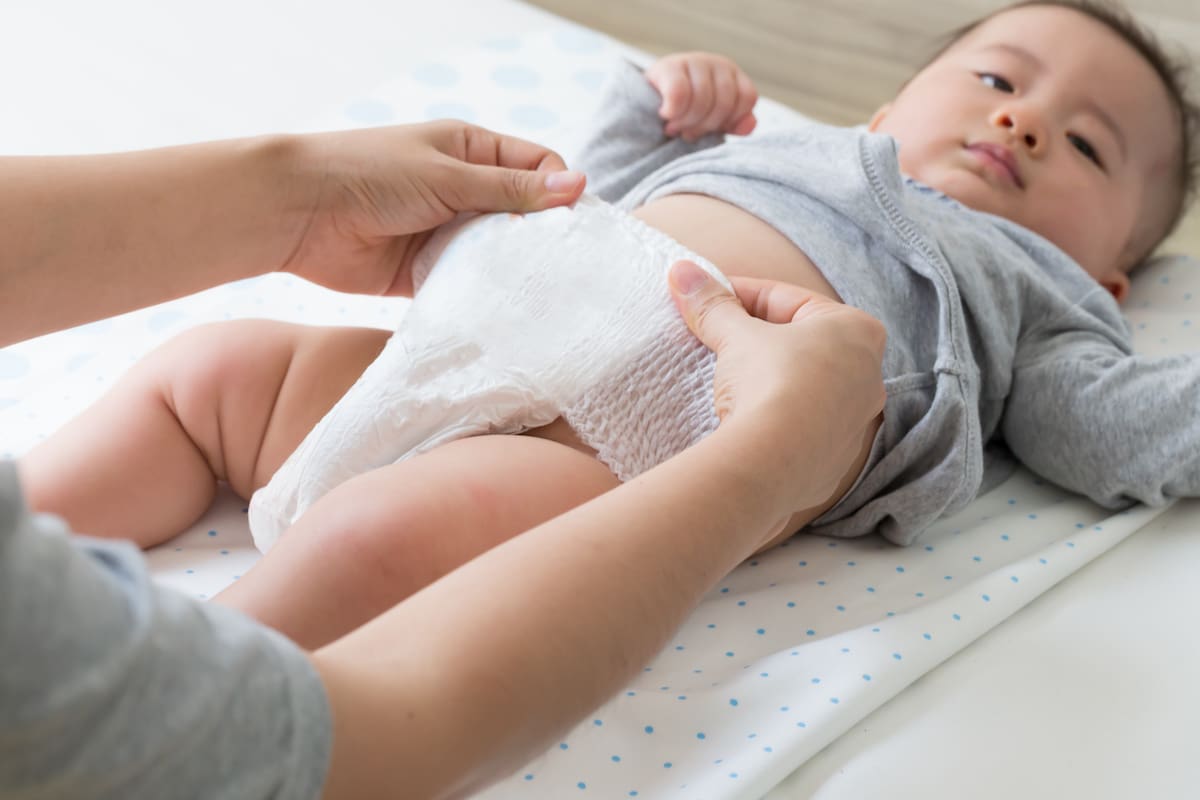

Red, painful and angry looking, nappy rash can be distressing for babies, and a source of anxiety for parents. But what exactly is nappy rash? Paediatric Dermatologist, Dr Deshan Sebaratnam explains causes, treatments and prevention.
“Nappy rash is a common skin condition in babies, characterised by inflamed skin around the perineum (under the undies),” says Dr Deshan. “It looks red and inflamed, sometimes with areas of broken skin. It is caused by inflammation in the top layer of the skin and waste products in urine and faeces can contribute to this.”
Nappy rash affects more than half of babies by the time they turn one1 with new research by Huggies confirming it’s the number one concern among new parents. “Inside the uterus, the skin is covered in amniotic fluid. When babies are born, the skin needs to transition to life in the outside world, air instead of fluid, temperature changes, humidity changes, irritants etc,” says Dr Deshan. The good news is, it usually improves with time. “Nappy rash is most common in infants. It usually gets better as babies poo and wee less frequently daily and they transition to toilet training.”
What causes nappy rash?
The most common type of nappy rash is irritant dermatitis – a skin irritation that can happen when dirty, wet nappies are touching the baby’s sensitive skin. It is caused by a combination of wetness, the nappy rubbing against the skin, and skin damage caused by the enzymes in faeces. Urine and detergents can also worsen the irritation.
Once the rash has started, it can become infected with bacteria that normally live on the skin, or with a fungus (Candida) that normally lives in the intestine and on the skin. Infections can easily spread in the area under the nappy, because it is warm and moist. It is more difficult to avoid nappy rash if your baby has diarrhoea, if you can’t change nappies often enough, or if you use plastic pants over the nappy.
Other common causes of nappy rash are:
- fungal infection (‘thrush’)
- allergies (atopic dermatitis, also called eczema)
- other skin conditions such as miliaria (a heat rash), seborrhoeic dermatitis, or psoriasis.
Uncommon causes of nappy rash include:
- more severe types of bacterial skin infections
- infection caused by herpes simplex (the virus that cause cold sores)
- allergic contact dermatitis – when your baby is allergic to something that is directly touching the skin (e.g. an ingredient in a skin cream or lotion).
- There are also some rare skin conditions that can look like nappy rash.
Are some babies more predisposed to nappy rash than others?
“There are genetic and environmental components that cause nappy rash. We know that different genes can contribute to the barrier function and integrity of the skin and some people are just predisposed to dermatitis,” explains Dr Deshan. “Environmental factors also play a big role. When we used to use cloth diapers, babies would get a lot more nappy rash because the waste products would be kept damp against the babies skin.” Other contributing factors are things like the baby’s bowel and bladder habit. If babies have diarrhoea this can lead to more irritation of the skin and it can become a vicious cycle.
Signs and symptoms
Irritant dermatitis (ordinary nappy rash) causes reddening of the skin. The skin may look raw or spotty, and may be sore or itchy. Nappy rash can make your baby irritable or hard to settle.
If your baby’s skin is very raw or weeping, or if there is pus (white discharge) or puffiness, the skin could be infected. Infections in the nappy area often spread to the skin folds at the top of the legs and in the groin.
If your baby also has skin rashes on other areas of the body, these could be due to allergies or other skin conditions.
If your baby has a fungal infection (thrush), it may spread to the baby’s mouth or to your nipples if you are breastfeeding.
Preventing nappy rash
Ordinary nappy rash (irritant dermatitis) is very common, but there are some things you can do to help protect your baby. “Don’t overcomplicate things. Babies have been around for thousands of years without complicated skin routines so just keep it simple,” says Dr Deshan.
Nappies
“When it comes to nappy changes, the more frequent, the better. Disposable diapers are much better than cloth nappies as they are more absorbent. Nappy free time can also help,” explains Dr Deshan. Huggies Zinc Oxide enriched layer has been proven to help protect baby’s skin against irritation.
- Try to minimise the amount of time that a wet nappy is against your baby’s skin.
- Use very absorbent disposable nappies – these will absorb more fluid than cloth nappies and keep the skin drier.
- If you use cloth nappies, change them every 2 hours and avoid nappy liners.
- Do not use plastic over-pants.
- Let your baby have some time without a nappy each day, if possible.
Cleansing your baby’s skin
Simplicity rules at bath time, where less is more. “A soap-free cleanser around the nappy area is all that’s needed for bath time which only needs to be every 2 or 3 days,” says Dr Deshan.
- Avoid anything antiseptic – these can irritate your baby’s skin.
- When you bathe your baby, avoid ordinary soap. Instead, use a soap substitute (e.g. QV Baby Gentle Wash).
- At bath time, use a bath oil suitable for babies (e.g. QV Bath Oil).
- Don’t use talcum powder on your baby’s nappy rash.
Barrier creams and ointments
What about nappy rash creams? The truth is, there are a lot on the market, but there’s one stand-out ingredient backed by science that will really help treat and prevent nappy rash. “Zinc-based barrier creams have been used by dermatologists for decades to help protect against nappy rash,” says Dr Deshan. “Zinc-based products can help with supporting the barrier function of the skin, keeping those irritants away from the skin of babies.”
- Every time you change your baby’s nappy, use a protective cream or ointment that contains zinc (e.g. zinc and castor oil ointment, zinc compound paste, zinc oxide cream, Desitin Nappy Rash Ointment, Egozite baby cream, Egoderm ointment) or dexpanthenol (e.g. Bepanthen Ointment).
- When you use creams and ointments, apply a thick layer on the skin under the nappy so that the wet nappy will not be able to touch your baby’s skin.
Ask your doctor, Child and Family Health nurse, or community pharmacist for advice.
Nappy rash treatments
The right treatment for your baby will depend on what is causing the nappy rash and how severe it is. Ordinary nappy rash (irritant dermatitis) that is mild will often clear up by taking extra care with frequent nappy changes, nappy off time , a zinc-based cream and ensuring any products you use don’t contain fragrances or irritants.
In Australia, several soothing creams and ointments for treating nappy rash are available from your pharmacist without a prescription. These usually contain combinations of moisturisers and dexpanthenol or zinc. Brands include Bepanthen Ointment, Dermaveem eczema cream, Egozite baby cream, Egoderm ointment and Sudocrem. Some creams and ointments should not be used if your baby’s skin has open or weepy sores, so always check with your pharmacist first.
When to see a doctor about nappy rash
“Don’t feel like you’re alone and don’t try and Google it,” says Dr Deshan. “If your baby’s rash doesn’t respond to the strategies above after a week, or if you have any questions about the skin health of your baby, seek help from your GP or specialist dermatologist.” Another warning sign is if your baby seems unwell or upset. Noone knows your baby and their moods as well as you. Trust your gut and if you’re feeling uneasy, see a doctor.
Usually no tests are needed when your baby has nappy rash. If your doctor or nurse suspects your baby has a skin infection, they may take a swab to be tested under a microscope. To do this, the doctor or nurse touches a clean cotton swab (like a cotton tip) to your baby’s skin, then puts it into a sealed tube.
More severe nappy rash may need short-term treatment with a mild steroid cream to settle the irritation. This medicine should be used on babies only when recommended by a doctor. Steroid creams and fungal treatments are often used together.
In Australia, medicines recommended or prescribed by GPs and dermatologists (skin doctors) for short-term treatment of nappy rash include combinations of:
- hydrocortisone 1% ointment (e.g. DermAid cream/DermAid Soft Cream)
- methylprednisolone aceponate 0.1% ointment (e.g. Advantan Cream, Advantan Fatty Ointment) – for more severe nappy rash, not for very young babies
- triamcinolone acetonide 0.02% ointment (e.g. Aristocort, Tricortone)
- nystatin cream (e.g. Mycostatin Topical)
- clotrimazole cream (e.g. Canesten Clotrimazole)
- clotrimazole plus hydrocortisone 1% cream (e.g. Hydrozole)
- miconazole plus zinc oxide (e.g. Resolve Nappy Rash).
Your doctor will explain when and how long to use each medicine. If your baby has a bacterial skin infection, your doctor may also presribe an antibiotic cream or oral antibiotics tablets.
Where to get more information
Ask your GP or your Child and Family Health nurse for advice about preventing and treating nappy rash.
You can contact a Child and Family Health nurse through your local community health service. Community health services for mothers and babies have different names in different states and territories, e.g, Maternal and Child Health Clinics/Services (ACT and Victoria), Early Childhood Health Clinics (NSW), Child and Family Health Clinics/Centres (Northern Territory and South Australia), Child and Baby Health Clinics (Queensland), or Child Health Centres (Tasmania and Western Australia). Your community pharmacist can give you advice about nappy rash treatments that are available over the counter.
